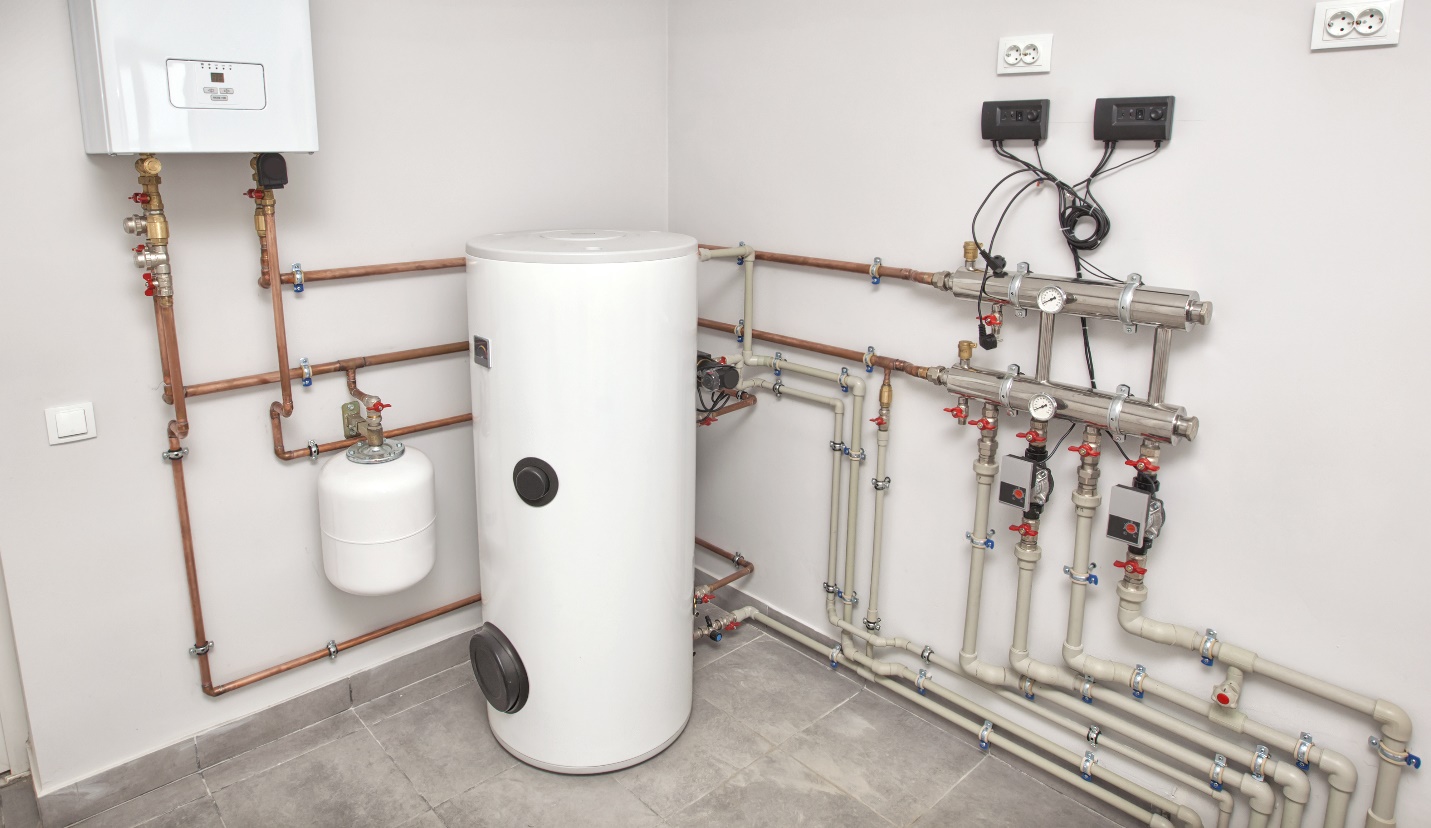
As the name suggests, your water heater is responsible for heating your home’s hot water. A well-maintained water heater provides hot water in an instant, giving you and your family warm showers and baths, a ready supply of hot tap water, and more.
Though heating water may seem like a simple task, water heaters use several unique design features to heat water quickly and efficiently. Read on to find out more about the major types of water heaters, their ingenious and unique designs, and how to tell whether your hot water is operating at peak performance—and when it isn’t.
Types of Water Heaters and How They Work
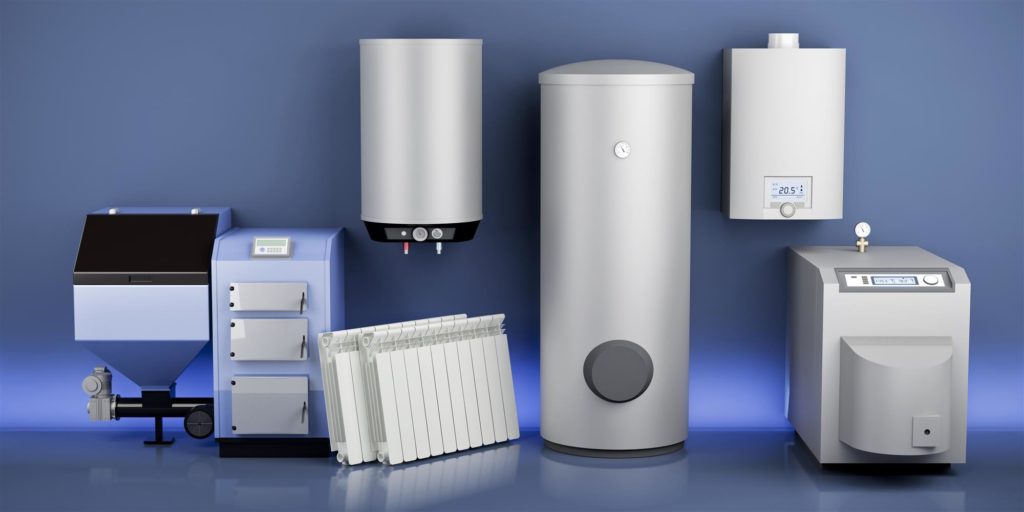
Water heaters come in two main types: gas (conventional) water heaters and electric water heaters. While the primary distinction is the fuel used (gas or electricity), each type has unique components and heating methods. There are also tankless water heaters, which do away with water tanks altogether and heat water on demand.
Gas/Conventional Water Heater
Most conventional waters use gas as a fuel source. Gas heaters are among the most common and affordable; however, they may begin to fall out of favor as more homes adopt mostly electric appliances and utilities. Even so, there’s a high likelihood that your home’s water heater is powered by gas.
As we’ll see later on, gas water heaters use a heating element located outside the water heater’s holding tank, usually in the form of a large burner. Like any gas burner, your water heater’s burner requires regular maintenance and cleaning.
Electric Water Heater
Unlike gas heaters that use a gas burner located outside the water tank, electric water heaters use electric induction coils located inside the tank itself. This type of direct contact is, at times, more efficient and reliable than gas burners. While gas water heaters are still the most common, electric water heaters are slowly gaining in popularity as more homes switch to electric appliances and electricity prices fall.
Tankless Water Heaters
Whereas both gas and electric water heaters store hot water in large tanks, tankless water heaters only heat small amounts of water at a time. While this method might not be suitable for high-volume or commercial applications, many residences prefer tankless water heaters for their compact size, low cost, and versatility.
For small applications, tankless water heaters also come with a variety of efficiency benefits; here, instead of having to constantly keep a large tank of water at a high temperature, tankless water heaters flash heat water as it’s needed. Again, this method is ideal for smaller applications.
Basic Principles and Components of Water Heaters
On the surface, water heaters don’t look like much more than a water tank wrapped in an insulative shell. Frankly, that wouldn’t be far from the truth; at their core, water heaters are just large, insulated tanks of water with a heating element, such as a gas burner. However, it’s the additional components—thermometers, safety valves, and so on—that make water heater designs so unique and effective.
The Tank
Most conventional water heaters heat and store hot water in a large tank—usually around 40 to 60 gallons at a time. The tank holds the hot water at a standard residential water pressure of about 50 to 100 psi (pounds per square inch) and keeps it warm with a thick layer of insulation.
The water inside the tank might be exposed directly to a heating element or it may be heated from outside. In any case, water flowers in and out of the tank using separate inflow and outflow pipes, whose placement is crucially important for delivering you the hottest water possible.
Inflow/Outflow Pipes
Water heaters have two major water lines: an inflow and an outflow. The inflow pipe takes cold water into the heater, usually directly from a municipal water line or inground well. The inflow pipe outputs water at the very bottom of the tank, where it’s then heated by the heating element below.
By contrast, the outflow pipe is placed almost at the very top of the pipe. This arrangement takes advantage of convection—the effect where heat rises.
The Thermostat
The water temperature inside the tank is constantly monitored using a thermostat. The thermostat is important for controlling the heating element; for example, if the thermostat detects the water getting too hot, it can lower the temperature of the heating element. It’s the thermostat’s “job” to measure and maintain a near-constant pressure.
The Heating Element
Your water heater’s heating element is either gas or electric, depending on its type. Gas water heaters are usually placed outside and below the water tank, heating the tank through a burner much like a pot on a stove. By contrast, electric water heaters use induction coils placed inside the water tank, which heat up as electric current flows through them.
Both gas and electric water heaters share the same design, apart from their heating elements. The only exceptions are tankless water heaters, which heat small amounts of water on demand without holding large quantities in a tank. Like conventional water heaters, tankless water heaters can have either gas or electric heating elements.
Other Components
We’ve covered the main components of most water heaters, but your water heater relies on a few other components to function properly and safely. These features include exhaust vents for the heating elements (mostly in the case of gas), safety valves and shut-off mechanisms, and something called a “sacrificial anode.”
The sacrificial anode is a piece of metal placed inside the water tank which helps to slow the rate of corrosion. Any metal placed in contact with water will corrode over time, but some metals will corrode faster than others. For water molecules, the metal of the sacrificial anode (usually magnesium or aluminum) is far more “appealing” to corrode than the metal of the tank. As a result, the sacrificial anode sacrifices itself for the sake of the water tank—thereby slowing corrosion.
Putting It All Together
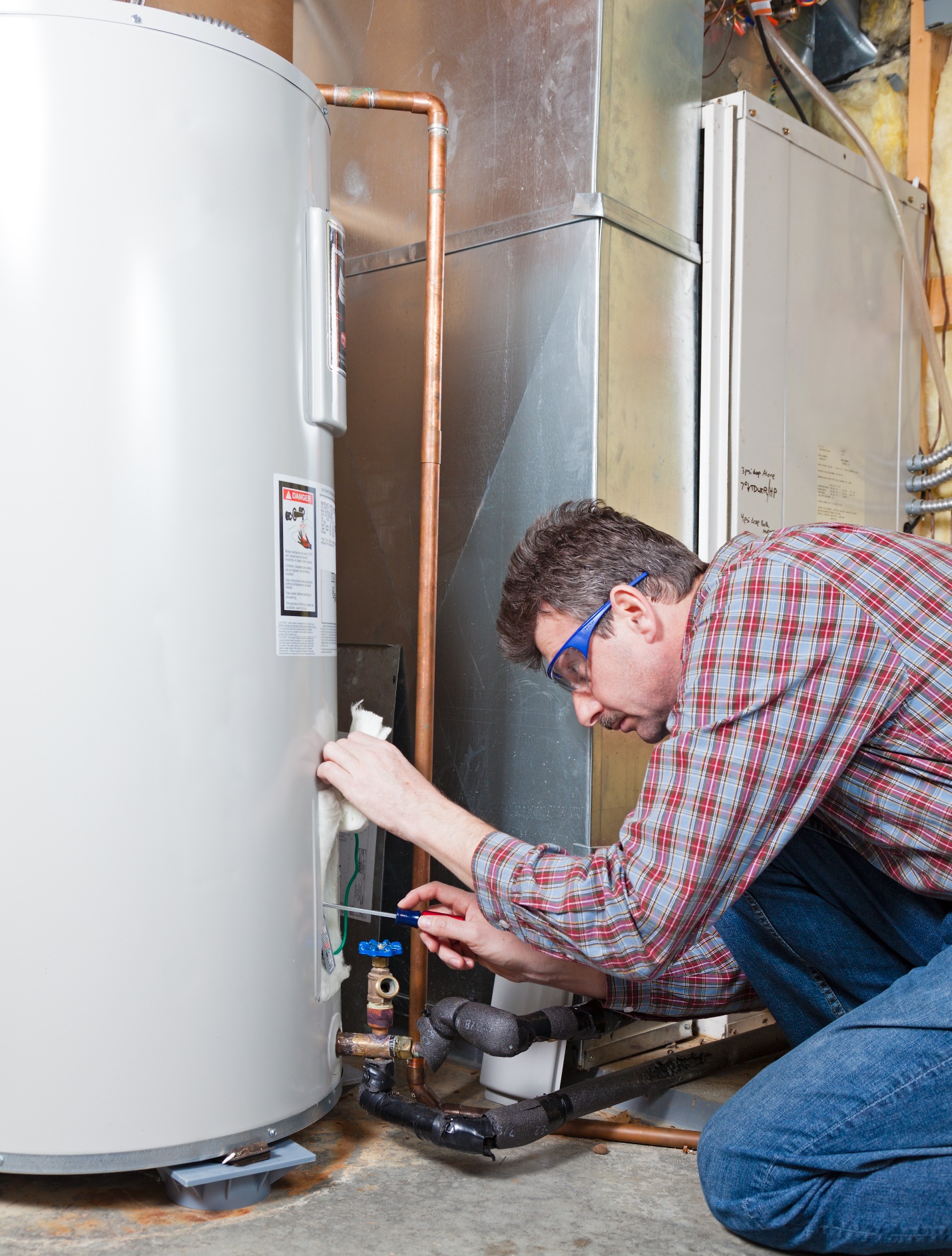
All of the components mentioned above work together to safely and efficiently heat your home’s water supply. As cold water flows into the bottom of the tank, a heating element heats the water so that the hot water rises to the top.
During this process, thermometers and safety valves analyze temperature and pressure, adjusting the heating element or releasing pressure as necessary. Through these control processes, water generally stays at a temperature between 120 and 180 degrees Fahrenheit and a pressure of 50 to 100 pounds per square inch. If conditions rise above or drop below these figures, control mechanisms will adjust heat and pressure as necessary.
Once at the right temperature, the hot water is sent through an outflow pipe and into your home’s water supply. The pressure built in the tank helps the water flow to wherever it’s needed.
Water Heater Maintenance and Replacement
While water heaters are relatively simple devices, they can break down and fall into disrepair—just like any other device. However, with some basic maintenance and knowledge, you can keep your water heater functional for years to come!
Basic Water Heater Maintenance
Thanks to their simplicity and elegant design, water heaters don’t need too much regular attention or maintenance. However, be sure to perform the following tasks at least once a year:
- Flush sediment from the hot water tank. Sediment naturally builds up inside the tank over time. Letting too much accumulate can make it harder for the heater to produce hot water.
- Check and set your temperature settings. Your water heater should be set to anywhere between 120- and 180-degrees Fahrenheit, depending on your home’s plumbing and the make and model of your water heater. Setting a lower temperature can help save on fuel costs.
- Test the pressure relief valve. While you can do this test yourself, it’s best to call in a professional.
- Check the sacrificial anode. Once your tank’s sacrificial anode has been fully “sacrificed,” water will begin to corrode the rest of the tank. Be sure to replace the anode regularly.
- Check and clean the heating element. This step is more specific to gas heaters. Their burners should be checked and cleaned regularly.
Signs It’s Time to Replace Your Water Heater
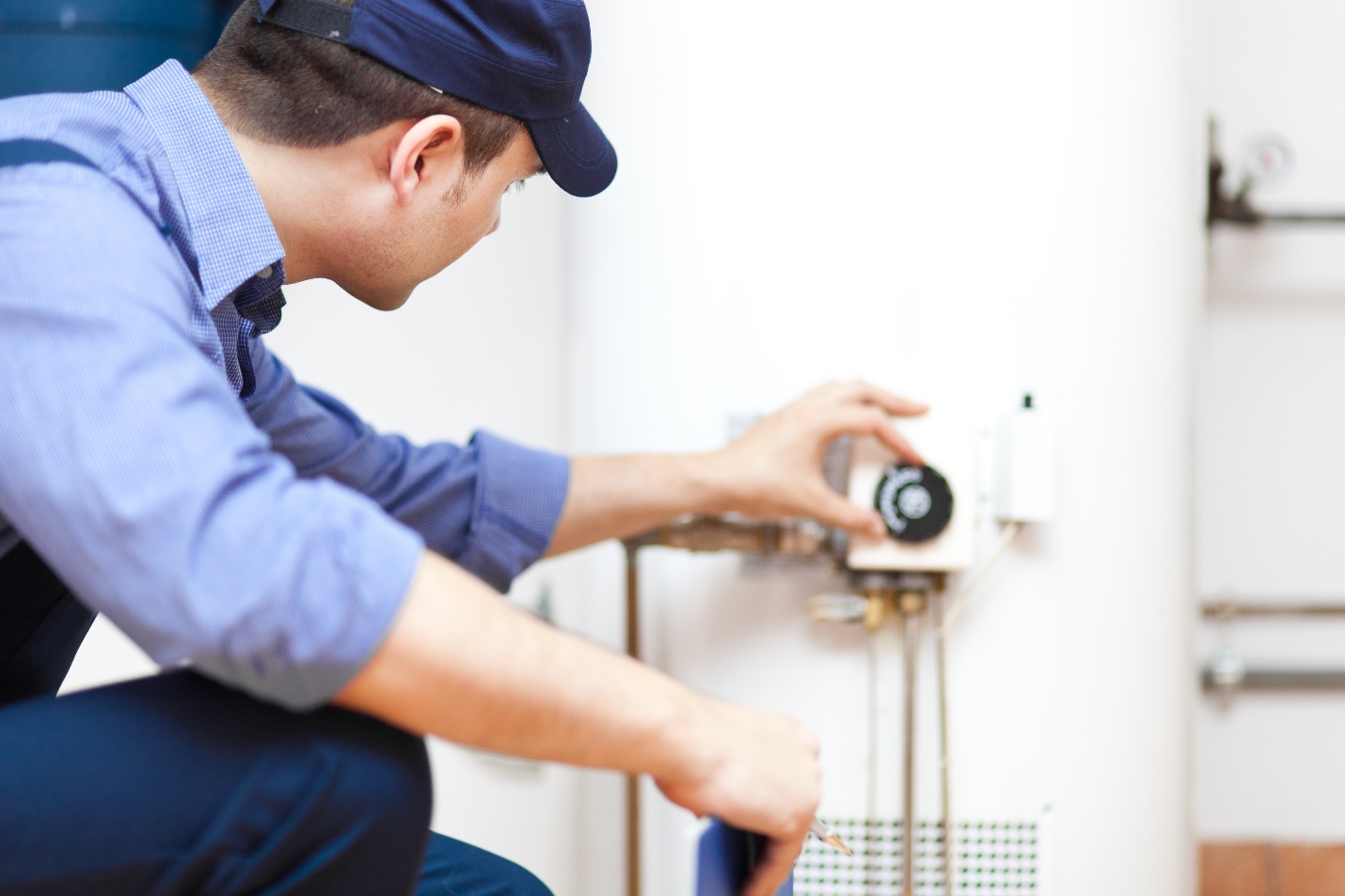
Unfortunately, water heaters have limited lifespans. Most water heaters last for about ten years, though some can last longer or shorter, depending on maintenance and other factors. Check for these signs to determine whether it’s time for a replacement:
- Unusual noises. Mechanical and structural failures inside your water heater can produce strange noises. One of the most common noises is a “rumbling” sound, which is usually caused by sediment buildup at the bottom of the tank. While regularly flushing can help avoid this, tanks with high sediment buildup may need a complete replacement.
- Water heater leaking. Other damage, particularly that to your heater’s pipes and valves, can cause leaks. Look for puddles or drops of water near or around your water heater. Unless the leak is coming from a single, external source, then a leaking water heater could indicate a deeper problem.
- Water not being heated. This sign should almost go without saying—if your water heater isn’t heating, then it might be time for a new water heater! However, be sure to check your heater’s temperature settings, heating elements, and sediment buildup before making the replacement.
Water Heater Replacement and Maintenance Services
While regular maintenance helps keep your water heater in top order, you may eventually need a complete water heater replacement. No matter what you need, call our team at 512-246-5400 to learn how we can help.