2025’s Best Practices for Commercial HVAC Maintenance

Modern commercial building rooftop with hvac units

Modern commercial building rooftop with hvac units

Maintaining a commercial HVAC system is essential for ensuring energy efficiency, reducing operational costs, and extending the lifespan of HVAC equipment. As we navigate through 2025, advancements in HVAC technology and maintenance strategies are making it easier for business owners and facility managers to optimize their systems.

Whether you manage office buildings, retail spaces, or industrial facilities, adopting a proactive approach to commercial HVAC maintenance can improve comfort, reliability, and performance.

Key Takeaways

  • A planned commercial HVAC maintenance program prevents costly repairs and extends equipment lifespan with regular inspections and tune-ups.
  • Enhancing commercial HVAC energy efficiency lowers costs—upgrade systems, clean coils, and use smart thermostats for better performance.
  • Preventative maintenance ensures longevity—inspect ductwork, calibrate thermostats, and replace air filters regularly.
  • Selecting the right HVAC system depends on building size, climate, and energy efficiency
  • Working with a trusted HVAC service provider ensures expert care, regulatory compliance, and a tailored maintenance plan.

Implement a Planned Commercial HVAC Maintenance Program

Hvac professional installing a commercial ac duct system

A commercial HVAC maintenance plan is crucial for preventing unexpected breakdowns and costly repairs. Rather than waiting for HVAC equipment to fail, businesses should invest in planned commercial HVAC maintenance, which includes regular inspections, filter replacements, and seasonal tune-ups.

A well-maintained HVAC system not only operates more efficiently but also reduces long-term repair expenses.

To optimize your maintenance program:

  • Schedule routine commercial HVAC inspections to detect minor issues before they escalate.
  • Establish a seasonal maintenance schedule based on your type of HVAC system and climate conditions.
  • Partner with a licensed commercial HVAC service provider to ensure proper maintenance is performed.

Focus on Energy Efficiency to Lower Costs

Energy costs can be a significant expense for commercial buildings, but energy-efficient commercial HVAC solutions can help businesses save money. By improving commercial HVAC energy efficiency, companies can reduce their carbon footprint and lower monthly utility bills.

To enhance your system’s efficiency:

  • Upgrade to high-efficiency commercial HVAC systems that use smart technology for better control and monitoring.
  • Ensure commercial AC unit maintenance includes coil cleaning and refrigerant level checks to maximize efficiency.
  • Invest in programmable thermostats and building automation systems to optimize temperature settings.
  • Regularly replace air filters to maintain proper airflow and prevent strain on the system.

Prepare for Rising Refrigerant Costs and Phase-Out Regulations

With new environmental regulations taking effect, businesses should be aware of upcoming changes to refrigerants used in commercial HVAC systems.

According to an article by JOBBER, as of January 1, 2025, R-410A refrigerant will be phased out in favor of R-32 and R-454B due to environmental concerns. This transition is part of the AIM Act (U.S.) and ODSHAR (Canada), which aim to reduce hydrofluorocarbon (HFC) production by 85% by 2036.1

As a result, the cost of new HVAC equipment is expected to increase by 10-15%, and repairs for older systems using R-410A will become more expensive due to limited refrigerant availability.1

To stay ahead of these changes:

  • If you’re planning an HVAC upgrade, consider systems that already use next-generation refrigerants.
  • Schedule a commercial HVAC inspection to assess whether your system is affected by the R-410A phase-out.
  • Work with an HVAC professional to explore cost-effective transition strategies and energy-efficient

Prioritize Preventative Maintenance and Regular Inspections

Preventative maintenance on a commerical hvac unit

Routine HVAC maintenance is essential for extending the lifespan of your commercial HVAC system and minimizing costly downtime. Preventative maintenance includes tasks like inspecting ductwork, checking electrical connections, and ensuring components are functioning correctly.

Key HVAC system maintenance tips for preventative care:

  • Inspect and clean air ducts to maintain indoor air quality and efficiency.
  • Lubricate moving parts to reduce wear and tear on motors and fans.
  • Test and calibrate thermostats for accurate temperature control.
  • Ensure condensate drains are clear to prevent water damage and mold growth.

By scheduling regular commercial HVAC inspections, you can catch potential problems early and keep your system running smoothly.

Choose the Right HVAC System for Your Building

Selecting the appropriate type of HVAC system for your commercial building is essential for achieving optimal performance. Different buildings require different solutions, whether it’s a rooftop unit, split system, or a centralized chiller system.

Consider these factors when selecting or upgrading an HVAC system:

  • Building size and occupancy levels.
  • Heating and cooling demands based on the local climate.
  • Energy efficiency ratings and available rebates for high-efficiency systems.
  • Compatibility with smart HVAC technology and automation controls.

A commercial HVAC system maintenance plan should also account for the specific needs of your system to ensure longevity and efficiency.

Work with a Trusted Commercial HVAC Service Provider

Air conditioning professional conducting tests on a commerical hvac unit

A professional HVAC repairand maintenance provider can ensure your system operates at peak efficiency. Partnering with a licensed and experienced team for commercial HVAC system maintenance means your system receives expert care, reducing the risk of emergency breakdowns.

Benefits of hiring a professional HVAC service provider:

  • Access to expert diagnostics and advanced maintenance techniques.
  • Compliance with local building codes and safety regulations.
  • Customized maintenance plans tailored to your business needs.

Schedule Your Commercial HVAC Maintenance Today

Don’t wait for costly breakdowns to disrupt your business operations. A well-maintained HVAC system ensures energy efficiency, reliability, and long-term savings. At Christianson Air Conditioning & Plumbing, we provide expert commercial HVAC maintenance, inspections, and repairs to keep your system running at peak performance.

Contact us today to schedule a commercial HVAC inspection or set up a customized commercial HVAC maintenance plan tailored to your business needs.

Fall Leaves and Your Outdoor HVAC Unit: Why Regular Cleaning Matters

Outdoor AC unit covered in leaves

Outdoor AC unit covered in leaves

As the temperatures cool and the leaves start to change, homeowners across Central Texas enjoy the beauty of fall. But while the season brings gorgeous colors, it also brings a challenge for your outdoor HVAC system: falling leaves and debris. Allowing leaves to accumulate around your air conditioning unit can lead to decreased efficiency, costly repairs, and even permanent damage. Here’s why it’s essential to keep your outdoor HVAC unit clean and protected this fall.

Why Leaves Are a Problem for Your Outdoor Unit

Your outdoor air conditioner is designed to handle a variety of weather conditions, but leaves in the AC unit can create issues that compromise its performance. When leaves and debris accumulate in and around the unit, they obstruct airflow, which can cause the system to overheat. This not only forces the unit to work harder, leading to higher energy bills, but it can also damage critical components over time.

Leaves in the air conditioner can also trap moisture, encouraging rust and corrosion on sensitive parts of the HVAC system. In the worst cases, leaf buildup can lead to motor strain or even a system breakdown, leaving you without reliable air conditioning just when you need it most. Keeping the area clear can help prevent these issues and extend the life of your air conditioning system.

The Risks of Ignoring Leaves and Debris Buildup

Ignoring leaves and other debris around your outdoor unit can quickly lead to costly consequences. Debris buildup causes your system to work less efficiently, which can shorten its lifespan and require frequent maintenance. Here are some of the key risks:

  • Increased Energy Bills: When airflow is restricted by leaves and debris, your air conditioner works harder, leading to higher energy consumption and costs.
  • Frequent Repairs: Debris buildup strains the unit, resulting in more frequent breakdowns and unexpected repairs, which can be costly.
  • Shortened System Lifespan: Constant strain on the HVAC system can shorten its overall lifespan, meaning you may need to replace it sooner than expected.
  • Poor Indoor Air Quality: A dirty HVAC system struggles to circulate clean air effectively, which can spread dust and allergens throughout your home, impacting respiratory health.
  • Higher Likelihood of Needing an HVAC Technician: With airflow obstructed, your system is more likely to shut down or perform inefficiently, increasing the need for professional maintenance.

By keeping the outdoor unit clean, you help maintain your system’s performance and protect indoor air quality, which is particularly important for family members with respiratory conditions or allergies.

Preventative Measures for Your Outdoor AC Unit

Man putting on an outdoor AC cover

Fortunately, preventing leaves and debris from compromising your air conditioner is simple with a few proactive steps. One of the most effective ways to protect the unit is by investing in an outside air conditioner cover. These covers are specifically designed to shield the unit from leaves and other outdoor elements, keeping it protected throughout the season. When selecting a cover, choose one that is breathable to prevent moisture buildup.

Other protective measures include placing a fence or barrier around the unit to limit the number of leaves that blow into it. However, make sure to maintain at least a two-foot clearance around the unit to allow for proper airflow. AC protection tools, such as mesh guards and leaf screens, can also be effective at keeping out debris without affecting the unit’s efficiency.

How to Clean Leaves Out of Your AC Unit

Knowing how to clean leaves out of your AC unit can save you time and money on maintenance. Follow these simple steps to safely remove leaves and debris from your outdoor unit:

  1. Turn Off the Power: Before you begin cleaning, ensure that the unit is powered off to prevent accidents and ensure your safety.
  2. Remove Large Debris by Hand: Use gloves to carefully pick out any large leaves or twigs from the unit’s vents and surrounding area. Take care to avoid damaging any of the unit’s fins or coils.
  3. Use a Hose to Spray Down the Unit: A gentle spray of water can help remove finer debris that may be stuck inside the unit. Be cautious not to use a high-pressure setting, as it could damage the fins.
  4. Clear the Area Around the Unit Regularly: To minimize the need for cleaning, keep the area around the unit free of leaves and debris on an ongoing basis. Regular sweeping or raking can make a big difference.

These steps can help you protect your air conditioning system without professional assistance. However, for a thorough cleaning or if you notice performance issues, consider scheduling a visit from an HVAC technician.

When to Call an HVAC Technician

HVAC technician working on an outdoor unit

In some cases, routine cleaning may not be enough. If you notice unusual sounds, inconsistent performance, or increased energy bills, it may be time to call in a professional. An HVAC technician can perform a deep clean and inspect the unit for any underlying issues. They can also ensure your system is ready to handle the colder months ahead.

Protect Your Outdoor HVAC Unit This Fall – Schedule a Maintenance Visit

If fall leaves and debris are piling up around your outdoor unit, it’s time to take action. Regular HVAC maintenance will keep your system efficient, extend its lifespan, and prevent costly repairs. Contact Christianson Air Conditioning & Plumbing today to schedule your seasonal maintenance visit and ensure your air conditioning system stays in peak condition all year long.

Everything You Need to Know About HVAC Odors

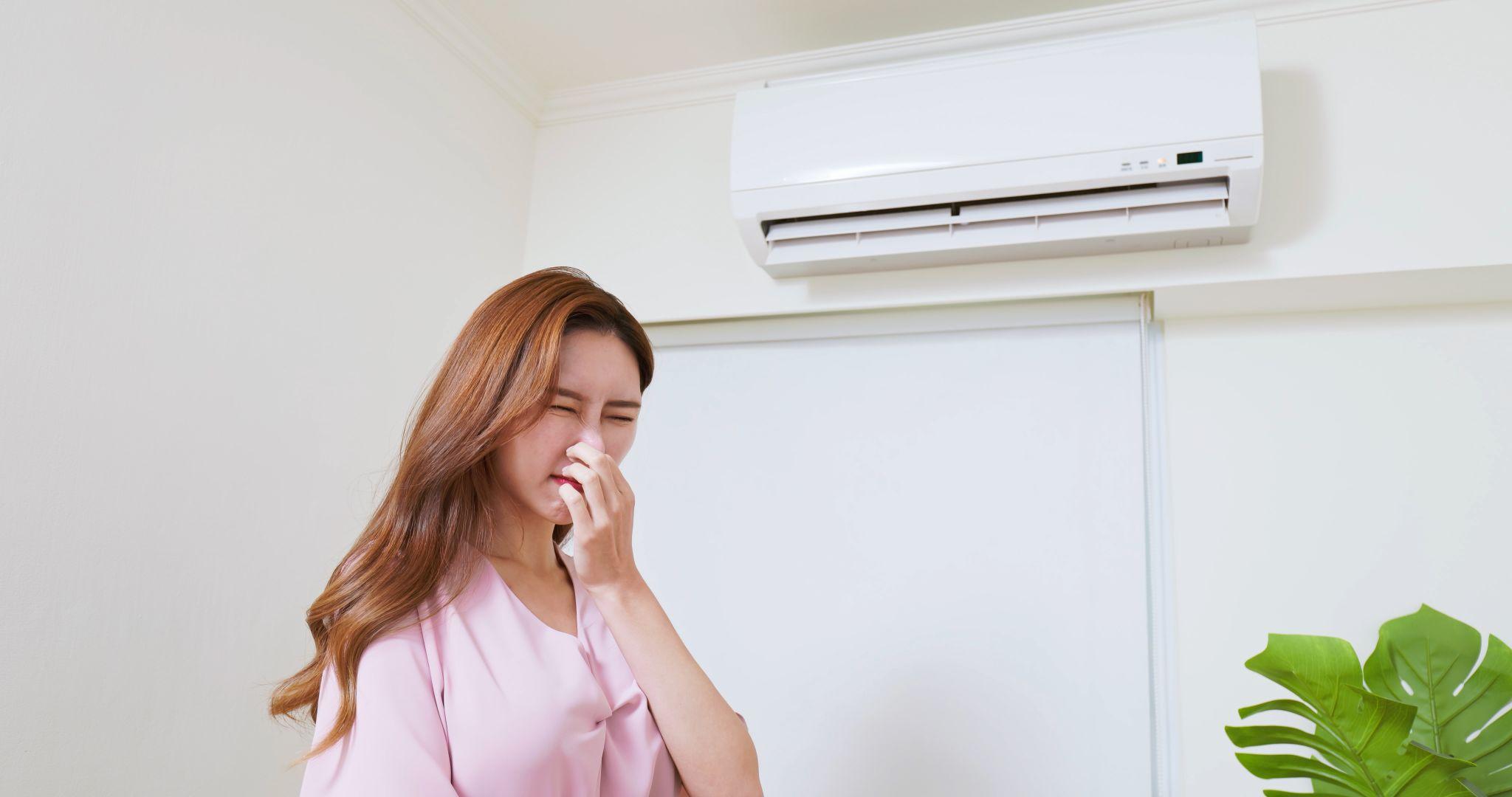
Odor coming from a AC unit in home

Odor coming from a AC unit in home

As a trusted HVAC professional serving Central Texas, Christianson Air Conditioning & Plumbing understands that maintaining indoor air quality is crucial for your comfort and safety. One common concern many homeowners face is identifying and addressing various HVAC odors. Whether it’s a musty smell or a burning scent, understanding these odors can help you determine when to call an HVAC technician or even a gas company.

Common HVAC Odors and Their Causes

Rotten Egg Smell

If you detect a rotten egg smell coming from your HVAC unit, it’s a serious warning sign. This odor often indicates a natural gas leak. Natural gas is odorless, so utility companies add a substance that smells like rotten eggs to alert homeowners of a leak. If you smell this, open the windows immediately, leave the house, and contact your gas company or a local HVAC professional.

Burning Smell

When you first turn on your air conditioners for the season, a slight burning smell is normal as dust burns off. However, if the burning smell persists, it could indicate an electrical issue or a problem with your air conditioning unit’s motor. Turn off your system and call a HVAC technician.

Musty Smell

A musty smell typically signifies the presence of mold and mildew within your HVAC system, especially in the evaporator coil or the air ducts. This odor impacts the indoor air quality and requires attention. Replacing the air filter and regular maintenance by a HVAC professional can help prevent this issue.

Sweet Smell Coming from AC

A sweet smell can indicate a refrigerant leak in your air conditioning unit. Refrigerant leaks are not only harmful to the environment but can also affect the efficiency of your system. It’s crucial to contact an HVAC technician to address this issue.

AC Stinks When First Turned On

If your AC stinks when first turned on, it could be due to stagnant water in the drain pan or a clogged condensate drain line. Regular cleaning and maintenance can prevent this smell.

Why Does My HVAC Smell and How to Fix It

  • Poor Maintenance: Lack of regular maintenance can lead to various smells. Ensure regular servicing of your HVAC systems to keep them clean and well-functioning.
  • Dirty Air Filters: A clogged air filter can cause a musty smell and affect your system’s efficiency. Regularly check and replace your air filters.
  • Moisture Issues: Excess moisture can lead to mold and mildew growth, causing a musty smell. Ensure proper humidity levels and inspect your system for any leaks.
  • Electrical Problems: Any burning smell might indicate an electrical problem. If you notice this, turn off your system and call a professional immediately.

When to Contact a Professional

While some odors can be resolved by simple solutions like changing the air filter or opening the windows, others require professional attention. If you encounter persistent odors or smells that indicate a serious issue like a gas leak or an electrical problem, it’s vital to contact a local HVAC professional or the gas company immediately.

Preventive Measures

HVAC professionals from Christianson Air Conditioning & Plumbing

To ensure the longevity of your HVAC systems and maintain optimal indoor air quality, it’s essential to adopt a few preventive measures. First, regular maintenance checks by a qualified HVAC technician are indispensable. These professionals can identify and address potential issues before they develop into problematic odors.

Additionally, changing your air filters every few months is a key step in preventing dust and mold accumulation, helping to avoid musty smells that can affect your comfort. It’s also important to clean the drain pans and lines of your air conditioners regularly, as this prevents water stagnation and eliminates related odors.

Last, keeping a close eye on indoor humidity levels is crucial for preventing mold growth and ensuring your home’s air remains healthy and fresh.

Understanding HVAC odors is crucial for maintaining a healthy, comfortable, and safe home environment. Regular maintenance and prompt attention to unusual odors can keep your HVAC system running smoothly and ensure your indoor air is fresh and clean.

Get Expert Help with Your HVAC Concerns

Are you experiencing strange odors from your HVAC system? Don’t wait for the problem to escalate. Contact Christianson Air Conditioning & Plumbing for professional assistance. Our experienced team is ready to provide swift and reliable solutions for all your HVAC needs, ensuring your home remains a safe and comfortable haven.

Call us or look through our website for expert service that brings peace of mind. Let us help you breathe easier in your own home.

Things You Can Do for Your Home in the New Year

The start of the new year is a great time to make some New Year’s resolutions for your home. You can do all sorts of things, from simple improvements to complete renovations. Taking the time to set some goals for the things you want to accomplish can pay off in the long run too.

Declutter and Reorganize

After taking down your holiday decorations, this is the perfect time to declutter your house and get rid of anything you no longer want or need. You should also consider reorganizing your home to make it more comfortable and functional.

Remodel Your Kitchen or Bathroom

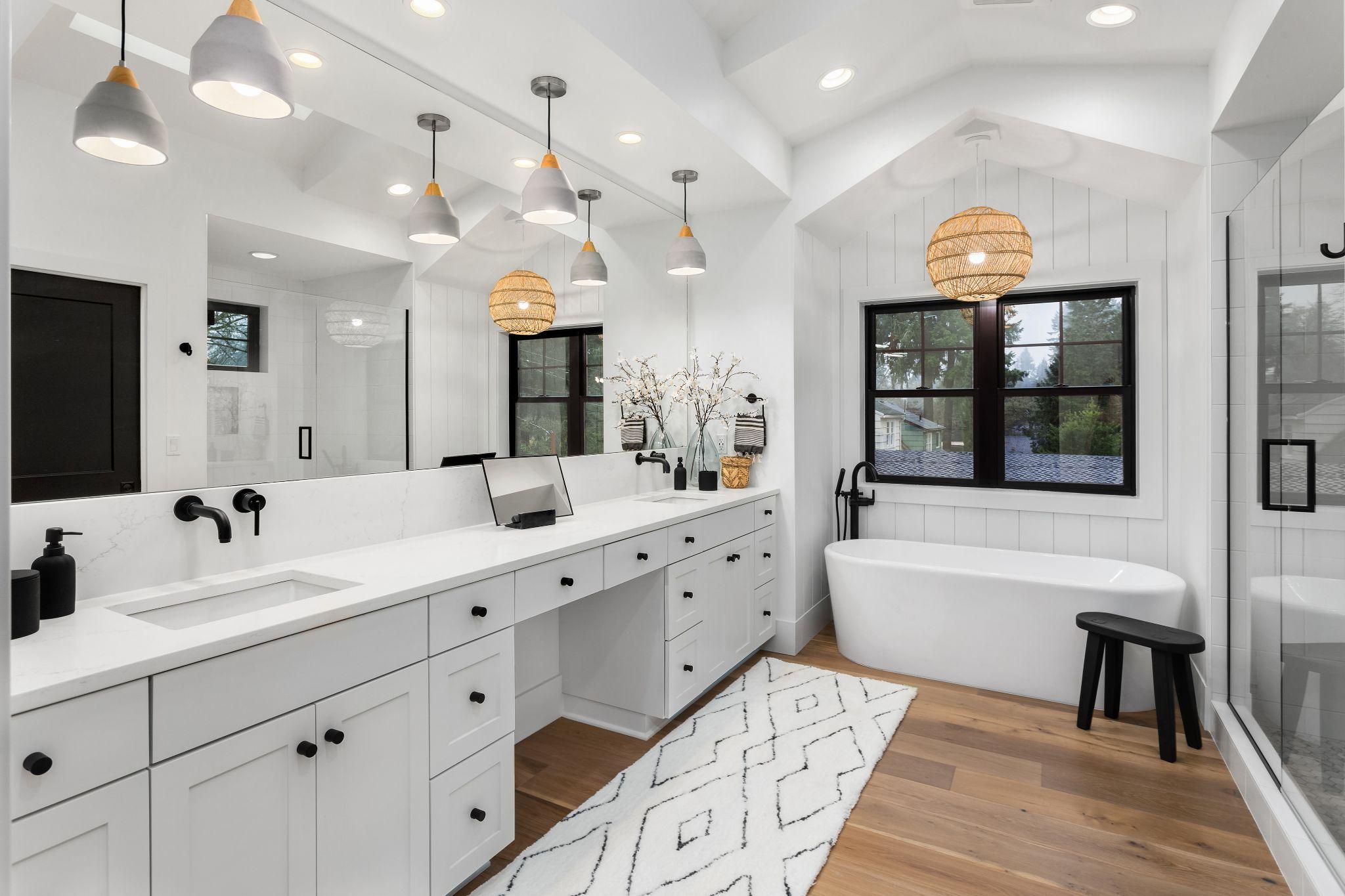
Beautiful bathroom in luxury home with double vanity, bathtub, mirror, sinks, shower, and hardwood floor

When you have renovation resolutions you want to accomplish, make a list of how you want to transform your kitchen or bathroom. Some ideas to help get you started include:

  • Low-Flush Toilets
  • Water-Saving Fixtures
  • New Shower
  • New Bathtub
  • More Storage Space
  • New Energy-Efficient Appliances

Make Energy-Efficient Improvements

Woman controlling temperature with a smart thermostat mounted on the wall at modern apartment.

There are many different ways to make your home more energy efficient, such as:

  • Have a smart thermostat installed.
  • Upgrade to a tankless water heater.
  • Have solar panels installed.
  • Insulate any exposed plumbing lines.
  • Insulate your tank-type water heater.
  • Top off your attic insulation.
  • Upgrade your windows.
  • Seal air leaks around doors and windows.
  • Replace your air conditioning and heating system if it is more than 15 years old.
  • Upgrade your lighting to LED smart bulbs.

Improve Indoor Air Quality

Most people are surprised to discover their indoor air quality is worse than the air outside. Have your indoor air quality tested by your HVAC technician. After the test, they will make recommendations on how you can improve the air quality inside your house.

Have Air Ducts Cleaned and Sealed

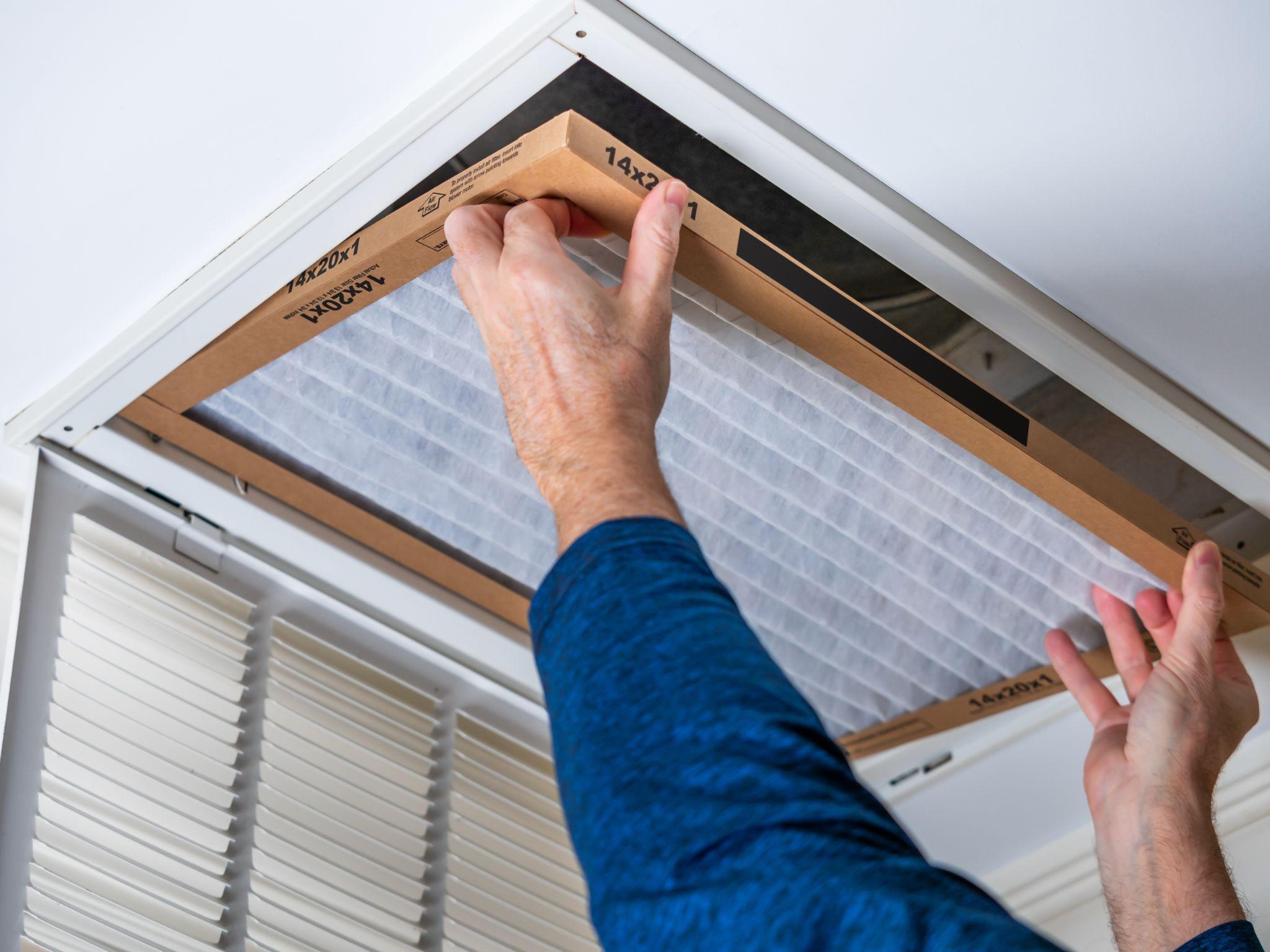
Man replacing dirty HVAC air filter in ceiling vent. Home air duct system maintenance for clean air.

Part of poor indoor air quality is when there are air leaks in the air ducts. Having these cleaned and sealed will improve the air quality and reduce the amount of cooled or heated air lost.

Have Your Water Tested

Even if you have city water, there can still be things in the water that affect its smell and taste. Have your plumber test your water to find out exactly what is in it.

Afterward, they can recommend an appropriate water filtration system to suit your needs. If you have hard water, you may also want to consider getting a water softener as part of your new system.

Test Your Smoke Detectors

The start of the new year is a good time to test all the smoke detectors in your house to ensure they are working correctly. You should also replace the backup batteries at the same time.

Have a Carbon Monoxide Detector Installed

If you use natural gas in your home for cooking, hot water, or heating, it is highly recommended to have a carbon monoxide detector installed. Carbon monoxide detectors can alert you when there is a gas leak.

Have Your Water Heater Serviced

Whether you have a tank-type or tankless water heater, you should have it serviced annually. Part of the annual service to help it last longer includes flushing out the water heater to remove any build-up and debris that have accumulated in the unit.

Replace Old Plumbing

If you have an older home with steel or metal plumbing lines, you should consider getting new plumbing, especially if you notice rust in your water. Replacing your plumbing now will also help you avoid potential water leaks and other problems that occur with steel and metal plumbing lines the older they get.

Have Your HVAC System Serviced

Scheduling bi-annual maintenance on your air conditioning and heating system will keep it working correctly and help it last longer. Ideally, you should schedule air conditioning maintenance in the spring and heating maintenance in the fall. However, if you have not had any maintenance performed lately, schedule maintenance as soon as possible.

Add a Splash of Color

It is easy to give the rooms in your home a new look and feel by adding some color. For example, you could repaint the walls in a trendy color or change the color of the cabinets in your kitchen or bathroom by painting them.

Keep Your House Clean

The new year is a good time to establish a weekly cleaning schedule for your home and stick to it. Decide what chores you want to accomplish and when, so you still have time to relax after working all week.

You can even break your list of chores up so you do things on alternating weekends, such as vacuuming, sweeping, and mopping one weekend and dusting and washing sheets and bedding the following weekend.

Schedule Drain Cleaning Plumbing Services

Soap, food particles, grease, hair, and other gunk build up inside drain pipes, eventually leading to clogged drains. This icky stuff can also start to smell and stink. Scheduling plumbing services to have your drain lines cleaned annually can prevent clogs and keep drain lines from stinking and working correctly.

Why Is Creating Home Resolutions Important?

One of the benefits you gain when you create home resolutions in the new year is feeling like you are in a new home. You will notice your house has a different look and feel, making it more inviting, comfortable, and appealing. In addition, many of the improvements you make throughout the year will increase the value of your house.

Furthermore, when you improve your home’s indoor air quality and water quality, you and your family benefit. You will notice feeling healthier and having fewer allergies, respiratory problems, and illnesses.

Schedule HVAC and Plumbing Services Today

Whether you are renovating your kitchen or bathroom, want to make energy-efficient improvements, or want to schedule maintenance for your HVAC system or plumbing, you can count on Christianson Air Conditioning & Plumbing.

Our HVAC technicians and plumbing professionals can take care of all your home’s heating, cooling, air quality, water quality, and plumbing needs in San Antonio and the Austin Metro area. Contact us at 512-246-5400 today.

Why Do I Need Air Conditioning Duct Cleaning?

Areas of the home that frequently get overlooked when cleaning are the air ducts. Regular air conditioning duct cleaning from an experienced HVAC company can help keep your home and indoor air quality cleaner. Another benefit of air duct cleaning is improved air conditioner efficiency and energy savings.

How Do Air Ducts Get Dirty?

Air ducts do get dirty for various reasons. Dust and dirt can get inside the ducts as air is recirculated through the home. One of the more common causes is running your air conditioner without an air filter or with a dirty filter.

When the AC system is run without an air filter, there is nothing to stop pet hair, dust, dirt, and pet dander from getting inside the AC system and into air ducts. Additionally, operating the AC without a filter will shorten the lifespan of the air conditioner and result in more frequent repairs.

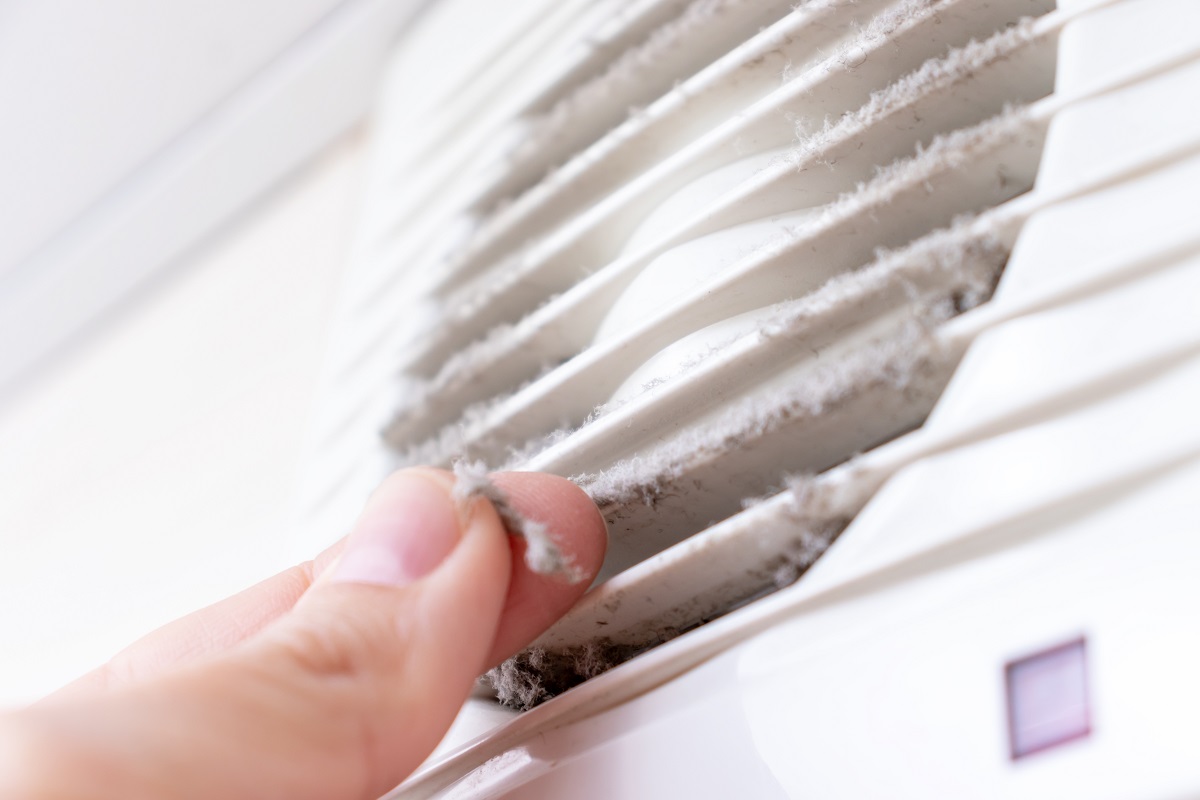
dusty white plastic ventilation air grille and a hand holding dust by fingers

A dirty filter is not able to remove any more particles from the air. As it attempts to do so, it gradually forces dirt through the filter and recirculates it into the home. It also strains the air conditioner to work harder to cool the home, which leads to increased energy bills and frequent repairs.

A third cause is also related to improperly sized air filters. If the air filter does not fit tightly and there are gaps around it, dirt can get sucked back in through the return air vent. Then it is recirculated into the air ducts and home.

Another cause is if there are disconnected, deteriorated, or poorly connected ducts where there are air gaps. When the AC runs, not only does the cooled air escape through these openings, but it also draws in dust, dirt, and other debris that is deposited inside ducts and blown into the home.

What Are the Common Signs I Need Air Duct Cleaning?

The most common sign you need air duct cleaning is if you notice your home gets dusty very quickly. If you dust, and then within a few days there is a layer of dust, the air ducts are dirty.

You may also notice that there are heavy dust and dirt deposits on air vents that keep returning quickly. Another common sign is a noticeable increase in your cooling bills. This indicates problems with the ductwork.

How Often Do I Need Air Duct Cleaning?

The frequency of air conditioning duct cleaning depends on several factors such as:

  • The age of your AC system.
  • How well you maintain the AC system.
  • Whether you have done any home renovations.
  • How often you change the air filter.
  • How quickly your home gets dusty.

Ideally, you will want to schedule air duct cleaning and maintenance every three to five years.

What Happens if Air Ducts Aren’t Cleaned?

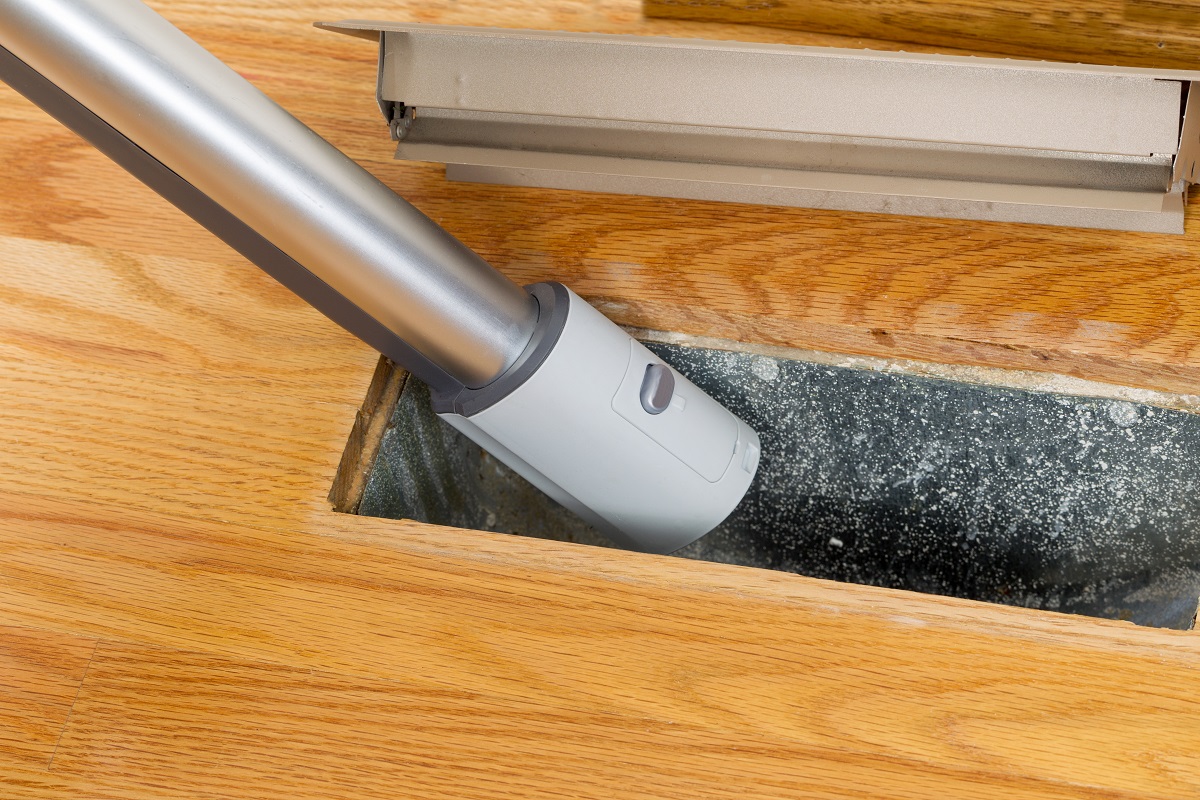
Cleaning inside heating floor vent with Vacuum Cleaner

If air ducts aren’t cleaned, it can lead to a host of problems with your air conditioner, and it lowers the indoor air quality. Your home will constantly be dusty and seem dirty, no matter how much you clean. You will notice your cooling bills increasing for no apparent reason.

You will notice that your air conditioner has problems cooling or it breaks down often. You will need to change a 3-month air filter every month. Additionally, your air conditioner will not last as long and will need to be replaced much sooner.

As you can imagine, regular duct cleaning from experienced AC technicians will help prevent these problems.

If you notice any of the signs of dirty air ducts or it’s been a while since your AC was last serviced, please feel free to contact Christianson Air Conditioning & Plumbing at 512-246-5400 to schedule air duct cleaning and AC maintenance service in the San Antonio, Austin Metro, Temple, and New Braunfels areas.

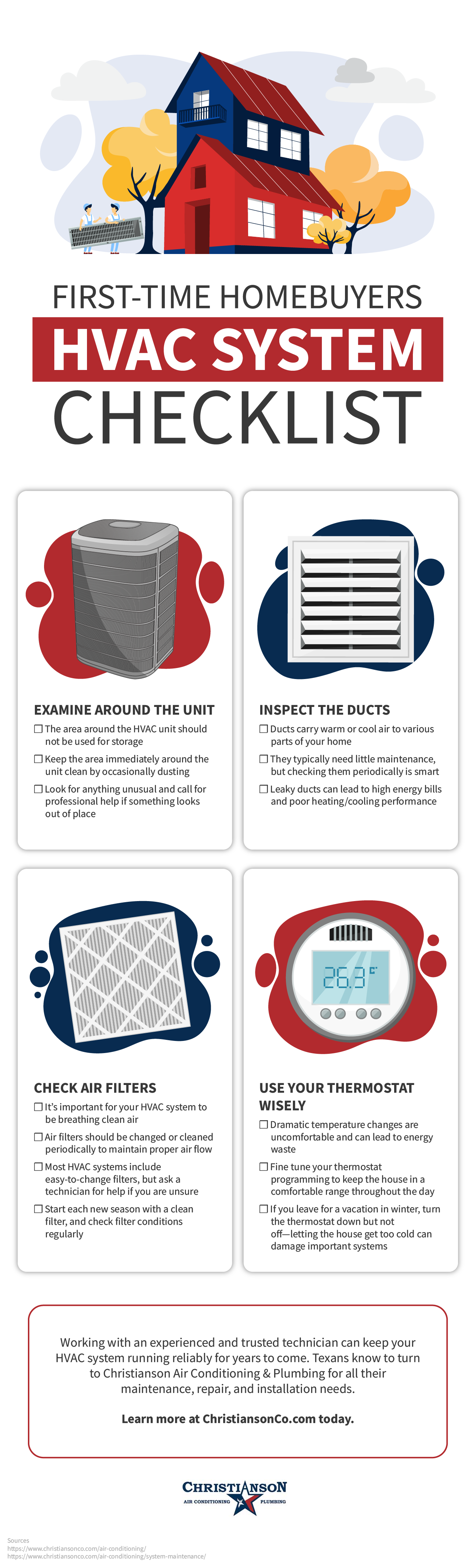
First-Time Homebuyers HVAC System Checklist

When you buy a home for the first time, you need to make sure to check several things. One of the biggest things you’ll want to check is the HVAC system to make sure it’s functioning well. If it’s not, you could be in for some expensive repairs and uncomfortable days.

Examine the HVAC unit itself to start, and make sure nothing looks out of place. Next, you can inspect the ducts, even though they require a lot less maintenance than other parts of the HVAC system. Perhaps the easiest part of the system to inspect is the air filters—and clean them periodically.

Once you’re satisfied that your HVAC system works, don’t forget to use your thermostat wisely. Doing so can cut down on dramatic temperature changes and save money.

Buying a home is a huge decision. You’ll want to make sure everything is in good working order, especially your heating and cooling system. To read the complete checklist of what you need to examine in an HVAC system, read the infographic below.

First-Time Homebuyers HVAC System Checklist Infographic

Click below to embed this infographic into your website:

Energy-Efficient Smart Thermostats: How Do They Work?

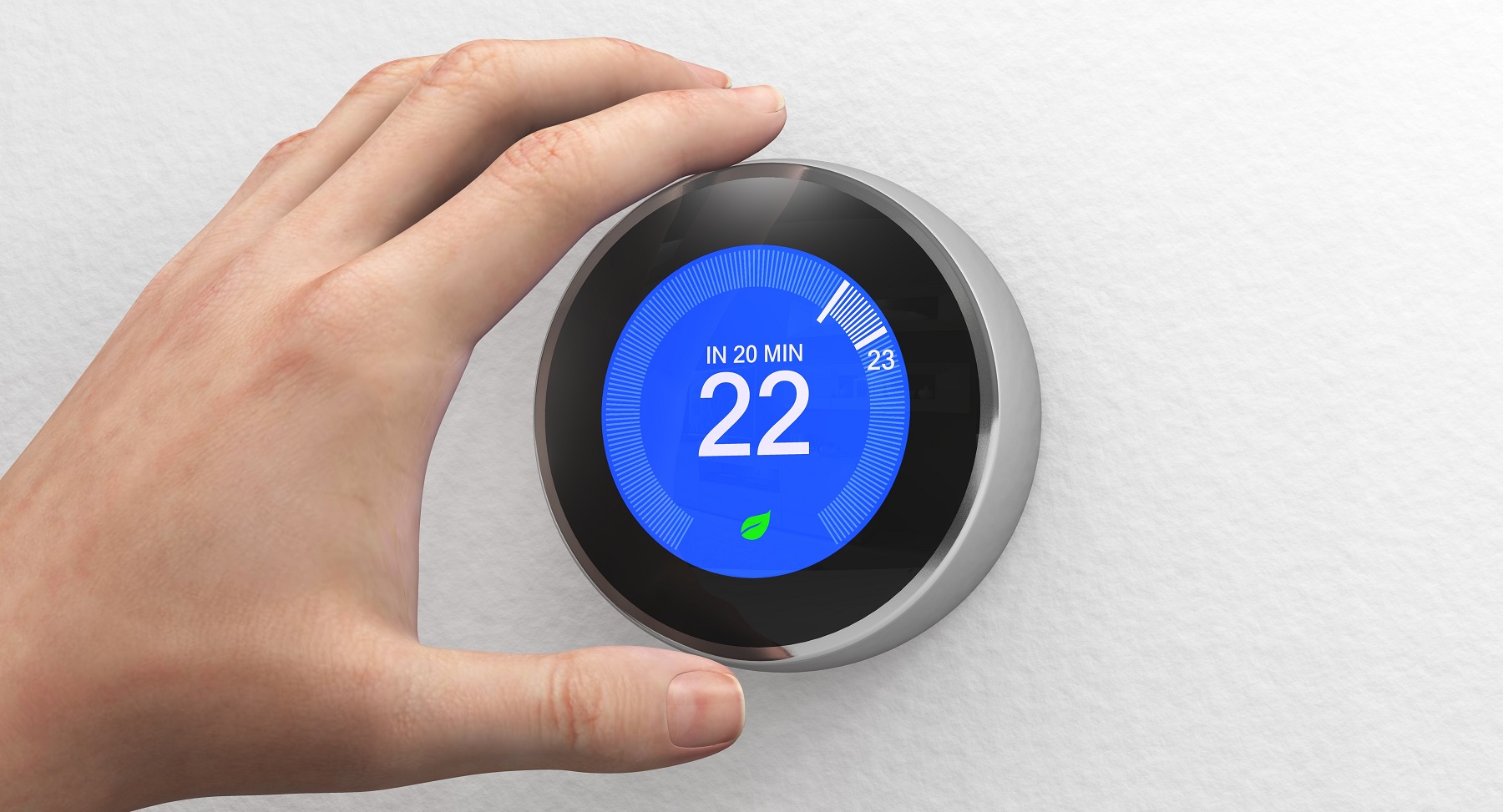
Energy-efficient smart thermostats are those sleek and cool-looking devices with the digital LED displays used to control your air conditioning and heating system. They are very different from those “old-school” dial thermostats, where you turn the dial to set the temperature you want inside your home.

They are also an upgrade from programmable thermostats that feature basic LED displays, similar to old cell phones. One of the key differences between smart thermostats and dial-style and programmable models is they connect to the internet. This feature helps you tap into a wide range of features and benefits to further expand the functionality of the thermostat.

Raumthermostat digital - Rund - Hand

Energy-Efficient Smart Thermostats – Features and Benefits

Besides being able to control the thermostat from the interface on the wall like conventional thermostats, smart thermostats also include:

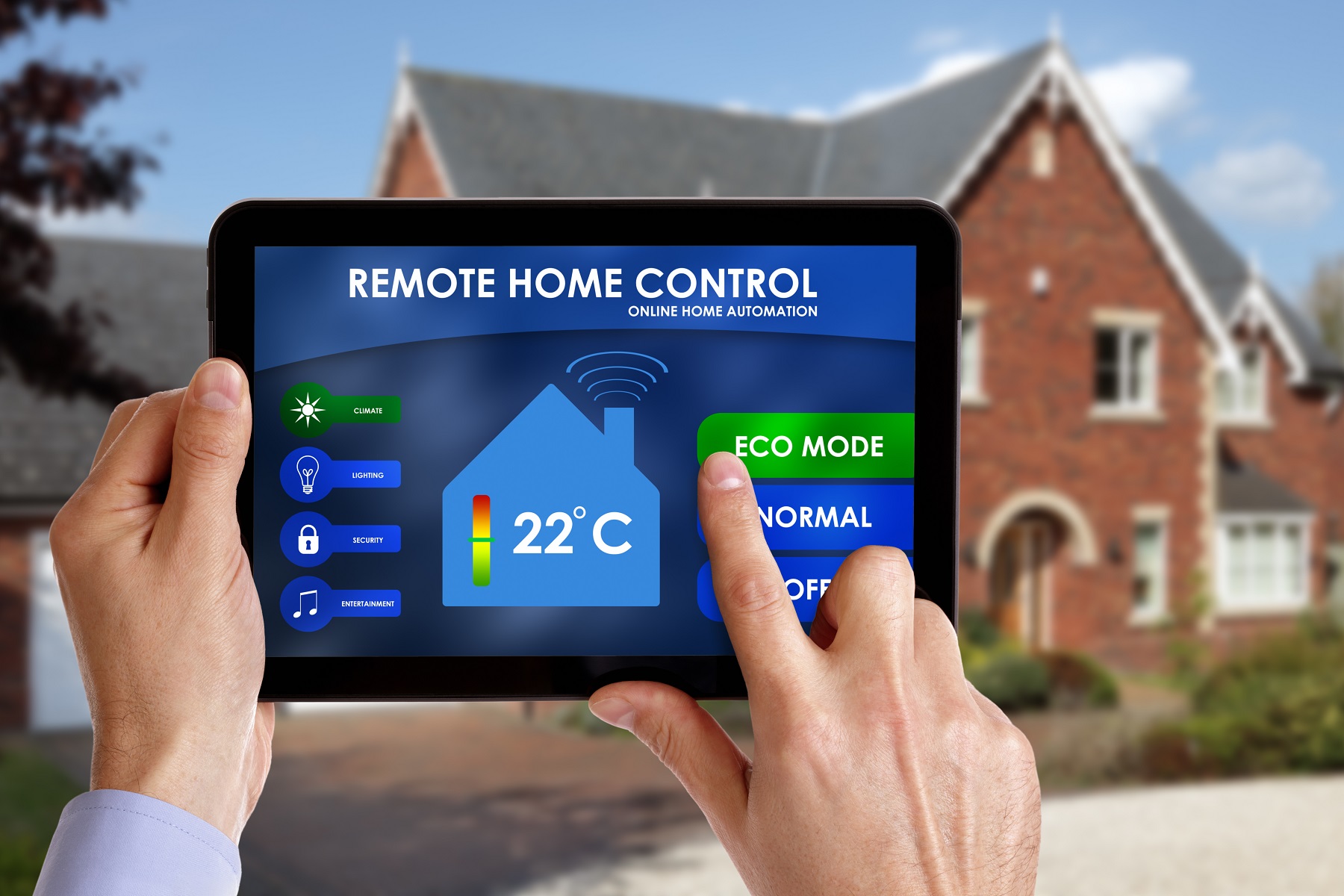
  • Access through a smartphone/tablet app. Each smart thermostat manufacturer offers an app so you can access the settings in your home from anywhere you have an internet connection. For instance, you could adjust the settings a few degrees cooler or warmer than you had programmed earlier in the day before coming home from work. Alternatively, if you happen to leave for a vacation and forget to set the thermostat to “vacation mode”, you could do it from your phone without having to turn back.
  • Smart thermostats integrate with voice-activated personal assistants. Amazon Alexa and Google Assistant can both be taught the appropriate “skill” to interface with smart thermostats. Imagine you just sat down to eat dinner and you are hot. Instead of having to get up to turn down the thermostat, you just ask Alexa or Assistant to do it for you.
  • Smart thermostats learn your routine. With the right setup, smart thermostats use AI (artificial intelligence) to learn your routines to know when you are home or away. This feature allows the device to adjust temperature levels based on your previous preferences.
  • Smart thermostats can control multiple zones. In larger homes that have two or more separate heating and cooling units, a single smart thermostat can be configured to control the settings for each system or zone.

Additionally, certain models can track your energy usage, as well as build an energy profile for your home. Best of all, smart thermostats can connect to other devices like smart dehumidifiers and smart humidifiers and also control those devices.

remote home control online home automation system on a digital tablet

How Does Smart Thermostat Installation Save Money on Energy Bills?

With a traditional dial-style thermostat, your home is cooled or heated constantly at that same setting. Most people are away from home between 8 to 10 hours each day. Do you really need to keep your home cooled or heated to the same setting all day? Not necessarily.

Just like a programmable thermostat, a smart thermostat can be programmed to change the temperature settings so you use less energy to cool or heat your home when you are away. Unlike programmable thermostats, smart thermostats can automatically make temperature changes even if you forget to program or change them yourself.

Another way smart thermostats help save you money is they can be configured to track your local weather conditions. If the weather ends up being hotter or colder than you anticipated, the thermostat will adjust your home’s cooling and heating settings to match the weather.

To learn more about energy-efficient smart thermostats, installation, or to upgrade to one when getting new AC installation, please feel free to contact your nearest Christianson Air Conditioning & Plumbing location in Temple, New Braunfels, San Antonio or Austin Metro today!

Heat Pump Systems vs. Traditional HVAC Systems

You have a few different options when you are shopping around for a new air conditioning installation for your Texas home. Two of your options are traditional HVAC systems and heat pump systems. Both systems can heat and cool your home, but there are a few key differences in how they work.

You need to understand these differences in order to choose the best cooling option for your home. Let’s take a look at how each one works, how they are installed, and which one is most efficient for those hot Texas summers.

How Heat Pump Systems Work

The name “heat pump” can be misleading because you think it would just heat your home. The name of this system actually refers to how it operates. A heat pump moves warm and hot air from one area to another instead of heating the air.

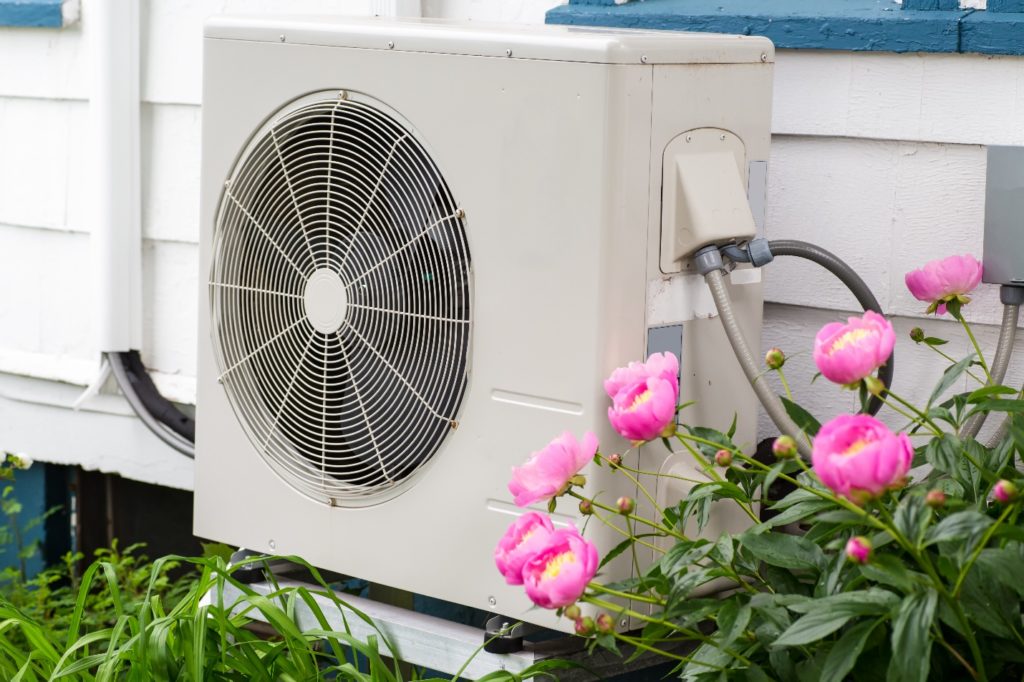
air conditioning unit

The warm air being transferred through the heat pump will do one of two things. In the summertime, it moves the hot air from inside the home into the unit, and then absorbs the heat from the hot air. Next, it blows the now-cooled air back into the home.

The cooling function on heat pump systems functions in a similar way to those on an air conditioning system. The primary difference is a heat pump can also be used to heat the home, and it does not require a separate furnace or heating unit. During the cooler winter months, a heat pump absorbs the heat energy found in outdoor air and blows the warm air into the home.

How Traditional AC and Heating Systems Work

With a traditional air conditioning system, hot air is drawn out of the house through the return air duct. It is passed over cooling coils inside the outdoor unit. Inside the coils is a refrigerant that absorbs the heat from the air and cools it. After the air is cooled, it is blown back into the home.

If you also want to heat your home, you need a separate furnace inside the home or a packaged outdoor unit. Packaged systems are common in Texas, as they include the AC system and a separate heating system that is installed outside your home. The main benefit of a packaged system is it frees up space inside the home where a furnace and other shared system components would be installed.

Heat Pump Systems Installation

Heat pump systems consist of various parts and components. There is an indoor unit that will have a fan, air handler (blower motor), and cooling/heating coils. There is also an outdoor unit that contains its own cooling/heating coils and a fan to help move air over the coils.

The heat pump is installed in a similar way to a conventional split HVAC system. Once installed, the air handler is connected to the ductwork inside your home. There is a return air vent and an air filter as well. In place of a traditional heating coil, the heat pump has a reversing valve. This valve allows the refrigerant to flow in opposite directions. Which way the refrigerant flows will depend on whether the system is set to heat or cool the home.

There is a variant available with heat pump systems for homes without air ducts, called a ductless system. These systems are typically mounted on the walls in the rooms you want to heat and cool. They are connected to a small outdoor unit.

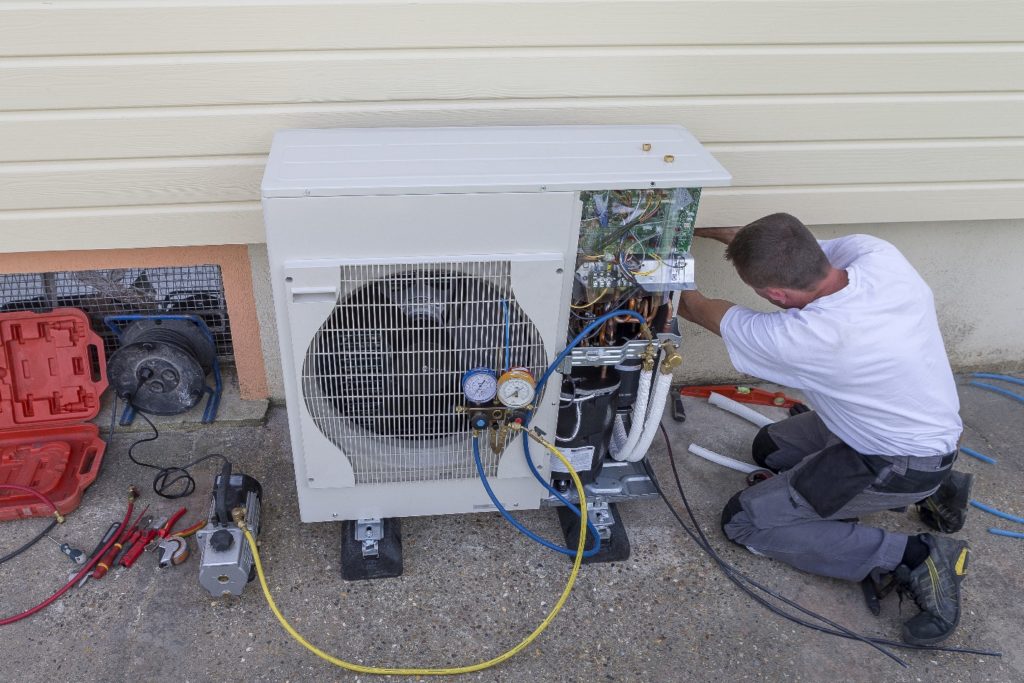
technician working on a heat pump outside

Traditional Heating and Air Conditioner Installation

With a traditional heating and cooling system, the furnace part of the system is installed indoors while the cooling unit is installed outdoors. These two systems are connected together inside, where they share some similar components like the air handler, blower motor, air filter, and ductwork.

With a packaged HVAC system, the entire unit is installed outside the home. Once installed, it is connected to the existing ductwork. The air handler, blower motor, and heating system are all contained within the outdoor cooling unit. Many homes in Texas have these because our winters tend to be shorter and we rely upon our air conditioning systems much more.

Which Type of System Is More Energy Efficient?

You can find both heat pump systems and traditional HVAC systems which are very energy efficient. Ideally, you want a system with a SEER rating of 13 or more. A SEER rating of 18 is considered very efficient.

Part of the system’s efficiency does depend on your preferred indoor air temperature. This will determine how often the system has to run. In general, and under normal operating conditions, both energy-efficient heat pumps and air conditioning systems tend to cost about the same to operate during the hot Texas summers.

How Long Does Each Type of System Last?

With regular maintenance at least twice a year, heat pump systems last about 12 to 15 years if they are constantly run every day. AC systems, on the other hand, can last between 15 to 20 years since you are only using them for about eight months or so each year.

Heat Pump vs. Air Conditioning Installation Costs

It is important to keep in mind the costs for heat pump or air conditioning installation do vary based on the features, options, brand, size, style, and type of system you choose to have installed. That being said, please remember the following are just generalized estimated installation costs and should not be considered an actual quoted system installation price.

Heat pumps can range in cost from as little as $700 for the smallest systems to around $3,000 for larger or multiple systems. Traditional air conditioning systems can range from around $1,500 for smaller units to around $3,400 for larger or multiple systems.

In addition, ductless systems tend to cost more and have their own range of prices. These will also vary based on the number of rooms you need to heat and cool inside your home. For the most accurate system and installation costs, it is best to request a free quote from one of our qualified heating and cooling installation professionals.

Which System Is Best for Hot Texas Summers?

Heat pump systems are well suited for moderate climates that do not have very cold winters. In Texas, they can work rather well if you do not need to keep your home at lower indoor air temperatures in the mid to high-60s. If you are comfortable with the thermostat set to 76 to 78 or even 80, then a heat pump could be the right choice for your home.

If you like your home cooler, then a traditional air conditioning system could be the better option. This is because traditional systems are able to cool and reduce air temperatures much faster on extremely hot days.

air condioner repairman thumbsup

Other Considerations When Selecting a New System

One of the most important things to consider, aside from efficiency, system cost, and installation cost, is the size of the unit itself. You want a unit that is sized correctly for your home. If you get a unit that is undersized, it will not be able to keep up with your cooling and heating demands. Not to mention, it will not be energy efficient at all.

Conversely, you want to avoid getting an oversized system too. Having a larger system than your home needs will cost more to operate and not provide any noticeable benefits to keeping your home cooled or heated. In addition, you will have much higher heating and cooling energy bills.

In the end, it really comes down to your own personal heating and cooling needs. If you only have a few rooms you need to heat and cool or a small home, a heat pump could be best for you. If you have a larger home or like to keep it much cooler during the hot Texas summers, then a traditional air conditioning system could be perfect.

For assistance in deciding whether heat pump systems or traditional HVAC systems are best for your home, please feel free to contact your nearest Christianson Air Conditioning & Plumbing location in New Braunfels, Temple, San Antonio, or Austin Metro today! We would be happy to discuss your heating and cooling needs and help you find the most cost-effective and energy efficient system for your home.

How Can a Dehumidifier or Humidifier Benefit My Texas Home?

It is important to ensure the level of indoor humidity in your Texas home is kept at the right percentage level year-round. At Christianson Air Conditioning & Plumbing, we are frequently asked: “Do I need a humidifier or dehumidifier for my home?” To answer this question, let’s look at what humidity is and how it can affect indoor air quality.

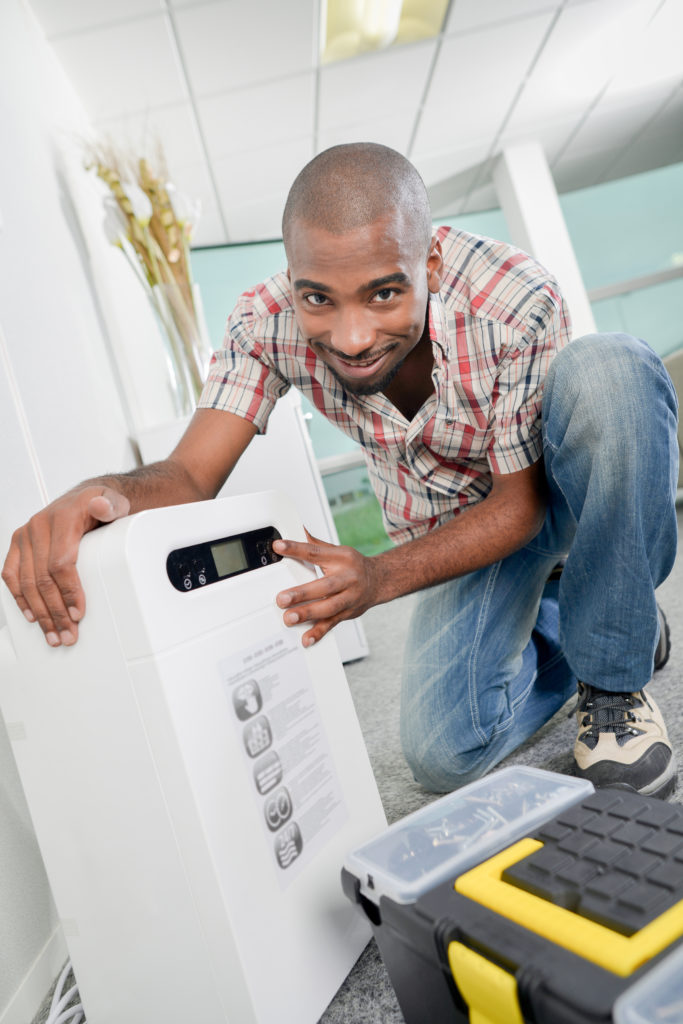
Man installing a dehumidifier

Humidity is the amount of moisture that is in the air. Ideally, you want to make sure the humidity level in your home is less than fifty percent. A good average to aim for is around forty percent. Maintaining around forty percent humidity in your Texas home will ensure you are comfortable.

This humidity level also helps promote better indoor air quality, alleviates problems with allergies and asthma, and reduces the spread of illnesses. In addition, you will discover you can set your thermostat a few degrees higher in the summer and a few degrees lower in the winter and still be comfortable.

Why You Need a Dehumidifier

As we all know, during the hot Texas summers, humidity levels can be rather high and make going outside almost unbearable. Even in your home during the summertime, humidity levels can increase and cause problems with mold and mildew.

If you have allergies or suffer from asthma, increased humidity levels can make it difficult to breathe. Not to mention, no one likes feeling moisture on their skin while they are trying to get a good night’s sleep. It is important to speak to a lung doctor as well to see what else you can do in your home to help you with your breathing, especially if you do suffer from these issues mentioned before.

While your air conditioner is designed to lower the indoor air temperature, it does not fully remove all humidity. You may have noticed your home feels warmer than what the thermostat says on those 90+ summer days. This is because the humidity inside is higher. When humidity levels are higher, they can make it feel warmer.

A dehumidifier can help by removing the excess moisture from the indoor air. As the water is extracted from the air, it makes it drier. Drier air feels cooler on the skin. Additionally, you won’t have to worry about condensation inside the home, which can promote mold and mildew growth.

Why You Need a Humidifier

The steam from the humidifier in the night

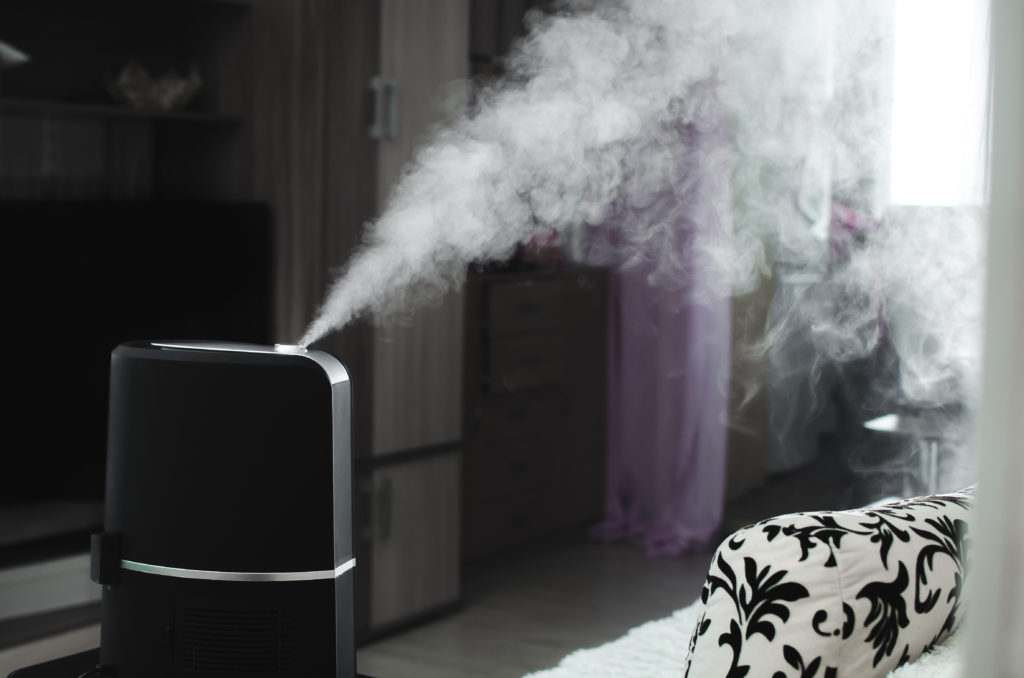
Humidifiers, on the other hand, add moisture to the indoor air. They are perfect for your home in the winter when humidity levels can drop below 40 percent. As the air becomes drier, it makes it easier for bacteria and viruses to be spread. It also can cause dry and chapped skin. Using a humidifier can be a wise choice in such options. To enhance the effects, many people all over the world tend to buy distilled water from suppliers like Golyath or the ones in their area to use in the humidifiers. Distilled water can reduce the chances of mold colonies forming inside the humidifier’s tank. This in turn can prevent the spread of bacteria and viruses.

Another side-effect of drier air with low humidity levels is it will make you feel colder. If you have ever gotten the chills when temperatures dip down to the 50s or 60s, it is probably because there is very little humidity in the air.

Furthermore, dry air is not good for anything made from wood, including your furniture and flooring. Low humidity levels will suck moisture out of the wood and cause it to dry out. Dry wood can become brittle and break easier.

Hopefully, you can see the benefits of getting a dehumidifier and humidifier for your Texas home. To learn more about getting a dehumidifier and humidifier installed, or for AC repair and plumbing repair services, please feel free to contact your nearest Christianson Air Conditioning & Plumbing location in San Antonio, Temple, New Braunfels, or Austin today!

Top 10 Benefits of Having a Garbage Disposal

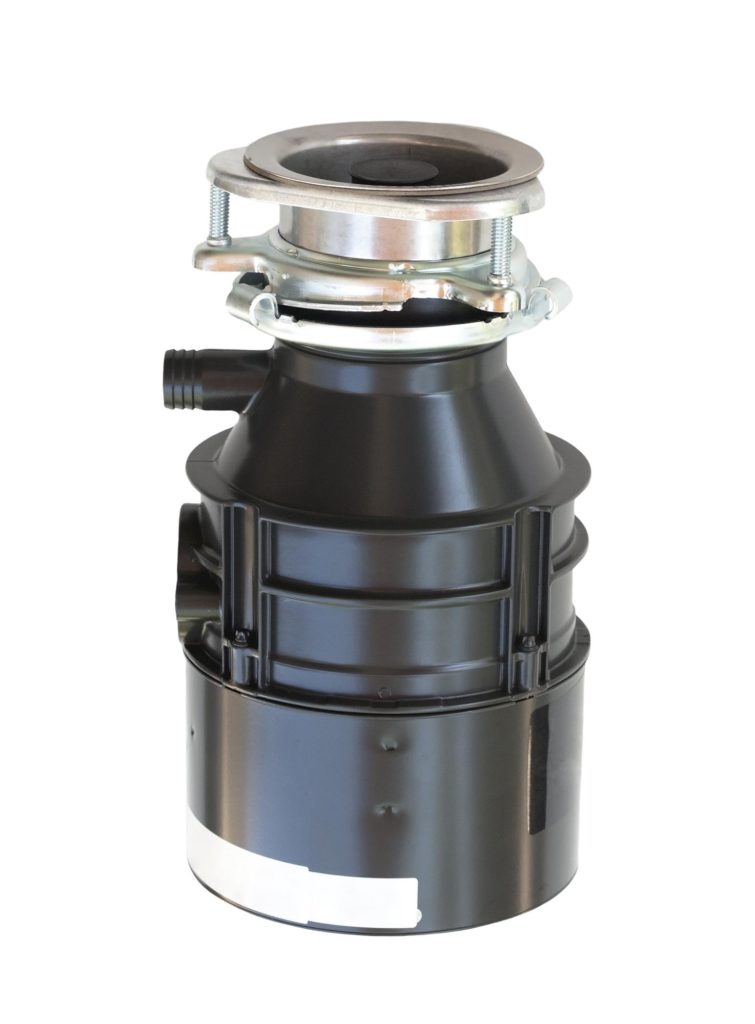
Installing a garbage disposal unit under your kitchen sink is an alternative to sending food scraps to the landfill or composting them on your own. The process is simple. Throw your leftovers in, open the tap, and flip a switch; the machine then shreds the material into tiny pieces that can pass through plumbing pipe. Although they last a while, garbage disposal replacement will eventually be needed, but you can count on a licensed plumber for prompt service.

Garbage Disposal

Here are 10 benefits of a garbage disposal for any homeowner.

Saves Time

Disposal of kitchen waste is a faster process. The garbage disposal breaks up food items, so you don’t have to make up the garbage and take it out. That means more time to relax after finishing a meal.

Less Trash

There is much less food waste to throw out, reducing the amount of work. You also use less plastic and paper every day. There is less to get from the store and fewer things to throw out.

Reduced Kitchen Odor

Once disposed of, food waste will not be left in a garbage can to rot. Kitchen odors are, therefore, eliminated. Food is ground up by a motor, and you don’t have to call on local plumbers to find the source of bad smells if they’re not coming from the trash.

Fewer Pipe Leaks

Food scraps are ground up, so there’s less pressure on drainage pipes. You won’t have to call a 24-hour plumber to fix a clog, leak, or burst pipe.

Cost Savings

You’ll save cash not requiring a 24-hour plumbing service as often. The disposal unit helps to improve drainage and protect your pipes. It also avoids spending money on trash bags and other supplies.

Long-Lasting

Although one garbage disposal unit differs from another, they can last a few years. Some last a decade or more. You might spend more with a longer warranty, although that doesn’t mean the machine will last longer.

Protect the Environment

Disposing of your own food waste cuts down on greenhouse gases emitted by garbage trucks, and less methane produced at landfills. Plus, wastewater treatment plants can use it as a source of energy and fertilizer.

Benefits Garbage Disposal

Choice of Models

You can select garbage disposal units that are most convenient for you. Continuous-feed models let you throw things in as it grinds up old waste. With batch-feed models, the stopper must be closed before the blades activate, improving safety.

Useful Features

Depending on the model, you may have an auto-reverse mode to clear jams or higher horsepower motors able to cut up bones and other hard waste. A quick-mount neck speeds installation, and look for safety covers to prevent accidental activation before the device is closed.

Repair by Plumbing Experts

Many plumbing services are experienced with garbage disposal repair and replacement, which is one more benefit of owning one. That means you can rely on the same company that fixes your drain, faucet, toilet, or dishwasher. For professional kitchen plumbing service, you can depend on Christianson Air Conditioning & Plumbing for prompt service and efficient repairs and replacements. Contact us online or call one of our local numbers to schedule service.