Toilet clogs can occur for a variety of reasons. You could use too much toilet paper. Your toddler could flush toys down the toilet. You or someone in your home could be flushing things that are not meant to be flushed. Even your sewer pipe outside your home could be damaged or have tree roots growing through it, causing the clog.
What items should never be flushed down the toilet?
There are several items that should never be flushed down the toilet, including:
- Disposable Diapers
- Paper Towels
- Sanitary Napkins/Tampons
- Condoms
- Paint
- Flour
- Facial Tissues
- Cotton Swabs and Cotton Balls
- Bandaids
- Medications
- Cigarette Butts
- Oils and Grease
- Kitty Litter
- Any Type of Hardening Materials (i.e. Plaster, Caulk, etc.)
- Chewing Gum
- Baby Wipes
- Contact Lenses
These types of items can cause toilet clogs and even damage your home’s plumbing.
Fortunately, if you are like most homeowners, you have a plunger handy to help deal with toilet clogs by using these simple steps:
Step #1: Use the right type of plunger.
There are two different types of plungers—a standard plunger that is round, and a flange plunger that has a rounded extension on the end. To unclog a toilet easier, you need a plunger with a flange. A standard plunger can also be used but may not be as effective at removing more difficult clogs.
Step #2: Make sure there is water in the toilet bowl.
You need water in the toilet bowl. If the bowl is low in water, remove the back cover from the toilet tank and carefully pull up on the flapper to allow a small amount of water to fill the bowl. You want to avoid flushing the toilet because it could overflow or fill the bowl up with too much water.
Step #3: Insert the flange into the drain opening in the bowl.
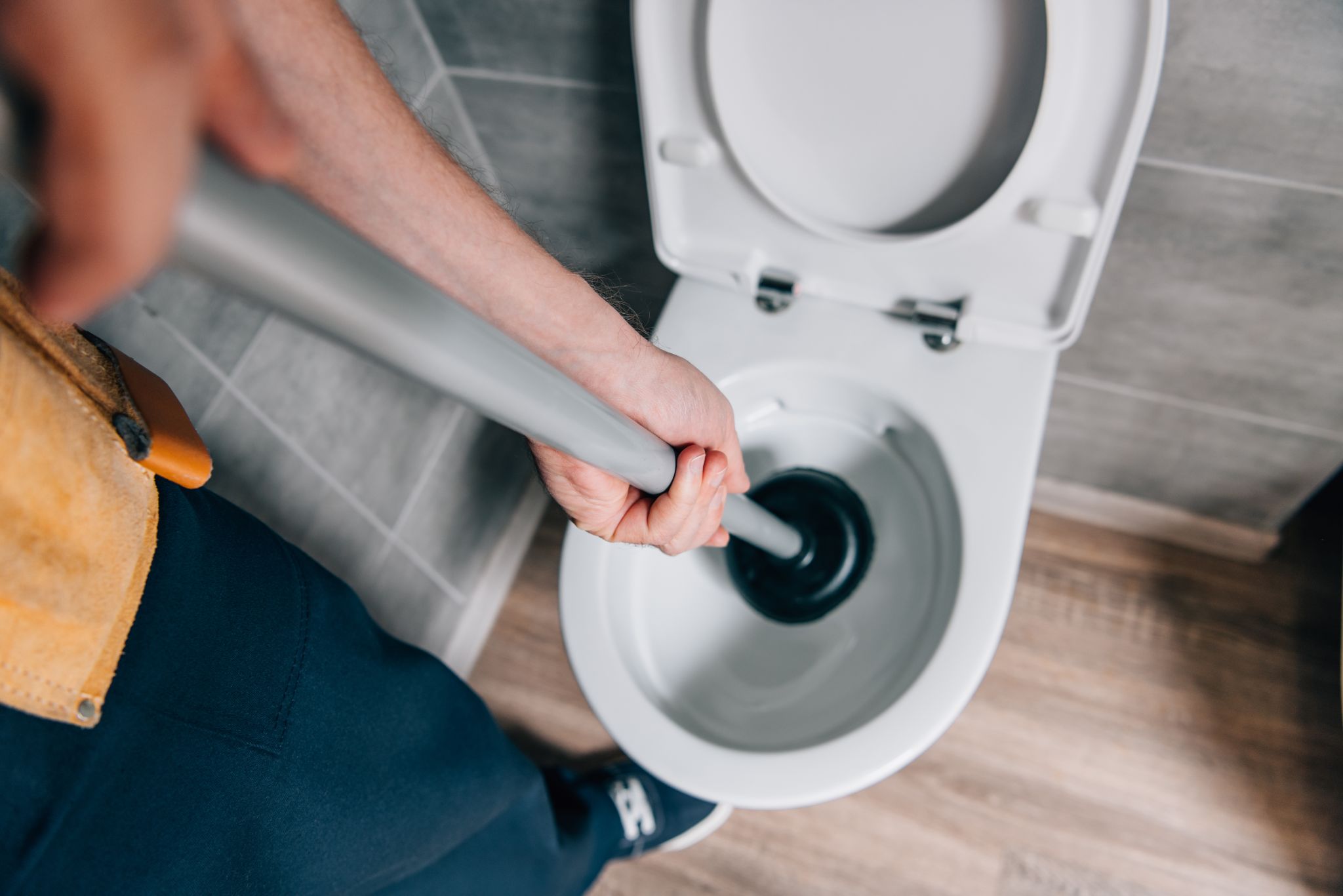
To help ensure you get the most pressure when plunging, you need to make sure the flange is in the drain opening. The rounded base of the plunger should also fit snugly over the drain opening.
Step #4: Start slowly before more forceful plunges.
For the first plunge compression you do not need to be very forceful. You want to release the air from inside the plunger. If you use a forceful plunge, the air could cause water and any icky stuff in the bowl to spray upward and out of the toilet bowl.
Step #5: Alternate between forceful and gentler plunges.
Alternate the amount of force you use after releasing the air from inside the plunger. Doing so helps loosen the clog faster.
Step #6: Flush the toilet once the clog is removed.
You will want to verify the clog has been cleared and water will drain away correctly. Make sure to leave the plunger in the bowl when you flush it in case it is still partially clogged. This way, you can start plunging right away, taking advantage of the force of the water to help remove the clog.
What if the toilet clog remains after using a toilet plunger?
For more difficult clogs, there are several different things you can try to do before you call a plumber, including:
- Put a gallon or two of water in a pot and bring it to a boil on your stove. Once it is at a rolling boil, remove it from the stove and carefully carry it into the bathroom. Slowly pour the boiling hot water down the toilet drain opening. The boiling water can help loosen the clog.
- Pour equal amounts of baking soda and vinegar into the toilet drain. Make sure to add the baking soda first. When the vinegar comes into contact with the baking soda, it creates a natural chemical reaction to help unclog the toilet.
Immediately after trying either one of these, make sure to plunge the toilet to help get the hot water or baking soda and vinegar mixture farther down into the drain line where the clog is located.
Is it okay to use chemical store-bought clog removers?
Chemical store-bought clog removers may sound enticing. However, what many people do not know is that they are only formulated for specific types of clogs. The harsh chemicals are also not safe for all types of plumbing and drain lines.
If you use chemical clog removers, you could make the problem worse. If the product does not work, now you have a drain line sitting full of harsh chemicals doing who-knows-what to your drain line.
Plunging the toilet and using the two “natural” methods mentioned above are your best bets to unclogging a toilet.
What if I still have a clogged toilet?
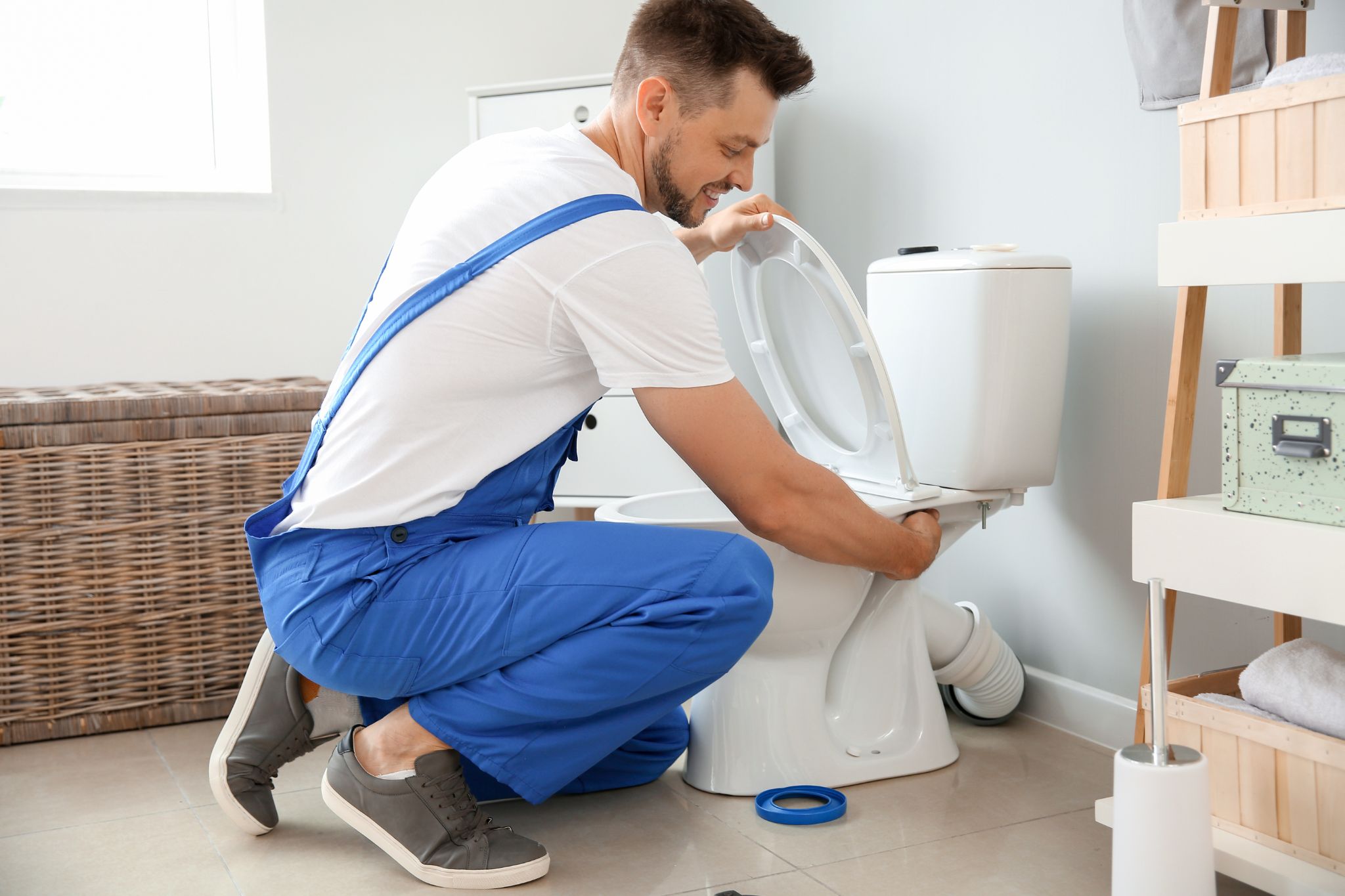
If the toilet clog is still present, now is the time to call a plumber for assistance. Your plumber has access to special tools and equipment like a sewer camera and toilet auger they can use to pinpoint the location of the clog and remove it for good.
For more severe clogs, your plumber may even need to turn off the water supply and remove the toilet. For example, your toddler might have flushed crayons or other toys down the toilet drain.
In other cases, the source of the clog could be in the sewer line in your yard. If it is collapsed or tree roots have grown through the sewer line, no amount of plunging will fix this type of clog.
As you can see, how to properly plunge a toilet is not that difficult or hard to do when using the steps we shared.
For difficult toilet clogs, drain clogs, and other plumbing problems in New Braunfels, Temple, San Antonio, and the Austin Metro area, please feel free to contact Christianson Air Conditioning & Plumbing at 512-246-5400 today!