Texans serving Texas since 1950

Call Us Now:

Austin Metro (512) 246-5400
San Antonio (210) 651-1212
Temple (254) 773-7175
New Braunfels (830) 627-2211

What Can I Do to Improve Water Quality at Home?

Posted on August 19th, 2020 by ChristainSon_Admin

With people spending more time at home due to the COVID-19 pandemic, one common question our 24-hour plumber has been receiving is what you can do to improve water quality at home. Water quality has to do with what is in the tap water.

There can be various minerals, calcium, additives like softeners, and so on. The quality of the water will also vary, depending on whether you have well water or city water. It is important to realize that tap water is not always what it seems.

There are acceptable limits of certain particulates allowed by the EPA and other government regulatory agencies. So, even if the annual water quality report shows details that the city water is safe, it does not mean there aren’t quality issues from the time the water leaves the treatment facility to when it reaches your home.

If you have well water, you, of course, are responsible for a water quality inspection by your plumber, or you’ll need to carefully collect and bring water samples to a lab. Once you have the quality report, then you can decide what steps to take to improve your water quality.

You may also request a water quality inspection from a plumber if you have city water. This report also will be beneficial in determining what quality improvement you need to make.

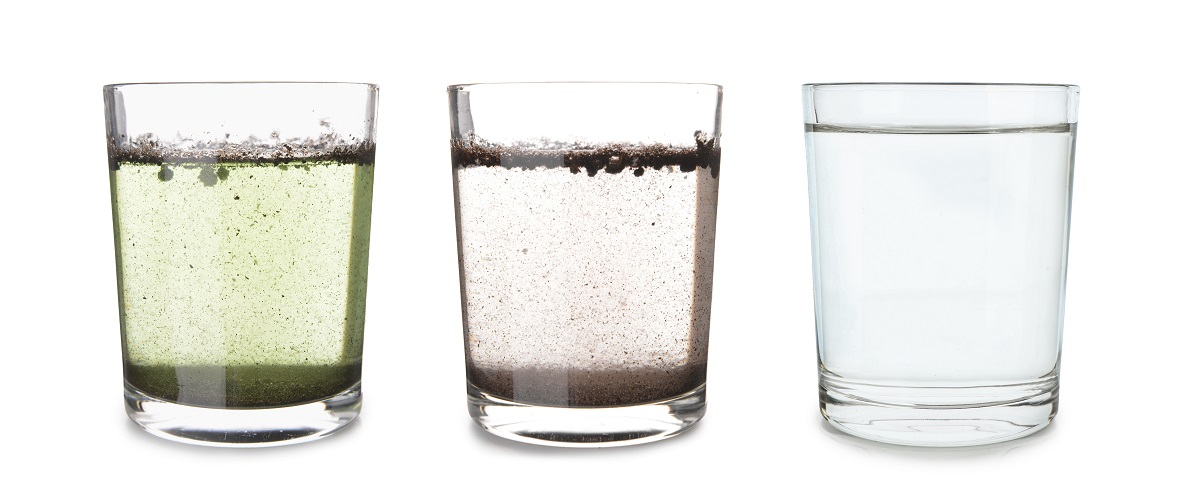
Glasses with clean and dirty water

How Does Water Get Contaminated?

City water can be contaminated by a variety of different factors. A sinkhole could introduce greywater or wastewater into fresh drinking water supplies. If this occurs after the water leaves the treatment facility, it could easily make its way into your home.

Then there are different types of pollutants that could get into fresh water supplies, such as gas and oil spills, chemical spills, leaking underground storage tanks, landfill contaminants, and so on. Pollutants can affect both city water and well water supplies.

Ensure a Safe Water Supply

With annual water quality tests performed by your plumber, you can find out if there are ever any pollutants in your drinking water and at what levels. However, if you are taking steps to improve water quality at home, then pollutants may not be an issue. Be sure to take these steps:

Step 1: Get a Plumbing Pipe Inspection

Depending on when your home was built, you may have lead pipes. While this practice of using lead pipes was discontinued in the 1980s, there are still many homes that still have them for plumbing supply lines.

You may also have cast iron pipes. Cast iron is not as bad as lead, but it can and does rust. If you notice your tap water is brownish in color or you see flecks of rust, then somewhere inside the home you have metal pipes that are rusting.

Talk to your plumber about plumbing replacement options for these pipes. PVC and various types of heavy-duty plastic plumbing pipes are suitable replacements.

Rust can also get into your home’s water supply from your water heater. As it ages, rust can develop inside the tank or on the moving parts that create hot water on demand if you have a tankless water heater.

Step 2: Install a Water Filter

You have no control over what freshwater supply lines your city uses to run water to your home. They may use steel or some other type of metal pipes. By installing a water filter where fresh water enters the home, you can remove various contaminants, including rust, metals, etc.

Step 3: Install a Water Softener

If you have hard water, which most people have if they have well water, you’ll need to install a water softener to help remove calcium from the water. Those white spots and scale deposits that you notice on dishes, shower walls, sinks, and other such places are caused by the calcium in hard water.

It is important to mention that a water filter and water softener are not the same things. Many people get these confused, and that is understandable. The easiest way to remember the difference is that a water filter removes impurities from drinking water and a water softener makes hard water “soft” by removing calcium from the drinking water.

Step 4: Clean the Aerators on Your Faucets

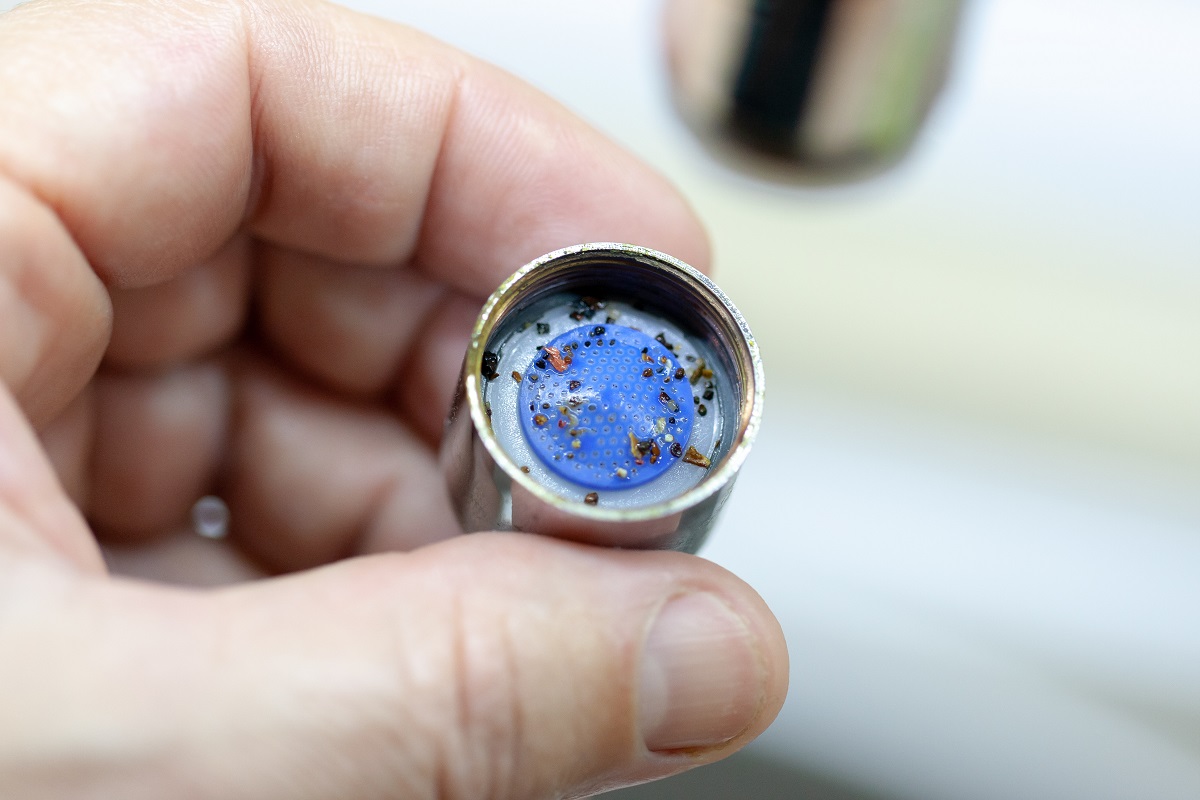
Aerators serve two general purposes: One, they help conserve water while maintaining water flow. Two, they act as a mini-water filter to remove dirt, debris, and other small particles. To clean the aerators, simply unscrew them from the faucets, rinse them off, and replace them.

If you notice a large amount of sediment inside the aerator, set the aerator aside and call your plumber. This could indicate a more serious water quality issue.

Aerators, just like faucets, do wear out and eventually need to be replaced. If you are having plumbing replacement performed on your plumbing pipes, you should also consider replacing your faucets and fixtures at the same time you start with all-new plumbing.

A person holds in his hand an old dirty aerator

Step 5: Get Your Septic Tank Emptied

If you have a septic tank, don’t wait for the tank to overflow into your yard before getting it emptied. If you do, raw sewage could leach into the groundwater and, worse, your well water. If your septic tank is older, talk to your plumber about replacing it with a new one that reroutes greywater into the yard rather than into the septic tank—then the water you use to wash dishes, do laundry, or bathe can help water your lawn and not fill up the septic tank as fast. However, some states do not allow this.

Step 6: Watch for Signs of Damaged Sewer Lines

Whether you have a septic tank or city sewer lines, you want to pay attention to early warning signs that there is a problem. If you notice your yard is constantly wet in the location where the sewer line runs to the septic tank or street, you could have a leaking sewer pipe. Another common sign is if the grass in this location is growing much faster than the rest of the lawn.

If you notice the ground is sinking in the location of the sewer pipe, the pipe could be broken. You will often hear gurgling sounds coming from drains that are not being used when flushing the toilet if there is a damaged or broken sewer line. Additionally, you may notice sewer water flowing back into the toilet or coming up your other drainpipes.

If you ever notice any of these signs, call your 24-hour plumber immediately. The sooner the problem can be fixed, the better, to stop raw sewage from getting into the ground and reaching freshwater supplies.

Step 7: Use Eco-Friendly Products

Look for eco-friendly dish soaps, laundry detergents, bathing soaps, shampoos, etc. These products are better for the environment and also make recycling greywater easier. Plus, they won’t have a negative impact on groundwater supplies if you have well water.

Is It Okay to Use Hot Water for Drinking and Cooking?

Another question we receive about what you can do to improve water quality at home is if it is okay to use hot water for drinking and cooking. Hot water has to travel from your water heater and through plumbing lines.

If you have metal or lead pipes in the home, then hot water leaches out lead, rust, and other such contaminants easier than when you’re using cold water. Even with PVC and plastic plumbing, hot water can dissolve any sediment on the inside of plumbing lines like calcium deposits.

Boiling spaghetti in pan on electric stove in the kitchen

If you are not sure what type of plumbing you have or the quality of your water, it is better to use cold water and then boil it in the microwave or on the stove before drinking it or cooking with it.

In many homes, the tap water is of decent quality and safe to use. Yet, there are times when the water may not be safe like after a tropical storm or hurricane. To ensure the water quality at your home is as safe as it can be, get a water quality inspection from our 24-hour plumber, and then take the appropriate steps to maintain water quality.

To schedule a water quality inspection, plumbing replacement service, or for other plumbing and air conditioning problems in San Antonio, Temple, New Braunfels, or the Austin Metro area, please feel free to contact Christianson Air Conditioning & Plumbing at 512-246-5400 today!


Toilet Plumbing Troubles? Here’s When to Repair or Replace Your Toilet

Posted on July 24th, 2020 by ChristainSon_Admin

Toilets are like other plumbing fixtures in your home that will eventually succumb to wear and tear. Sometimes toilet plumbing troubles can be repaired and other times you will need toilet replacement.

Signs You Need Toilet Repair

Certain types of toilet problems can be resolved with a simple repair from a qualified plumber. Some of the more common signs you need toilet repair include:

1. You have a clog. Clogs are easy enough to resolve but may require more than just plunging the toilet. Your plumber may need to “snake” the line or use hydro-jetting to remove blockages.

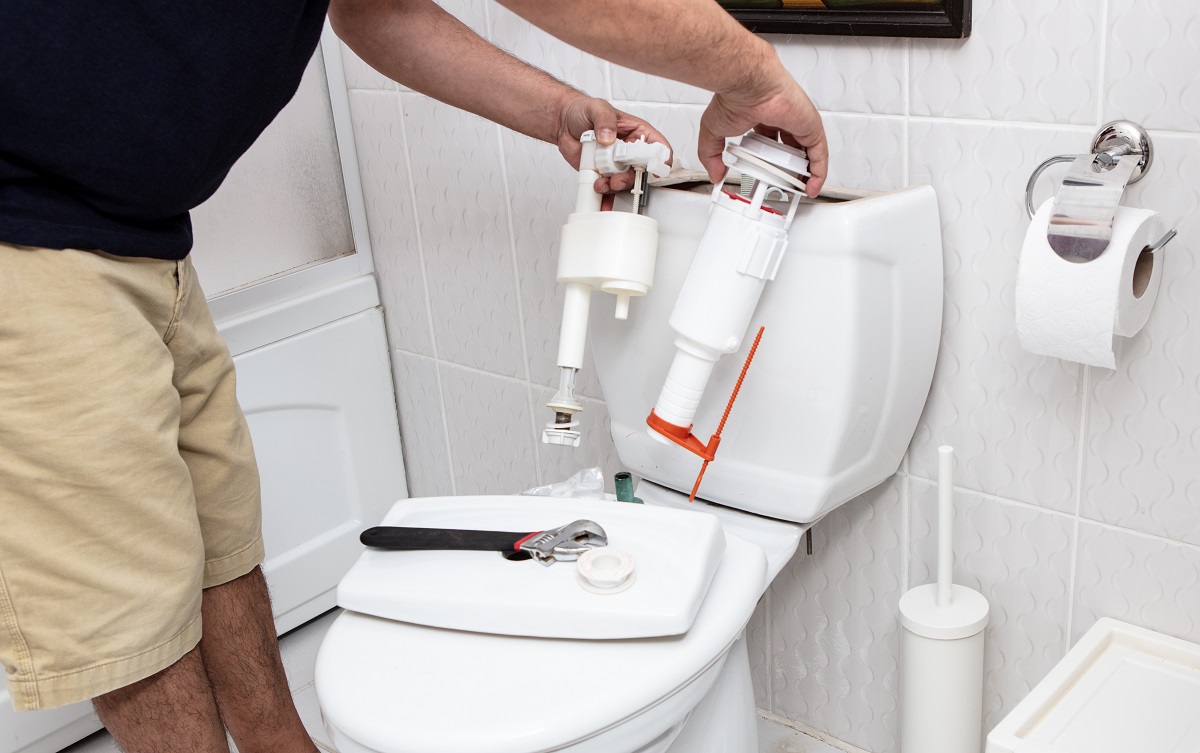
2. Your toilet won’t flush. This problem can occur if the flushing mechanism has broken. Installing a new flushing mechanism is also an easy repair your plumber can make.

Man using tools repairing reservoir in a bathroom

3. The water level is too low or too high. This can occur when the fill valve needs to be adjusted. If the fill valve is not damaged, you just have to adjust it so water fills to the desired level.

4. Water is constantly running into the toilet from the tank. This problem occurs when the flapper is not sealing correctly around the flush valve. Installing a new flapper will normally resolve this problem.

5. Water is leaking from the toilet tank. The flush valve gasket, shank washer, or tank bolt washers can wear out, so they no longer seal the tank correctly. These parts can be replaced to stop leaks.

6. Water is leaking from around the base of the toilet. If you notice that water is leaking at the base of the toilet, this often indicates the wax ring needs to be replaced. Again, this is an easy fix for a qualified plumber.

Signs You Need Toilet Replacement

Other types of toilet problems may require having your toilet replaced by your plumber. Some of the common signs you need toilet replacement are:

1. Your toilet is not water efficient. If you are looking to cut your water bill, you will want to get a new water-saving toilet.

2. Your toilet tank or base has cracks in the porcelain. If you notice deep cracks in the porcelain, these cannot be repaired. Eventually, they can lead to leaks, so it is better to replace the toilet than try to save it.

3. The toilet base wobbles when you are sitting on it. If you notice the base of the toilet is moving, it probably needs to be replaced.

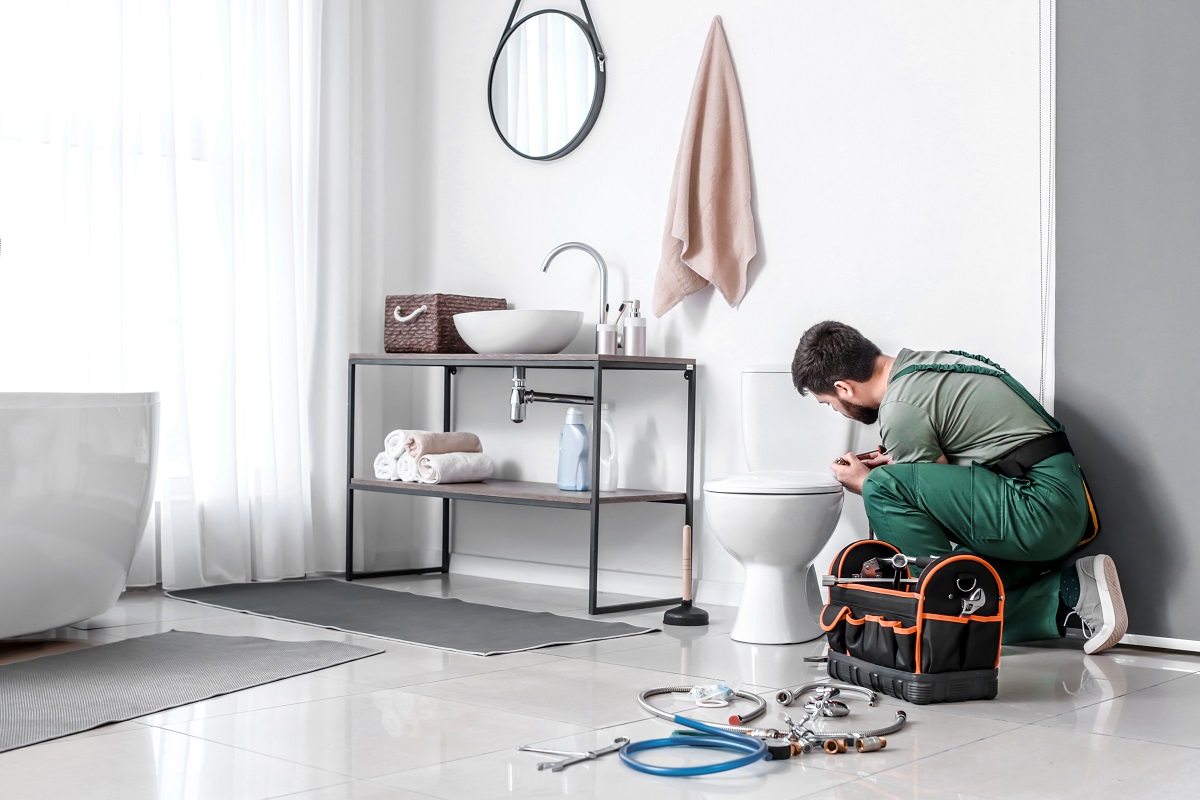
Plumber installing toilet bowl in bathroom

4. You are spending a lot on toilet repairs. If you have your plumber on speed dial because you are having weekly or monthly toilet problems, it is time to invest in a new one.

5. You are renovating your bathroom. Many people have a new toilet installed when they are renovating their bathrooms. After all, you are installing other new plumbing fixtures like a shower, tub, and sinks, so why not upgrade your toilet too?

6. You want a new smart, technologically advanced toilet. Yep, there are smart toilets available. These toilets offer a wide range of features and options like air dryers, heated seating, automatic flushing, self-cleaning, massaging washes, and more. If you want to feel pampered, then a smart toilet upgrade could be perfect for you.

If you are having toilet plumbing problems and need toilet repair or toilet replacement, please feel free to contact Christianson Air Conditioning and Plumbing at 512-246-5400 today! We offer air conditioning and plumbing services in San Antonio, Temple, New Braunfels, and the Austin Metro area.

Tags: , ,


How Your Water Heater Works and When to Replace It

Posted on July 23rd, 2020 by ChristainSon_Admin

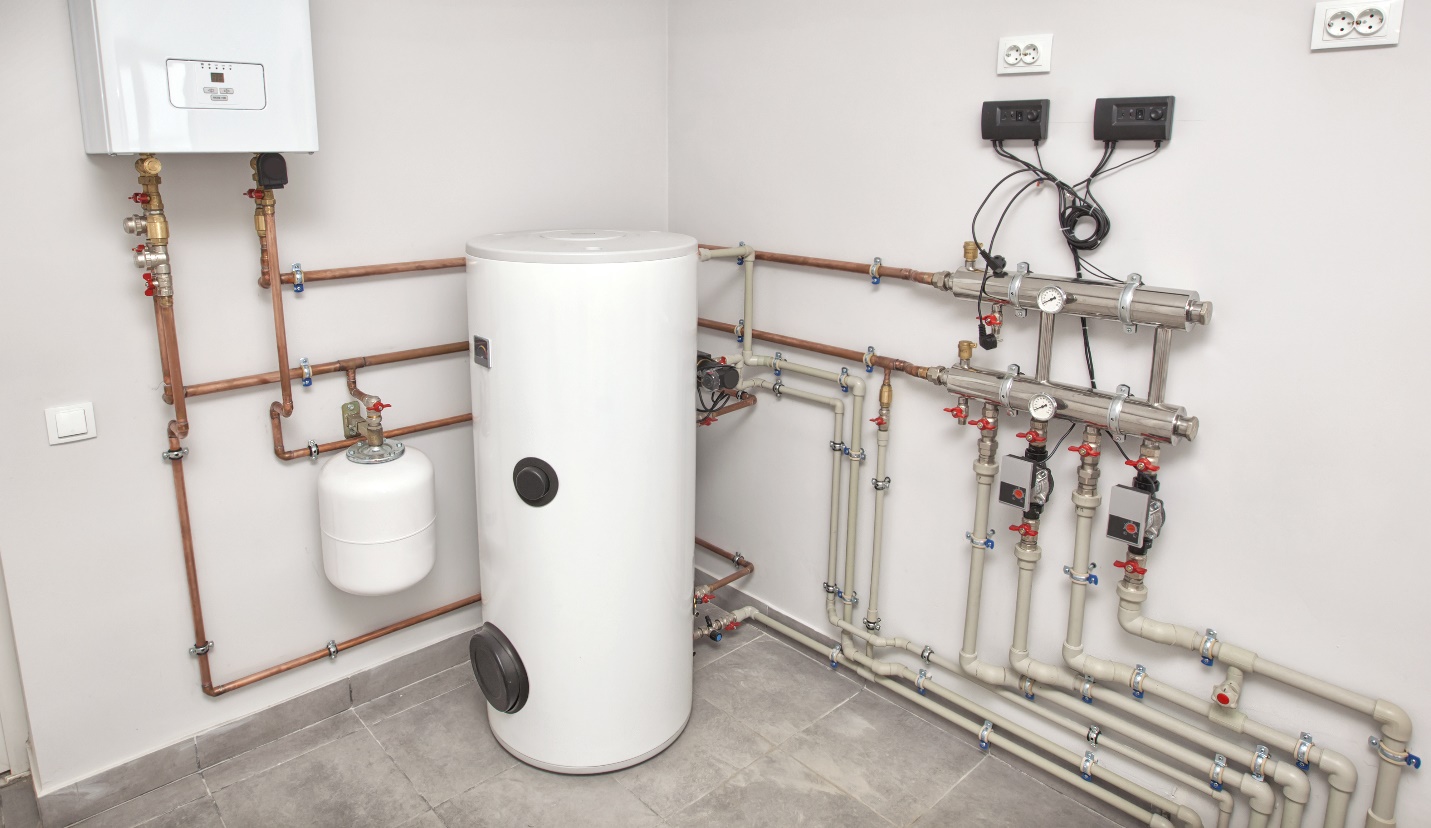
The boiler room with a lot of different equipment as a boiler, heater,pipes, expansion tank

As the name suggests, your water heater is responsible for heating your home’s hot water. A well-maintained water heater provides hot water in an instant, giving you and your family warm showers and baths, a ready supply of hot tap water, and more.

Though heating water may seem like a simple task, water heaters use several unique design features to heat water quickly and efficiently. Read on to find out more about the major types of water heaters, their ingenious and unique designs, and how to tell whether your hot water is operating at peak performance—and when it isn’t.

Types of Water Heaters and How They Work

Water heaters come in two main types: gas (conventional) water heaters and electric water heaters. While the primary distinction is the fuel used (gas or electricity), each type has unique components and heating methods. There are also tankless water heaters, which do away with water tanks altogether and heat water on demand.

Gas/Conventional Water Heater

Most conventional waters use gas as a fuel source. Gas heaters are among the most common and affordable; however, they may begin to fall out of favor as more homes adopt mostly electric appliances and utilities. Even so, there’s a high likelihood that your home’s water heater is powered by gas.

As we’ll see later on, gas water heaters use a heating element located outside the water heater’s holding tank, usually in the form of a large burner. Like any gas burner, your water heater’s burner requires regular maintenance and cleaning.

Electric Water Heater

Unlike gas heaters that use a gas burner located outside the water tank, electric water heaters use electric induction coils located inside the tank itself. This type of direct contact is, at times, more efficient and reliable than gas burners. While gas water heaters are still the most common, electric water heaters are slowly gaining in popularity as more homes switch to electric appliances and electricity prices fall.

Tankless Water Heaters

Whereas both gas and electric water heaters store hot water in large tanks, tankless water heaters only heat small amounts of water at a time. While this method might not be suitable for high-volume or commercial applications, many residences prefer tankless water heaters for their compact size, low cost, and versatility.

For small applications, tankless water heaters also come with a variety of efficiency benefits; here, instead of having to constantly keep a large tank of water at a high temperature, tankless water heaters flash heat water as it’s needed. Again, this method is ideal for smaller applications.

Basic Principles and Components of Water Heaters

On the surface, water heaters don’t look like much more than a water tank wrapped in an insulative shell. Frankly, that wouldn’t be far from the truth; at their core, water heaters are just large, insulated tanks of water with a heating element, such as a gas burner. However, it’s the additional components—thermometers, safety valves, and so on—that make water heater designs so unique and effective.

The Tank

Most conventional water heaters heat and store hot water in a large tank—usually around 40 to 60 gallons at a time. The tank holds the hot water at a standard residential water pressure of about 50 to 100 psi (pounds per square inch) and keeps it warm with a thick layer of insulation.

The water inside the tank might be exposed directly to a heating element or it may be heated from outside. In any case, water flowers in and out of the tank using separate inflow and outflow pipes, whose placement is crucially important for delivering you the hottest water possible.

Inflow/Outflow Pipes

Water heaters have two major water lines: an inflow and an outflow. The inflow pipe takes cold water into the heater, usually directly from a municipal water line or inground well. The inflow pipe outputs water at the very bottom of the tank, where it’s then heated by the heating element below.

By contrast, the outflow pipe is placed almost at the very top of the pipe. This arrangement takes advantage of convection—the effect where heat rises.

The Thermostat

The water temperature inside the tank is constantly monitored using a thermostat. The thermostat is important for controlling the heating element; for example, if the thermostat detects the water getting too hot, it can lower the temperature of the heating element. It’s the thermostat’s “job” to measure and maintain a near-constant pressure.

The Heating Element

Your water heater’s heating element is either gas or electric, depending on its type. Gas water heaters are usually placed outside and below the water tank, heating the tank through a burner much like a pot on a stove. By contrast, electric water heaters use induction coils placed inside the water tank, which heat up as electric current flows through them.

Both gas and electric water heaters share the same design, apart from their heating elements. The only exceptions are tankless water heaters, which heat small amounts of water on demand without holding large quantities in a tank. Like conventional water heaters, tankless water heaters can have either gas or electric heating elements.

Other Components

We’ve covered the main components of most water heaters, but your water heater relies on a few other components to function properly and safely. These features include exhaust vents for the heating elements (mostly in the case of gas), safety valves and shut-off mechanisms, and something called a “sacrificial anode.”

The sacrificial anode is a piece of metal placed inside the water tank which helps to slow the rate of corrosion. Any metal placed in contact with water will corrode over time, but some metals will corrode faster than others. For water molecules, the metal of the sacrificial anode (usually magnesium or aluminum) is far more “appealing” to corrode than the metal of the tank. As a result, the sacrificial anode sacrifices itself for the sake of the water tank—thereby slowing corrosion.

Putting It All Together

Water heater maintenance

All of the components mentioned above work together to safely and efficiently heat your home’s water supply. As cold water flows into the bottom of the tank, a heating element heats the water so that the hot water rises to the top.

During this process, thermometers and safety valves analyze temperature and pressure, adjusting the heating element or releasing pressure as necessary. Through these control processes, water generally stays at a temperature between 120 and 180 degrees Fahrenheit and a pressure of 50 to 100 pounds per square inch. If conditions rise above or drop below these figures, control mechanisms will adjust heat and pressure as necessary.

Once at the right temperature, the hot water is sent through an outflow pipe and into your home’s water supply. The pressure built in the tank helps the water flow to wherever it’s needed.

Water Heater Maintenance and Replacement

While water heaters are relatively simple devices, they can break down and fall into disrepair—just like any other device. However, with some basic maintenance and knowledge, you can keep your water heater functional for years to come!

Basic Water Heater Maintenance

Thanks to their simplicity and elegant design, water heaters don’t need too much regular attention or maintenance. However, be sure to perform the following tasks at least once a year:

  • Flush sediment from the hot water tank. Sediment naturally builds up inside the tank over time. Letting too much accumulate can make it harder for the heater to produce hot water.
  • Check and set your temperature settings. Your water heater should be set to anywhere between 120- and 180-degrees Fahrenheit, depending on your home’s plumbing and the make and model of your water heater. Setting a lower temperature can help save on fuel costs.
  • Test the pressure relief valve. While you can do this test yourself, it’s best to call in a professional.
  • Check the sacrificial anode. Once your tank’s sacrificial anode has been fully “sacrificed,” water will begin to corrode the rest of the tank. Be sure to replace the anode regularly.
  • Check and clean the heating element. This step is more specific to gas heaters. Their burners should be checked and cleaned regularly.

Signs It’s Time to Replace Your Water Heater

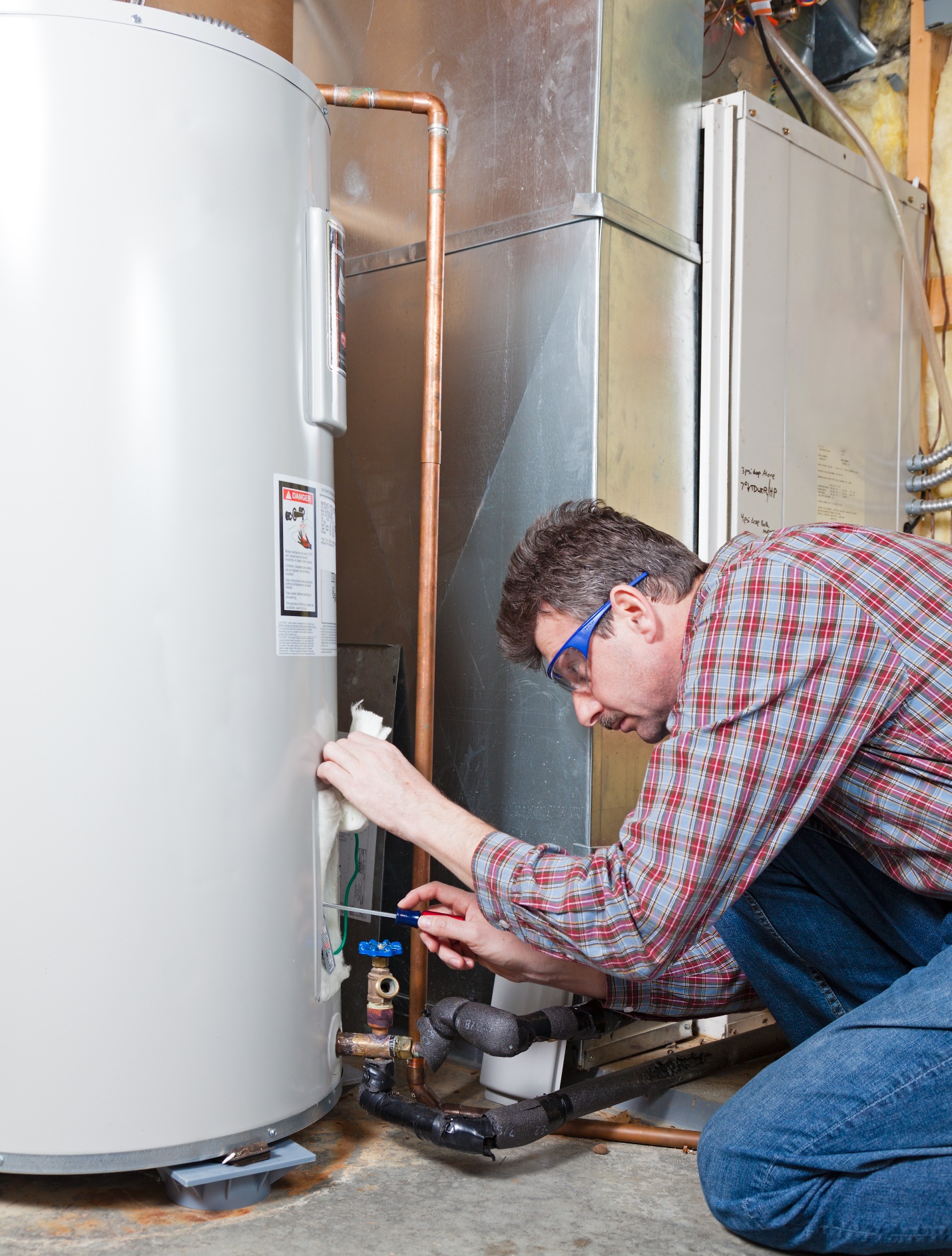
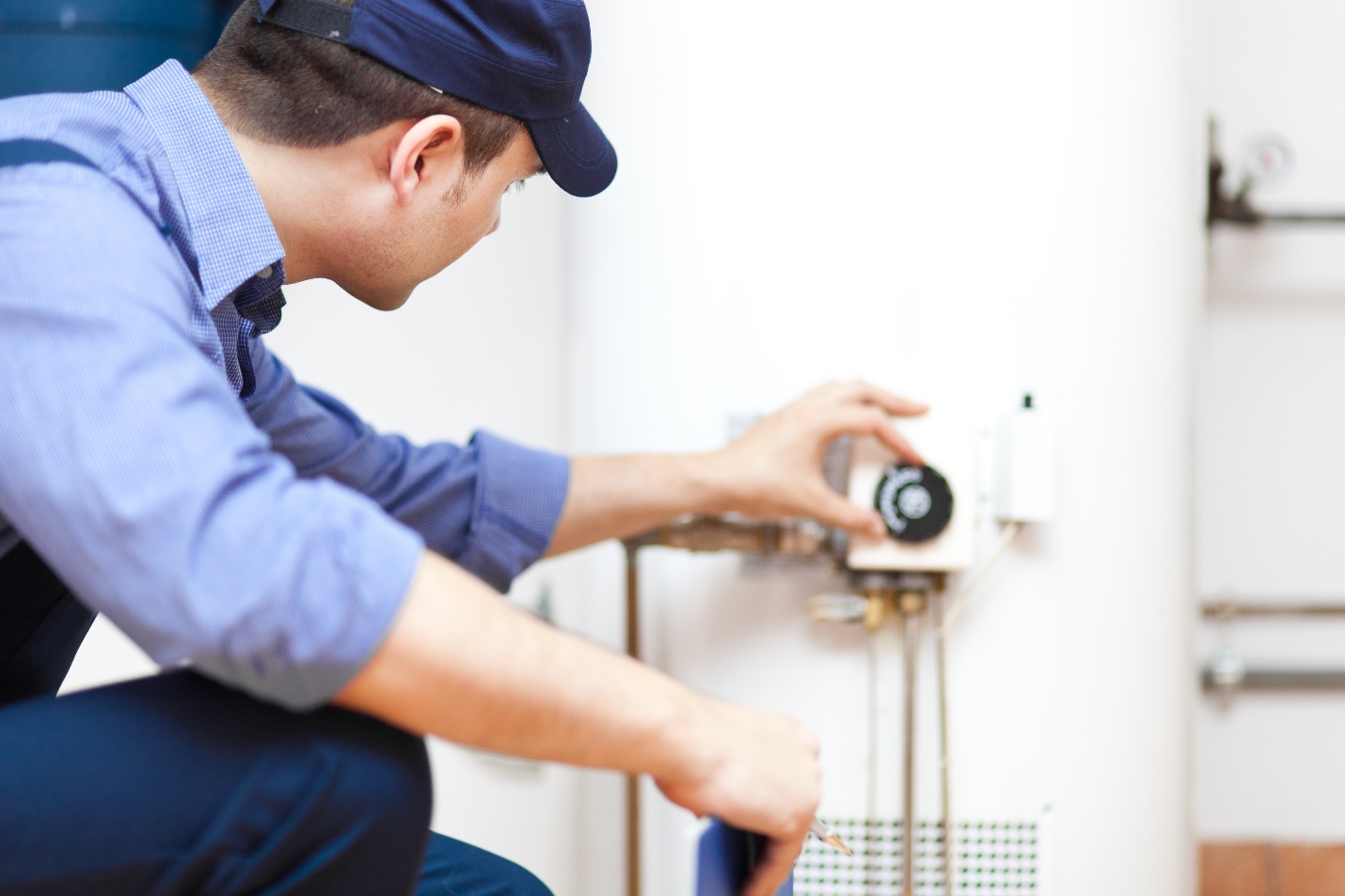
Plumber repairing an hot-water heater

Unfortunately, water heaters have limited lifespans. Most water heaters last for about ten years, though some can last longer or shorter, depending on maintenance and other factors. Check for these signs to determine whether it’s time for a replacement:

  • Unusual noises. Mechanical and structural failures inside your water heater can produce strange noises. One of the most common noises is a “rumbling” sound, which is usually caused by sediment buildup at the bottom of the tank. While regularly flushing can help avoid this, tanks with high sediment buildup may need a complete replacement.
  • Water heater leaking. Other damage, particularly that to your heater’s pipes and valves, can cause leaks. Look for puddles or drops of water near or around your water heater. Unless the leak is coming from a single, external source, then a leaking water heater could indicate a deeper problem.
  • Water not being heated. This sign should almost go without saying—if your water heater isn’t heating, then it might be time for a new water heater! However, be sure to check your heater’s temperature settings, heating elements, and sediment buildup before making the replacement.

Water Heater Replacement and Maintenance Services

While regular maintenance helps keep your water heater in top order, you may eventually need a complete water heater replacement. No matter what you need, call our team at 512-246-5400 to learn how we can help.

Tags: , ,


The Evolution of Plumbing

Posted on July 7th, 2020 by ChristainSon_Admin

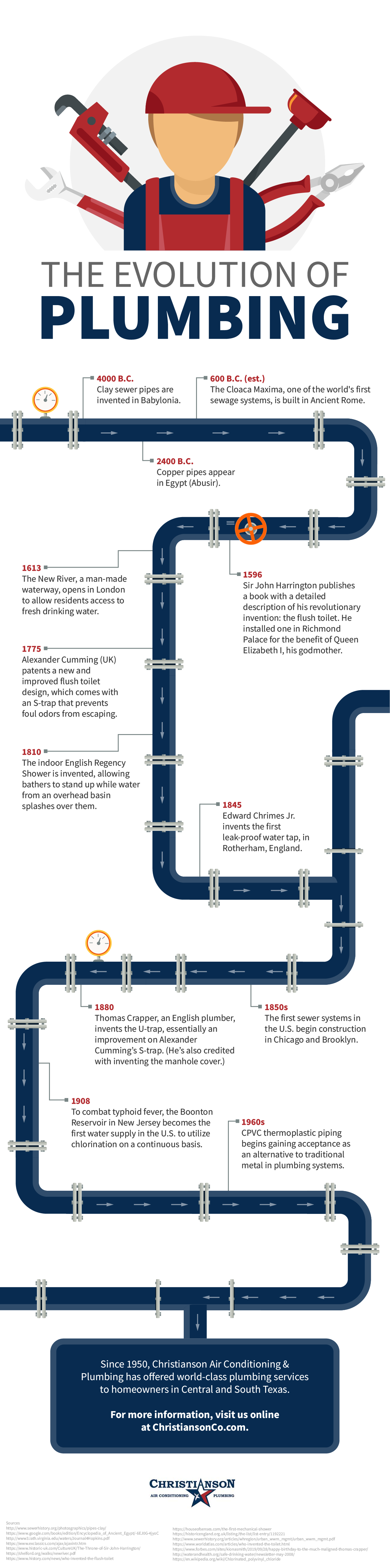
Without advances in science, engineering, and technology, modern plumbing would be far from what it is today. Could you imagine having to go outside to an outhouse to use the bathroom? What about having to take cold showers because all you had was cold water? Or having to boil water on a cooker to use it to take a bath?

To get water out of the ground, you had to dig a deep hole, install piping, and then use a hand pump to pump water from the well. It wasn’t until cities started installing freshwater lines that people could get fresh water without having to do so much work!

The evolution of plumbing has been occurring since around 4,000 B.C. when the first clay sewer pipes were invented in Babylonia. Since that time, other civilizations and countries have made strides on improving plumbing, piping, and developing marvelous new inventions like the flush toilet!

To check out how plumbing has evolved since 4,000 B.C., we invite you to read and review the following infographic.

For help with residential plumbing and air conditioning problems—including new installs and renovations—in Central and South Texas, feel free to contact Christianson Air Conditioning & Plumbing at 512-246-5400 today! We service the San Antonio, New Braunfels, Temple, and Austin Metro Areas.

The Evolution of Plumbing Infographic

Click below to embed this infographic into your website:


Why Do I Need Air Conditioning Duct Cleaning?

Posted on June 24th, 2020 by ChristainSon_Admin

Areas of the home that frequently get overlooked when cleaning are the air ducts. Regular air conditioning duct cleaning from an experienced HVAC company can help keep your home and indoor air quality cleaner. Another benefit of air duct cleaning is improved air conditioner efficiency and energy savings.

How Do Air Ducts Get Dirty?

Air ducts do get dirty for various reasons. Dust and dirt can get inside the ducts as air is recirculated through the home. One of the more common causes is running your air conditioner without an air filter or with a dirty filter.

When the AC system is run without an air filter, there is nothing to stop pet hair, dust, dirt, and pet dander from getting inside the AC system and into air ducts. Additionally, operating the AC without a filter will shorten the lifespan of the air conditioner and result in more frequent repairs.

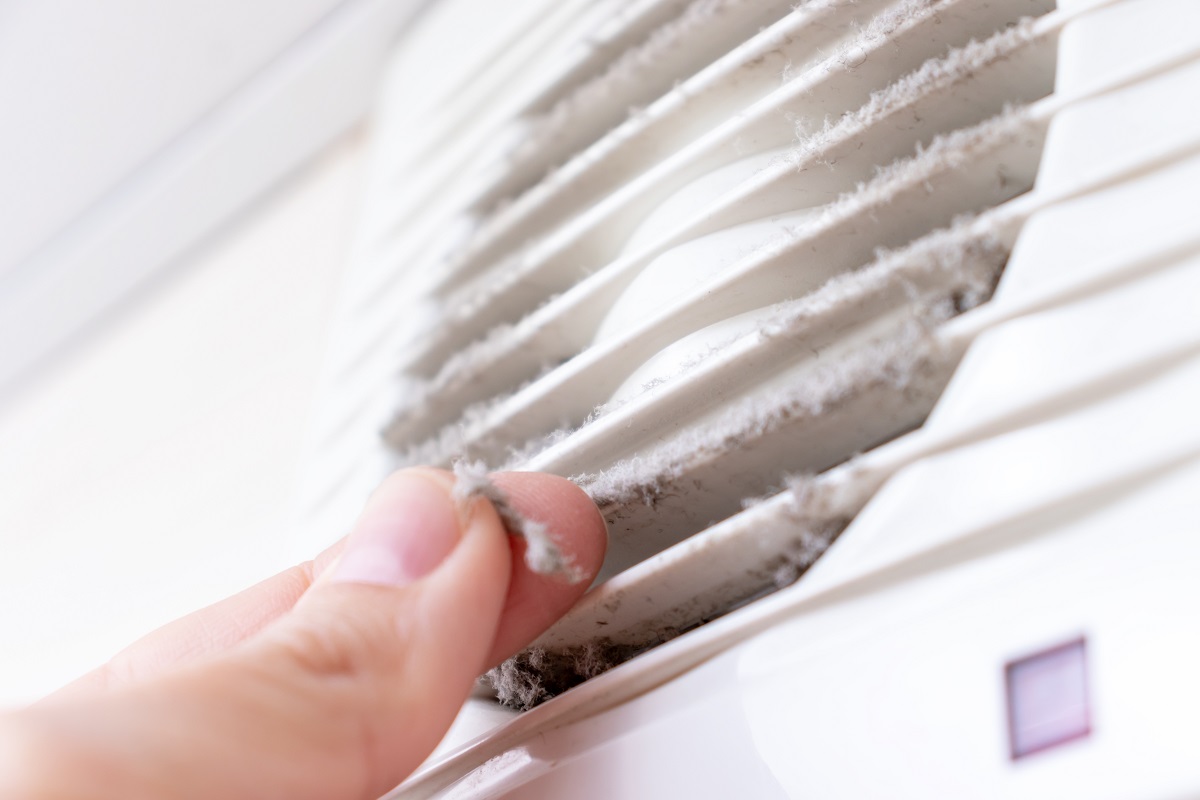
dusty white plastic ventilation air grille and a hand holding dust by fingers

A dirty filter is not able to remove any more particles from the air. As it attempts to do so, it gradually forces dirt through the filter and recirculates it into the home. It also strains the air conditioner to work harder to cool the home, which leads to increased energy bills and frequent repairs.

A third cause is also related to improperly sized air filters. If the air filter does not fit tightly and there are gaps around it, dirt can get sucked back in through the return air vent. Then it is recirculated into the air ducts and home.

Another cause is if there are disconnected, deteriorated, or poorly connected ducts where there are air gaps. When the AC runs, not only does the cooled air escape through these openings, but it also draws in dust, dirt, and other debris that is deposited inside ducts and blown into the home.

What Are the Common Signs I Need Air Duct Cleaning?

The most common sign you need air duct cleaning is if you notice your home gets dusty very quickly. If you dust, and then within a few days there is a layer of dust, the air ducts are dirty.

You may also notice that there are heavy dust and dirt deposits on air vents that keep returning quickly. Another common sign is a noticeable increase in your cooling bills. This indicates problems with the ductwork.

How Often Do I Need Air Duct Cleaning?

The frequency of air conditioning duct cleaning depends on several factors such as:

  • The age of your AC system.
  • How well you maintain the AC system.
  • Whether you have done any home renovations.
  • How often you change the air filter.
  • How quickly your home gets dusty.

Ideally, you will want to schedule air duct cleaning and maintenance every three to five years.

What Happens if Air Ducts Aren’t Cleaned?

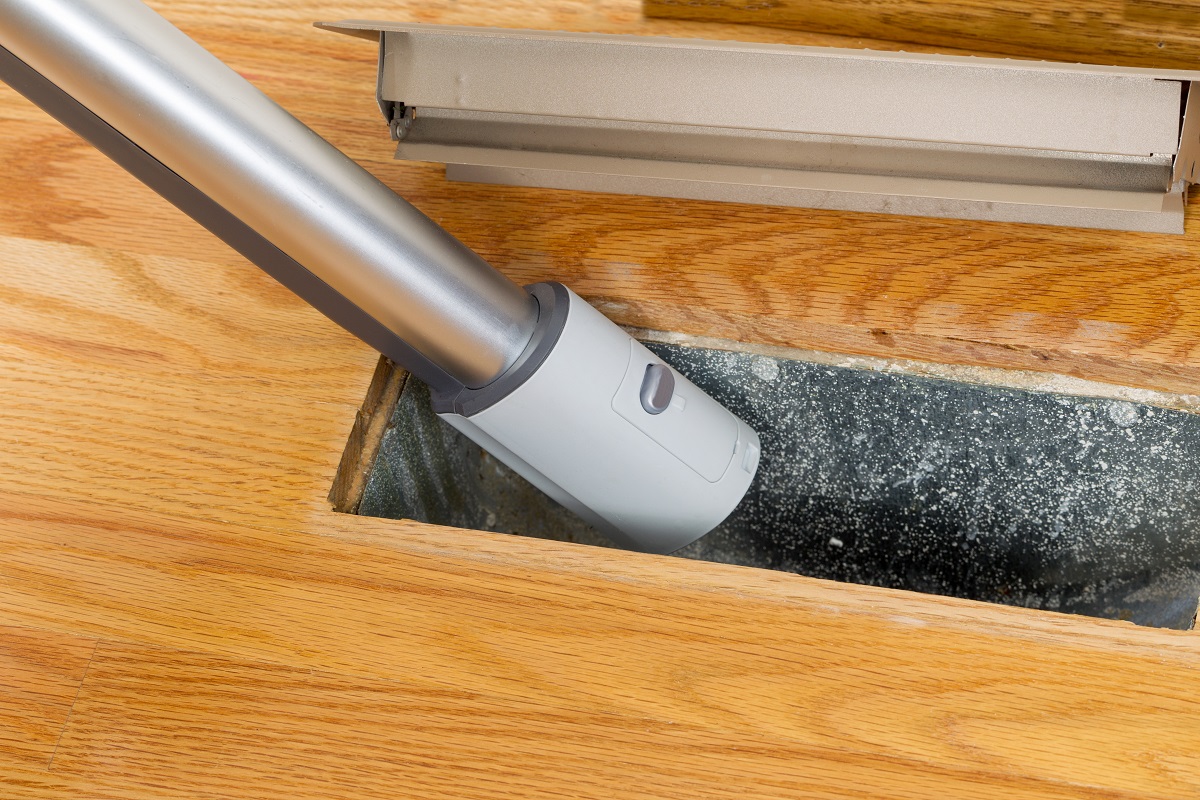
Cleaning inside heating floor vent with Vacuum Cleaner

If air ducts aren’t cleaned, it can lead to a host of problems with your air conditioner, and it lowers the indoor air quality. Your home will constantly be dusty and seem dirty, no matter how much you clean. You will notice your cooling bills increasing for no apparent reason.

You will notice that your air conditioner has problems cooling or it breaks down often. You will need to change a 3-month air filter every month. Additionally, your air conditioner will not last as long and will need to be replaced much sooner.

As you can imagine, regular duct cleaning from experienced AC technicians will help prevent these problems.

If you notice any of the signs of dirty air ducts or it’s been a while since your AC was last serviced, please feel free to contact Christianson Air Conditioning & Plumbing at 512-246-5400 to schedule air duct cleaning and AC maintenance service in the San Antonio, Austin Metro, Temple, and New Braunfels areas.

Tags: , ,


Why Replace Bathroom Plumbing?

Posted on June 17th, 2020 by ChristainSon_Admin

There are several different reasons why you might want to replace your bathroom plumbing. Plumbing is not limited to just the pipes in the walls and under the sink cabinet. Plumbing also includes tubs, showers, faucets, fixtures, toilets, sinks, and drainpipes.

Some of the more common reasons to have plumbing contractors replace the bathroom plumbing include:

1. Your Home Has Old Pipes

Depending on the age of your home, those built decades ago will have used different types of plumbing pipes and drainpipes. One common pipe used was zinc galvanized steel pipe. At the time, this seemed like a better solution than using lead pipes.

Yet, there are issues with steel pipes too. The majority of zinc also contains lead, which presents certain health concerns. Iron is found in zinc galvanized steel pipes too. Iron rusts, so over time water will start to look orange and leave rust stains in toilets, tubs, showers, sinks, dishwashers, and washing machines.
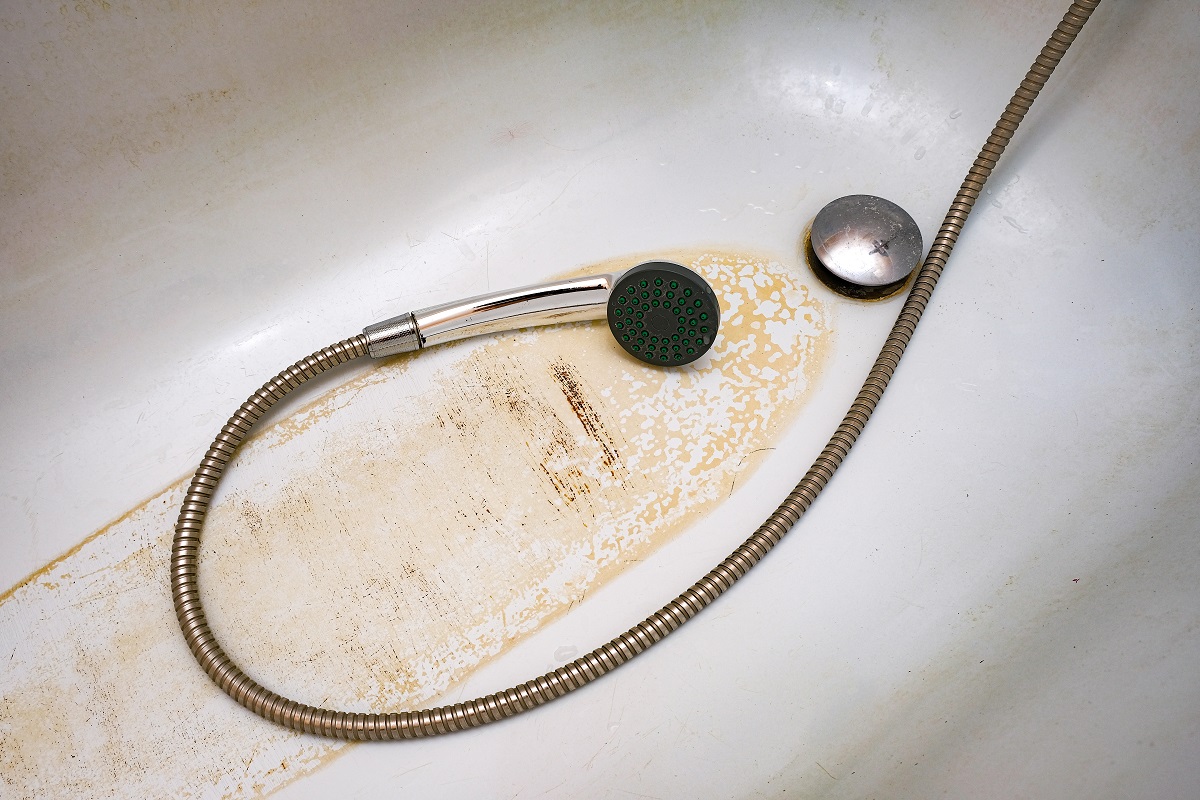
dirty bath drain mesh, hole and surface covered with limescale

As the pipes degrade, particles of the galvanized coating can become loose and move through the pipes. The loose particles can get stuck on elbows and other areas and eventually lead to clogs, as well as reduced water pressure. To get rid of those old and rusted pipes and have an aesthetically beautiful bathroom, a complete renovation of your bathroom can serve the purpose. Home Renovations company can help you to transform and re-build your bathroom according to your needs as well as installation of those future proof pipes.

2. The Pipes Are Leaking

If the plumbing is leaking, it can cause water damage and problems with mold and mildew. Replacing bathroom plumbing is a no-brainer, in this case, as it is needed to prevent further water damage to your home.

You will want to make sure any water damage and mold and mildew problems are also resolved and fixed at the same time. Since drywall is often removed to get to bathroom plumbing, it makes replacing water-damaged insulation and rotting wood and removing mold much easier.

3. You’ve Addressed Hard Water/Quality Problems

If you have invested in a new water filtration and/or water purification system to address hard water and other water quality problems, you may need to replace plumbing lines in your bathroom and elsewhere in the home.

For example, hard water leaves calcium and scale deposits that can clog faucets and fixtures. Since you addressed the hard water problem, you would also want to make sure all faucets and fixtures were also replaced if they weren’t working correctly-like if several of the spray outlets on the showerhead were no longer working or were caked full of calcium and scale.

4. The Bathroom Plumbing Looks Dated

Bathroom interior design trends constantly change. If your bathroom looks like it is from the 1960s or 1970s, it is well overdue for an update. You would probably want to invest in a complete bathroom renovation project to modernize your bathroom with a variety of features like spa-like tub, multiple showerheads, and even a special TV that is designed for use in the bathroom!

5. You Are Getting Ready to Sell Your Home

Two areas of the home that most people remodel before listing their homes for sale are the kitchen and bathrooms. Both areas increase the value of the home and can fetch higher sales prices. The costs to renovate multiple bathrooms can be less than renovating the kitchen. So, if you have a limited budget, it might be better to focus on the bathrooms.

6. The Bathroom Plumbing Needs to Be Replaced

Eventually, bathroom faucets, fixtures, and toilets do wear out. If the faucets, fixtures, or toilets are having issues that you have repaired in the past and for which you are now needing regular repairs, it is time to replace them.

For example, you have a faucet that drips constantly when it is shut off. You had your plumber repair it, and the leak goes away for several months but then returns. The problem is not with the new washers that were installed but, rather, the interior hardware is warped so it no longer seals shut correctly.

7. You Want to Reduce Your Water and Energy Bills

Another reason to replace bathroom plumbing is when you are looking to make your bathrooms more energy-efficient and eco-friendly. From water-saving toilets, showerheads, and faucets to tankless water heaters, there are several different upgrades you can make.

How Much Does It Cost to Replace Bathroom Plumbing?
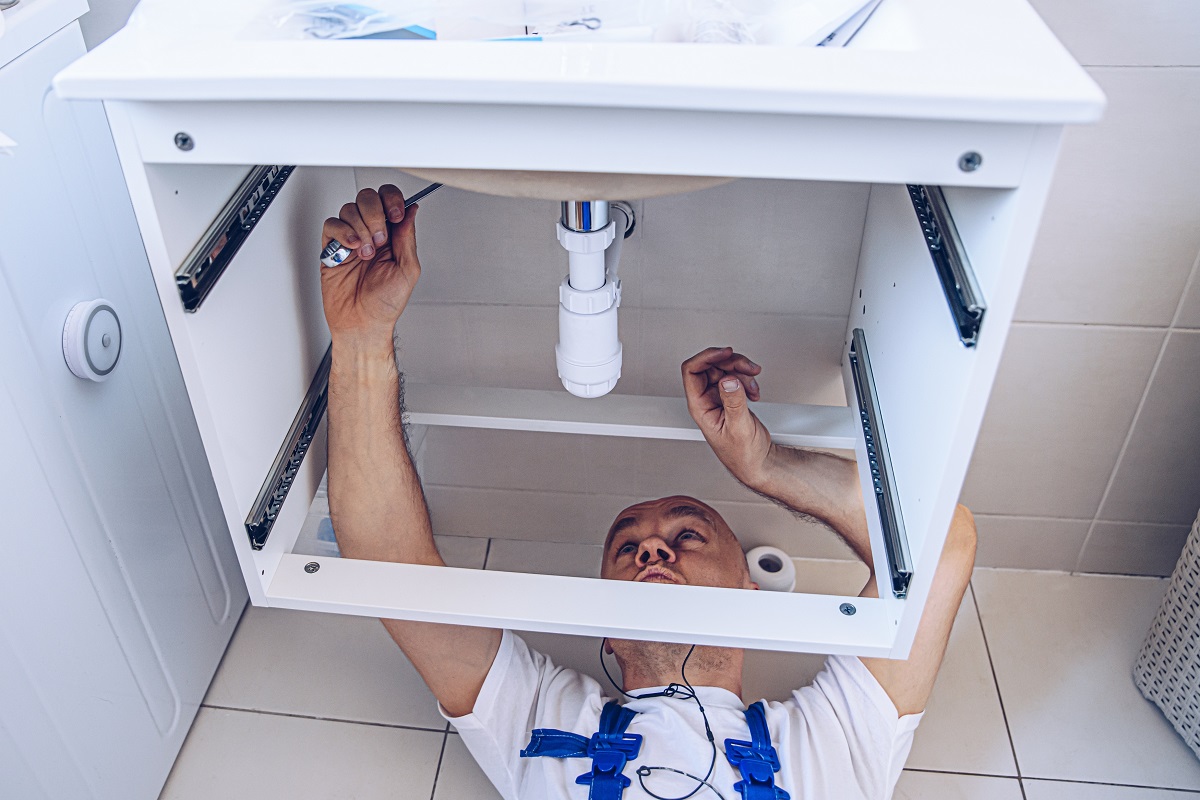
Plumber repairing or installing a bathroom sink

Plumbing can have the highest cost when doing a full bathroom renovation. On the other hand, when replacing a few fixtures and faucets, the costs are not that much. The cost to replace bathroom plumbing is influenced by several different factors, such as:

1. Supplies and Materials

The type of supplies and materials required to replace the bathroom plumbing affects total costs. Supplies and materials include fittings, sealants, washers, adhesives, and so on. You may also need tools like PEX crimp tool, pliers, wrenches, pipe bender, etc.

2. Waste Disposal and Removal Costs

There is a cost to dispose of old plumbing after it has been removed, such as the tub, shower, toilet, sinks, and so on. Even certain types of plumbing pipes can have a waste disposal fee based on the type of material they are made from.

3. Faucets and Fixtures

The style, quality, and material-type of faucets and fixtures is another factor. For instance, if you want high-end platinum showerheads or faucets, then these tend to cost more than nickel-plated showerheads and faucets.

Fixtures also include replacing a shower or tub with a new shower or tub. The style, design, features, and materials used for the shower and/or tub will determine the overall cost.

4. Plumbing Contractors Labor Costs

If you hire professional plumbing contractors, there are labor costs that are typically billed based on the type of project. Some projects could be billed at an hourly rate if they are smaller jobs. For more complex jobs, like a full bathroom renovation, the labor could be billed at a flat rate for a set number of hours.

5. Replumbing Costs

If you are moving or replacing plumbing and drain lines, this will add to your total costs. Replumbing costs also include installing new plumbing pipes and drainpipes.

6. Permit Costs

Certain types of bathroom plumbing projects may require one or more permits. There is a cost for permits. Plumbing contractors will sometimes obtain all necessary permits and just add those costs onto your final bill. Other times, they will inform you what permits you require and have you obtain them yourself, so they can start work.

Why You Should Hire Plumbing Contractors to Replace Bathroom Plumbing
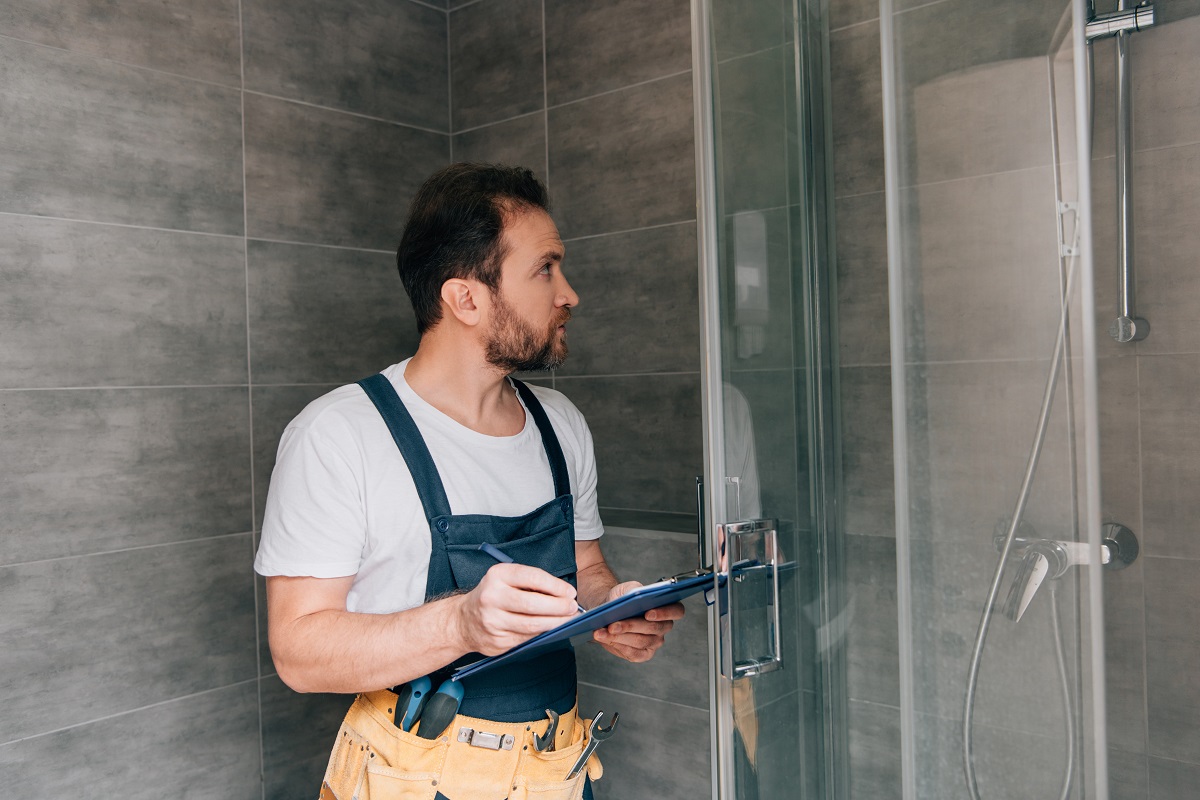
adult male plumber making notes in clipboard while checking shower in bathroom

There are certain types of bathroom plumbing that can be DIY and others that require plumbing contractors. The type of replacement and your plumbing skills should be evaluated to determine if this is something you can do yourself or if you will end up needing help from a professional plumber later.

You might be surprised to learn that many people mistakenly assume they can tackle a more complex plumbing replacement project since they can handle simpler things like cleaning out or replacing faucet aerators.

They get started, and then they discover the scope of the project is beyond their skillset. They now need to call a plumber to fix whatever they have done, plus the original work. If they had called a plumber to begin with, then the overall costs would have been typically less since the plumber wouldn’t have had to fix whatever mistakes the person made before fixing the actual issue.

Another reason to hire a professional plumber is that they are familiar with major bathroom remodels and renovations. They can help disconnect and remove existing faucets and fixtures. They can move plumbing lines and drainpipes, as well as install new ones, as needed. In addition, they can ensure your new faucets and fixtures are installed correctly.

You also won’t have to worry about whether you need permits or what type to get. Your plumbing contactors will either get the permits on your behalf or tell you which ones to get.

Most importantly, all work is completed based on current building codes. You do not have to worry about getting an inspection of the plumbing later should you ever decide to sell your home, as your plumber can certify what was done.

As you can tell, there are several benefits of hiring plumbing contractors to take care of your bathroom plumbing replacement needs.

To request a free quote for replacing the plumbing in your bathroom, bathroom renovations, kitchen remodels, or other residential plumbing services in the San Antonio, Austin Metro, Temple, and New Braunfels areas, please feel free to contact Christianson Air Conditioning & Plumbing at 512-246-5400 today!


Troubleshooting Common Air Conditioning Problems

Posted on May 27th, 2020 by ChristainSon_Admin

Is your air conditioning unit not working well—or at all? If not, you don’t have to wait for a professional. There are several common air conditioning problems you can troubleshoot on your own.

For instance, if your A/C unit won’t turn on, you can check to make sure the circuit breaker hasn’t been tripped. You can also check to make sure the thermostat settings are correct and that the condenser tray isn’t overflowing.

Of course, some problems might seem harder to solve. What if your A/C unit isn’t cooling or heating adequately? What if you’re getting poor airflow?

In both of these cases, there could be very simple solutions to the problem. In the case of your A/C unit not cooling or heating adequately, you might just need to replace the air filter. In the case of having poor airflow, opening up all the vents and making sure they are free from obstruction can solve the problem.

While problems with your air conditioning can seem daunting, once you know what to do you’ll find that the most common problems can be solved easily. To find out more about how to troubleshoot common air conditioning problems, read the infographic below.

Troubleshooting Common Air Conditioning Problems Infographic

Click below to embed this infographic into your website:


Should I Repair or Replace a Leaky Faucet?

Posted on May 27th, 2020 by ChristainSon_Admin

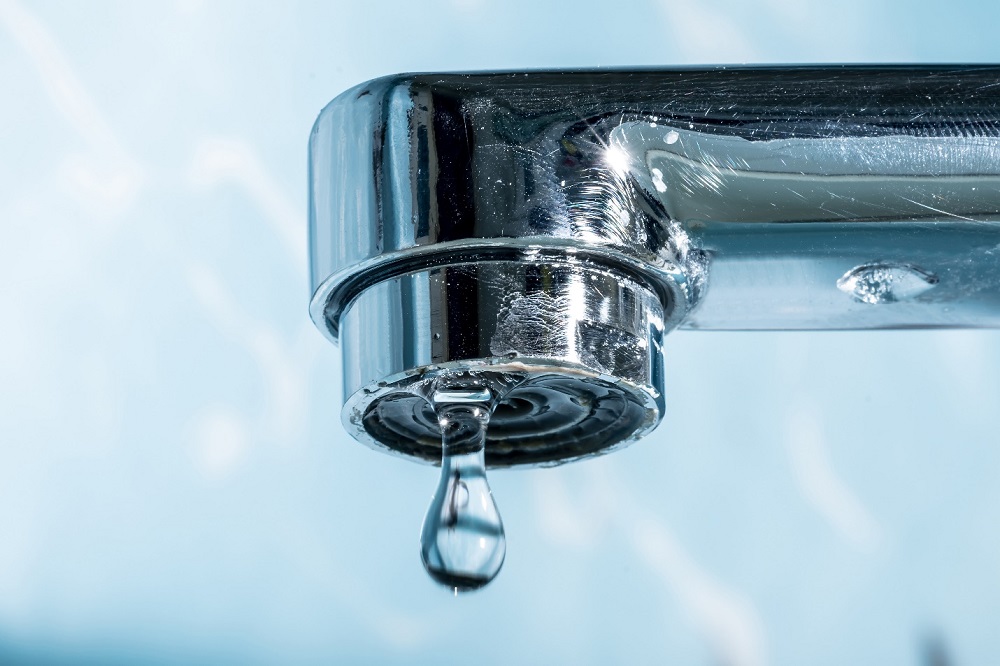
A drop of water hangs out of a water tap faucet

Faucets are small, yet important, parts of your home. When they work normally, you probably don’t think much about them. If not, the decision over faucet repair or replacement can be unclear. Generally, kitchen and bathroom faucets can last 10 years or more (some can last 15 to 20 years), but this depends on many factors. Hard water or more frequent use can reduce a faucet’s lifespan. If you’re undecided on repairing or replacing a noisy, spouting, or leaking faucet, continue reading for some helpful guidance.

Should You Repair It?

Many issues are fixable because faucets come with replaceable parts. Common trouble points include O-rings. An O-ring is a piece of rubber that fits around the valve stem; it can become loose or damaged through normal wear and tear. Corroded valve seats can disrupt the seal that prevents water from leaking. A valve seat connects the compression mechanism to the cartridge. Damaged or loose washers can occur with regular use, while worn inlet and outlet seals in disk cartridge faucets can cause trouble as well.

The most common faucet problems requiring repairs include:

  • Leaks/Drips: A leak is often the first sign internal parts are wearing down or failing. If a leak occurs from under the handle, a worn O-ring may need to be replaced. If the faucet is dripping, a corroded valve seat or loose washer may be the cause. Leaks can also occur internally, which can cause an incorrect mixture of hot and cold water. According to the U.S. Environmental Protection Agency, a leaky faucet, at one drip per second, can waste over 3,000 gallons per year.1 This is one reason why leaky faucet repair is so important.
  • Irregular Water Flow: The stream of water from a faucet should be constant. If the water is instead spitting, sputtering, or spraying, there may be internal damage. Call a professional to inspect and repair the unit. Irregular flow can be caused by a clogged aerator filter or air that has collected in water lines. Waiting for repairs can lead to additional damage that could have been avoided.
  • Squeaking Noises: If the handle squeaks when turned, and applying grease doesn’t resolve the problem, a repair is needed. Squeaking is often caused by worn threads in the faucet handle, but it can be caused by a loose washer too. The valve stem may be worn out, causing loose parts to flap around. High water pressure can cause the faucet to squeal, or there may be debris lodged in the pipes or the faucet itself.
  • Low Water Pressure: While low water pressure can indicate a water line break or sewer line blockage, it may also be caused by a clogged aerator or cartridge. Debris and mineral deposits can reduce water pressure; this is a likely scenario if the problem is limited to just one faucet. Other causes can include crushed or kinked supply lines under the sink, limiting the flow of water to the faucet.

A plumber who has diagnosed the problem and has the appropriate parts can repair a bathroom faucet in anywhere from 30 to 60 minutes.2 Repair costs depend on the part, the type of faucet, and the extent of the damage.

What Kind of Faucet Do You Have?

Hands plumber at work in a bathroom, plumbing repair service

The type and brand of faucet you have will impact your decision. High-quality faucets are often guaranteed for life, with replacement parts available just by asking the manufacturer for them. Upscale brands like Mohn, GROHE, and ROHL will replace parts for free. The other consideration is the type of faucet you have, which can be a:

  • Ball Faucet: Most commonly installed in kitchens, it has many parts, making it prone to leaks. An internal ball controls the flow of water.
  • Disk Faucet: A modern design that mixes hot and cold water in a special chamber, and controls water volume via two ceramic disks, it does not often need repairs.
  • Cartridge Faucet: A single- or double-handle faucet used in the typical bathroom sink. Movement is smooth and consistent with no pressure needed to turn off the faucet.
  • Compression Faucet: The handle (and, in turn, the washer) must be tightened to close the water flow. This design is used in utility sinks and is more often found in older homes.

Should You Replace It?

Replacing a sink faucet can cost up to $300 (higher for luxury types). This includes not only parts and materials but also labor.3 Faucet replacement often costs more than repairs, but that depends on your unique circumstances. In many cases, it is more cost-effective to replace a leaky faucet, especially if it is old or has been repaired several times.

A few reasons to consider replacement over faucet repair include:

  • Repairs cost more than replacing the faucet, especially if you can afford a higher quality brand that offers a warranty and/or replacement parts for free.
  • Frequent repairs are needed, which can increase the cost enough that replacing the faucet is a more cost-effective option.
  • Your fixtures are old and, even if repaired, are more likely to require additional repairs in the future, with no guarantee of lasting performance.

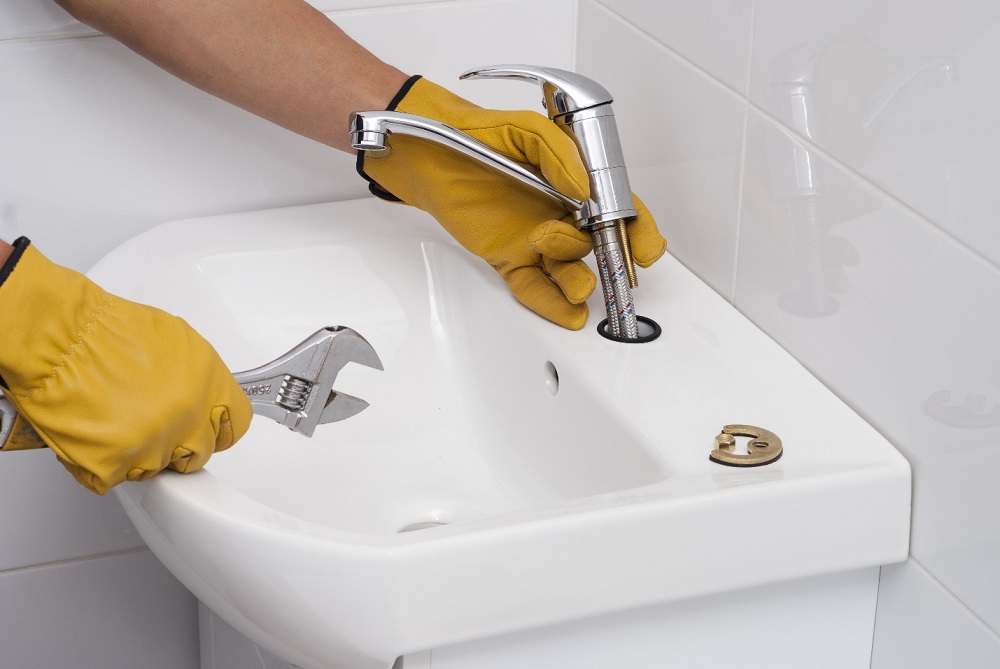
plumber installs a new faucet for a sink

  • You want a more efficient unit; older faucets can run at 3 to 5 gallons per minute, while modern, efficient ones often don’t exceed 2.5 gallons per minute.
  • You don’t like your fixtures; replacing your faucets can be a valuable update to your home, especially if you’re renovating or plan to sell it in the future.
  • The sink or counter surface may be damaged; to restore it, you may need to also replace your faucet, whether there’s something wrong with it or not.

It is important to know when to repair or replace a faucet, as tricky as the decision can be. The right choice will prevent more severe damage. Consult with a plumber as soon as possible if you have a leaky or otherwise damaged faucet.

Contact Us for Faucet Repair/Replacement in Austin and San Antonio

A leaking faucet can waste thousands of gallons of water, drive up your water bill, and cause damage to your home. Our plumbers are experienced at kitchen and bathroom faucet repair. They can also advise you on whether to install a new bathroom faucet or replace a kitchen faucet when necessary. Call 512-246-5400 or submit our contact form to receive expert help with your faucet trouble.

Sources:

  1. https://www.epa.gov/watersense/fix-leak-week
  2. https://www.angieslist.com/articles/should-i-repair-or-replace-leaky-faucet.htm
  3. https://www.angieslist.com/articles/should-i-repair-or-replace-leaky-faucet.htm


How to Choose the Best Thermostat for Your Home

Posted on May 24th, 2020 by ChristainSon_Admin

Choosing a properly sized HVAC system isn’t enough for keeping your home comfortable. Your air conditioning contractor should also recommend the most suitable thermostats. There are now many types. Knowing the factors to consider will help you compare different products. A programmable or smart thermostat has many advantages, but finding the best thermostat requires identifying one that meets your needs; to do that, you must look at factors such as:

Price

Manual thermostats go for just a few dollars but, with the latest smart units, expect to spend in the hundreds. Programmable electronic thermostats are in the mid-range when it comes to pricing. Not all smart thermostats work with every type of HVAC system. Do your research, or you could end up wasting money. The right installation can result in energy savings, which translates to lower utility bills.

Accuracy

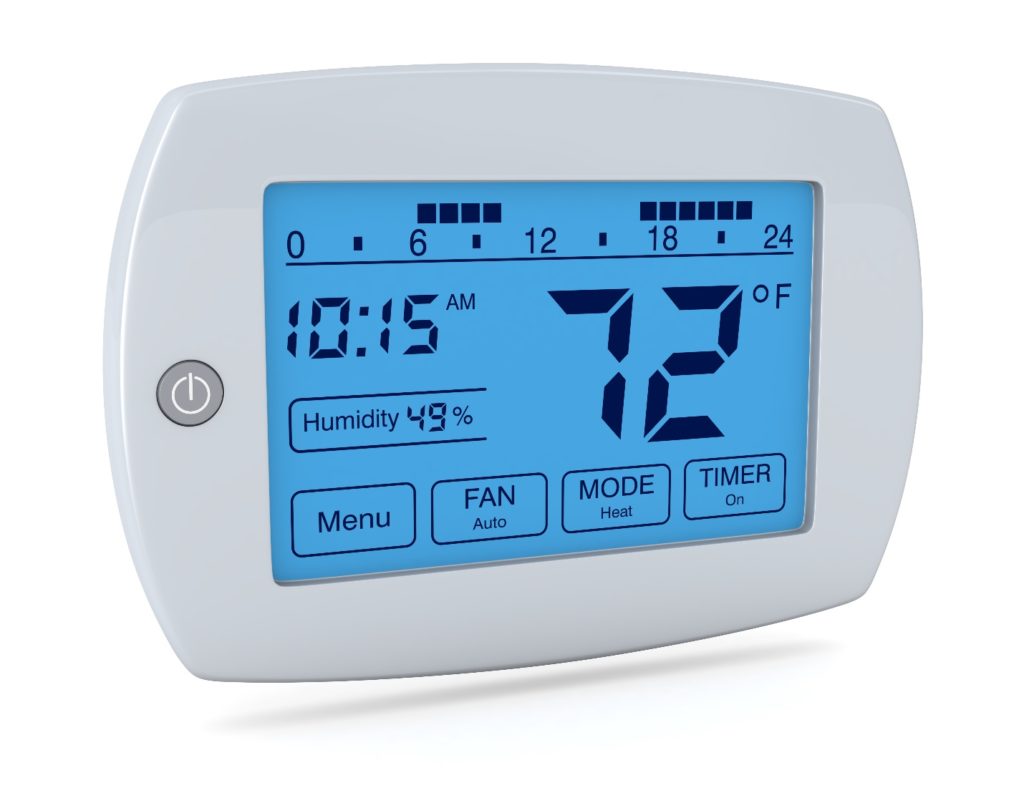
closeup of a digital, programmable thermostat

The room temperature should be close to what you set it to. Manual thermostats aren’t very accurate. Programmable devices allow you to create a heating and cooling schedule while controlling the setpoint. You can even set the temperature based on when you’re home or if you plan to be away or on vacation. Smart thermostats can track your temperature preferences and create a schedule automatically; some models use sensors to monitor room temperature and provide balanced heating and cooling.

Integration

If integration with devices such as virtual assistants (Amazon Alexa, Apple’s Siri, Google Assistant, etc.) is important, then go with a smart thermostat. It lets you set the temperature by voice without having to get up to make adjustments. Some models can be controlled with a smartphone app. A wireless setup can save you hassles if the unit supports it. If any complex wiring is required, hire a qualified electrician to install the device properly and safely.

Compatibility

A thermostat must be compatible with the voltage requirements of your HVAC system. It must also fit on an interior wall, preferably where the old unit was to avoid complex rewiring. The number of heating stages your A/C and heating system has will influence compatibility as well. Whether you have a single-stage, two-stage, or variable-speed system, a thermostat must support it. When choosing a replacement thermostat, consult with an air conditioning contractor to determine the most compatible solution.

Wiring

Technician repairing digital heating and cooling thermostat

Some newer thermostats have different wiring requirements than older models. Non-connected, programmable thermostats with as few as two low-voltage wires are common in older homes. Modern ones often require a C-wire to power displays, Wi-Fi, and other features. If you don’t have a C-wire, you can get a smart thermostat with a special power adapter or power extender, buy a third-party adapter, or choose a model that doesn’t require one. An electrician can professionally install a C-wire for you.

Contact Your Texas Air Conditioning Contractor

If you’re unsure of how to choose a smart thermostat or another model, contact Christianson Air Conditioning and Plumbing at 512-246-5400. Our company is trusted for HVAC/plumbing installation, repairs, maintenance, and other essential services in Austin, San Antonio, and surrounding areas.

Tags: , ,


Common Reasons Your A/C Freezes Up

Posted on April 24th, 2020 by ChristainSon_Admin

Air conditioning in ice, severe winter

Day after day, year after year, you depend on your air conditioner for indoor comfort, but when your A/C freezes up (which can happen even in the summertime), it can malfunction. Coolant cannot absorb heat from the indoor air when something is wrong that requires an air conditioning repair technician to address.

If frost forms on refrigerant lines or ice coats interior components, these are some of the most common reasons:

Blocked Airflow

When it’s running normally, the A/C draws indoor air and forces it over the evaporator coil, where the refrigerant absorbs heat. It’s important for air to continuously flow over the coil. Otherwise, condensation will form and the coil can freeze. If you see ice on the evaporator coil or excessive condensation, call a technician to determine why your A/C is freezing up.

Dirty Air Filters

Dirt can clog up filters more quickly in dusty air. If it’s been a few months since you changed the filter, it’s time to check it, whether you notice air conditioning issues or not. When the filter blocks air passing through the A/C system, not enough heat is transferred from your home to the refrigerant, so the coolant stays colder and causes condensation (and eventually ice) to form on the coils and outdoor unit.

Low/Leaking Refrigerant

Refrigerant enables the system to achieve the desired temperature you set on the thermostat. There must be enough of it to expand to the required amount. If levels are low or refrigerant is leaking, the coil may freeze over and the compressor can overheat and fair. If the leak is severe, or your system still uses R-22 refrigerant (which is being phased out in 2020), consider replacing the A/C system.

Mechanical Problems

Old air conditioner system compressor next to home

Air conditioners have many moving parts. A blower fan can jam up or break and refrigerant lines can corrode or leak. Various other components can break, get stuck, or clog up. An air conditioning company can inspect the system, if it’s freezing up, to find the exact cause and either fix it or provide a reliable replacement.

Dirty Coils

Just as dirt in the filter can cause trouble, so can dirt on the A/C coils. It can impede normal heat transfer, causing the colder refrigerant to condense moisture that freezes up. If you can access the coils, clean them or call a technician if you’re uncertain how to do it properly.

Faulty Thermostats

If the thermostat isn’t turning off at the right temperature, the air around the cooling coil can get too cold. This isn’t uncommon in older systems. The air conditioner can freeze if it continues to run when the temperature is too low, especially when it’s operating in cold weather.

Call Us if Your Air Conditioning Unit Is Freezing Up

At Christianson Air Conditioning and Plumbing, we can fix your frozen A/C and provide air conditioning maintenance, repair, installation and replacement services that are reliable. We have served Austin and San Antonio, Texas since 1950. Homeowners and builders depend on us for professional air conditioning repair. Call 512-246-5400 for prompt and professional service.

Tags: , ,


Copyright © 2025 Plumbing & Air Conditioning Company - Austin, TX

Licenses M-18631, M-18632, LI15740, TACLA023749C

Regulated by The Texas Department of Licensing and Regulation

P.O. Box 12157, Austin, Texas 78711, 1-800-803-9202, 512-463-6599, Website: http://www.tdlr.texas.gov