How to Use Your HVAC Unit Efficiently

Have you ever wondered what it would be like to live without your HVAC? Year after year, these systems provide us with warmth in the winter and relief in the summer. It’s not until they stop working properly until we realize just how important they are, and how important it is to keep them running smoothly. A happy HVAC unit makes a happy family!

The best way to make your HVAC happy is to use it efficiently. Efficiency is a measure of how much energy is expended to produce a result. The less energy used to keep your house warm or cool, and the less the unit has to work, the less strain you’re putting on the system. Parts will last longer before they wear out, your energy bills will be lower, and you’ll have more reliable temperatures, all year round.

If you know what you’re doing, using your unit efficiently is simple. While getting regular, professional maintenance for your HVAC is vital, there are also a number of things you can do yourself. You don’t even need to expend time and effort: just a few minor lifestyle changes are all it takes.

Keep your family happy. Ease the strain on your HVAC unit (and your wallet) and follow these usage tips to get you started!

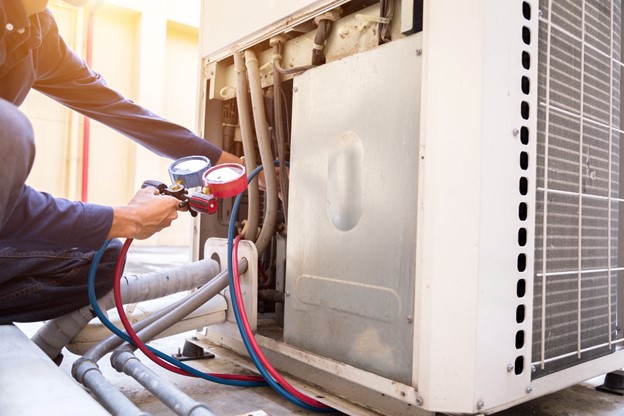
How to Use Your HVAC Unit Efficiently Infographic

Click below to embed this infographic into your website:

Why Is My Air Conditioning System Dripping Water?

Air Conditioning Dripping WaterNo matter what type of air conditioner you have on your home—split system, packaged system, or window unit—they all work similarly and will produce water through condensation. This is a normal function of all AC systems to create cold air and can make it look like your air conditioner is leaking water.
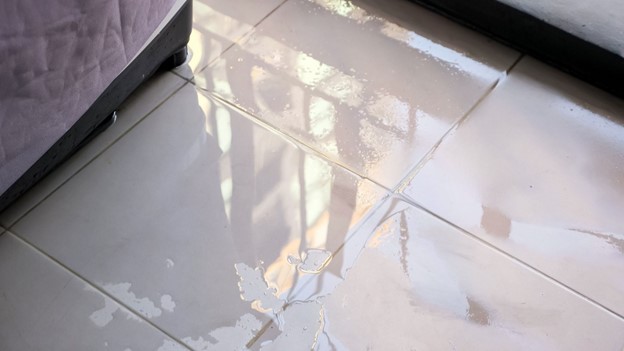
The water condensation is created by the following AC operations:

  1. When the ac unit is turned on, it starts to pull the warm humid air out of your home and over the cooling coils.
  2. The cooling coils are colder because they are filled with some type of refrigerant that is circulating through the coils.
  3. The water vapor in the warm humid air starts to condense on the cooling coils.
  4. As more water condenses, it will eventually start dripping off the coiling coils into a drain pan.
  5. As the drain pan starts to get full, the water slowly drains away down a connected condensate drain line or drain pipe.

Depending on the type of AC system you have installed, it will determine how the drain pipe is connected. On split systems and packaged systems, where the AC cooling coils are outdoors, the condensate drain line is normally attached to the side of the unit and drains directly into the ground away from the unit.

For indoor air conditioners, the drain pipe could be connected to one of your plumbing drain lines. For window ac units, the condensate drain line is located on the back of the unit, farthest from the window. The water drips out of the line and onto the ground.

When Air Conditioning Leaking Water Is Not Normal

Water on Floor Because AC BrokeThere are a few different situations where air conditioners leaking water is not normal. An excessive amount of water flowing from under the base of an outdoor unit or water backing up inside the home around the indoor part of a split AC system could be caused by the following problems:
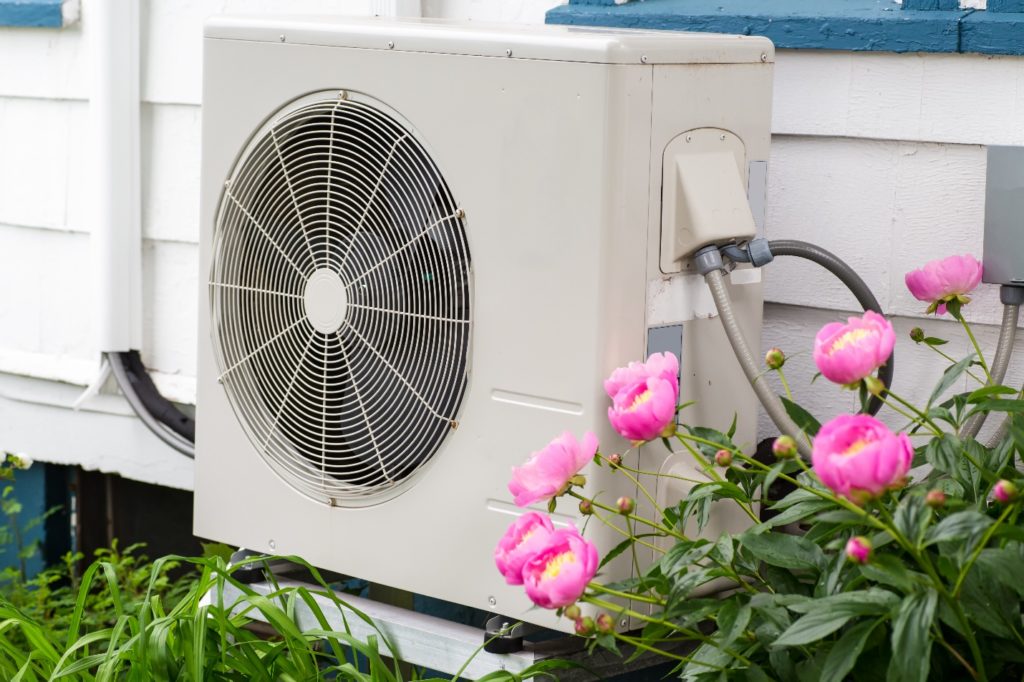
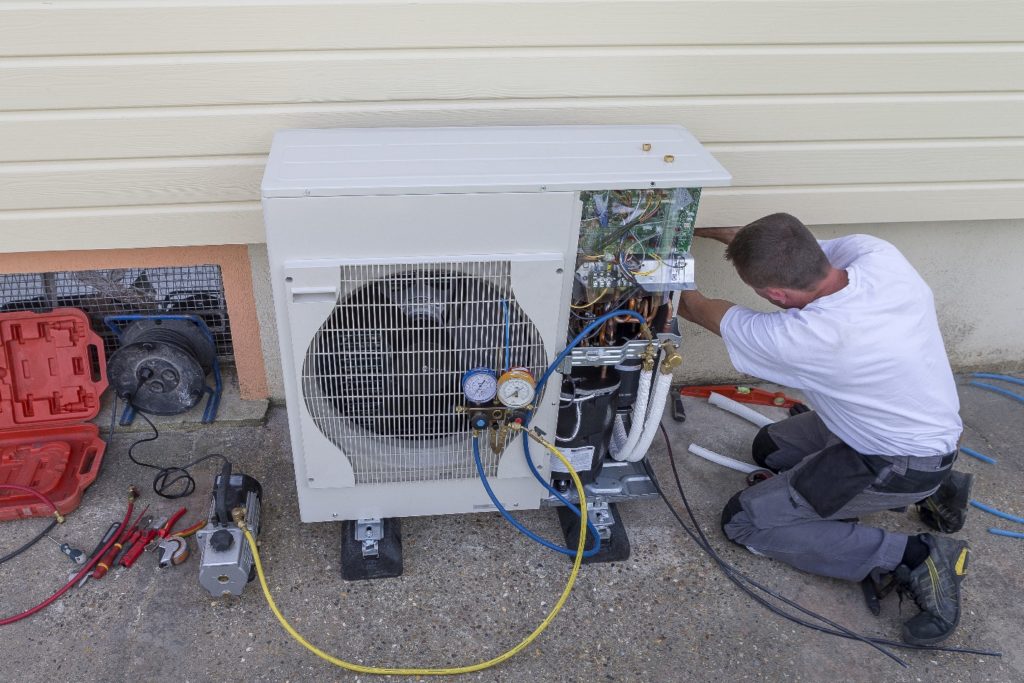
  • Clogged Drain Line: If the drain line gets clogged, the drain pan will overflow since water cannot flow out the drain pipe.
  • Rusted or Damaged Drain Pan: On older units, the drain pans were made of metal and can rust, so water just flows freely from under the unit. On newer units, the pans are made of plastic but could still crack and break from normal wear and tear.
  • Dirty Cooling Coils Vents: If the cooling coils and air vents on your outdoor unit are dirty, it can create airflow problems and cause the condenser and evaporator coils to freeze. When they thaw, it creates excess water, and the drain pan overflows.
  • Broken or Disconnected Drain Pipe: If the drain pipe is broken or becomes disconnected from the drain pan, the water will not drain correctly.
  • Refrigerant Level Is Low: If your AC system is low on refrigerant, it, too, will cause the condenser coils and evaporator coils to freeze.
  • Condensation Pump Broken: Some units have a condensation pump that pumps the water out of the condensate pan and into the drain line. If the pump breaks, the pan can overflow.
  • Dirty Air Filter: If the air filter is dirty, it can cause your AC unit to work harder to cool your home. Since the HVAC system is working harder, it can overheat and cause the condenser and evaporator coils to freeze.
  • Refrigerant Leak: If a crack develops in the condenser or evaporator coils, refrigerant leaks out of the system. If it is hot outside, the refrigerant will create condensation that makes it look like your ac is leaking. If you notice your air conditioner is not cooling properly, you could have a refrigerant leak.

To determine what is causing water to leak from your AC system or if you have general concerns or questions about why your air conditioner is leaking water, call a professional air conditioner repair technician from Christianson Air Conditioning & Plumbing at 512-246-5400 today!

We perform AC repairs, replacements, tune-ups, and inspections in New Braunfels, Temple, San Antonio, and the Austin Metro Area.

Heat Pump Systems vs. Traditional HVAC Systems

You have a few different options when you are shopping around for a new air conditioning installation for your Texas home. Two of your options are traditional HVAC systems and heat pump systems. Both systems can heat and cool your home, but there are a few key differences in how they work.

You need to understand these differences in order to choose the best cooling option for your home. Let’s take a look at how each one works, how they are installed, and which one is most efficient for those hot Texas summers.

How Heat Pump Systems Work

The name “heat pump” can be misleading because you think it would just heat your home. The name of this system actually refers to how it operates. A heat pump moves warm and hot air from one area to another instead of heating the air.

air conditioning unit

The warm air being transferred through the heat pump will do one of two things. In the summertime, it moves the hot air from inside the home into the unit, and then absorbs the heat from the hot air. Next, it blows the now-cooled air back into the home.

The cooling function on heat pump systems functions in a similar way to those on an air conditioning system. The primary difference is a heat pump can also be used to heat the home, and it does not require a separate furnace or heating unit. During the cooler winter months, a heat pump absorbs the heat energy found in outdoor air and blows the warm air into the home.

How Traditional AC and Heating Systems Work

With a traditional air conditioning system, hot air is drawn out of the house through the return air duct. It is passed over cooling coils inside the outdoor unit. Inside the coils is a refrigerant that absorbs the heat from the air and cools it. After the air is cooled, it is blown back into the home.

If you also want to heat your home, you need a separate furnace inside the home or a packaged outdoor unit. Packaged systems are common in Texas, as they include the AC system and a separate heating system that is installed outside your home. The main benefit of a packaged system is it frees up space inside the home where a furnace and other shared system components would be installed.

Heat Pump Systems Installation

Heat pump systems consist of various parts and components. There is an indoor unit that will have a fan, air handler (blower motor), and cooling/heating coils. There is also an outdoor unit that contains its own cooling/heating coils and a fan to help move air over the coils.

The heat pump is installed in a similar way to a conventional split HVAC system. Once installed, the air handler is connected to the ductwork inside your home. There is a return air vent and an air filter as well. In place of a traditional heating coil, the heat pump has a reversing valve. This valve allows the refrigerant to flow in opposite directions. Which way the refrigerant flows will depend on whether the system is set to heat or cool the home.

There is a variant available with heat pump systems for homes without air ducts, called a ductless system. These systems are typically mounted on the walls in the rooms you want to heat and cool. They are connected to a small outdoor unit.

technician working on a heat pump outside

Traditional Heating and Air Conditioner Installation

With a traditional heating and cooling system, the furnace part of the system is installed indoors while the cooling unit is installed outdoors. These two systems are connected together inside, where they share some similar components like the air handler, blower motor, air filter, and ductwork.

With a packaged HVAC system, the entire unit is installed outside the home. Once installed, it is connected to the existing ductwork. The air handler, blower motor, and heating system are all contained within the outdoor cooling unit. Many homes in Texas have these because our winters tend to be shorter and we rely upon our air conditioning systems much more.

Which Type of System Is More Energy Efficient?

You can find both heat pump systems and traditional HVAC systems which are very energy efficient. Ideally, you want a system with a SEER rating of 13 or more. A SEER rating of 18 is considered very efficient.

Part of the system’s efficiency does depend on your preferred indoor air temperature. This will determine how often the system has to run. In general, and under normal operating conditions, both energy-efficient heat pumps and air conditioning systems tend to cost about the same to operate during the hot Texas summers.

How Long Does Each Type of System Last?

With regular maintenance at least twice a year, heat pump systems last about 12 to 15 years if they are constantly run every day. AC systems, on the other hand, can last between 15 to 20 years since you are only using them for about eight months or so each year.

Heat Pump vs. Air Conditioning Installation Costs

It is important to keep in mind the costs for heat pump or air conditioning installation do vary based on the features, options, brand, size, style, and type of system you choose to have installed. That being said, please remember the following are just generalized estimated installation costs and should not be considered an actual quoted system installation price.

Heat pumps can range in cost from as little as $700 for the smallest systems to around $3,000 for larger or multiple systems. Traditional air conditioning systems can range from around $1,500 for smaller units to around $3,400 for larger or multiple systems.

In addition, ductless systems tend to cost more and have their own range of prices. These will also vary based on the number of rooms you need to heat and cool inside your home. For the most accurate system and installation costs, it is best to request a free quote from one of our qualified heating and cooling installation professionals.

Which System Is Best for Hot Texas Summers?

Heat pump systems are well suited for moderate climates that do not have very cold winters. In Texas, they can work rather well if you do not need to keep your home at lower indoor air temperatures in the mid to high-60s. If you are comfortable with the thermostat set to 76 to 78 or even 80, then a heat pump could be the right choice for your home.

If you like your home cooler, then a traditional air conditioning system could be the better option. This is because traditional systems are able to cool and reduce air temperatures much faster on extremely hot days.

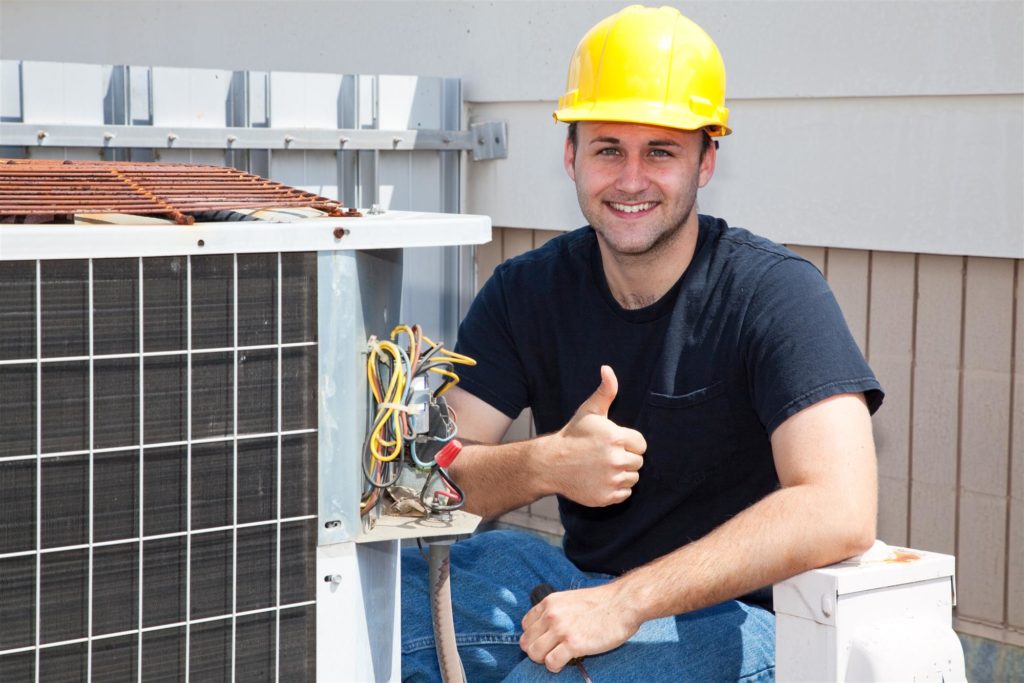
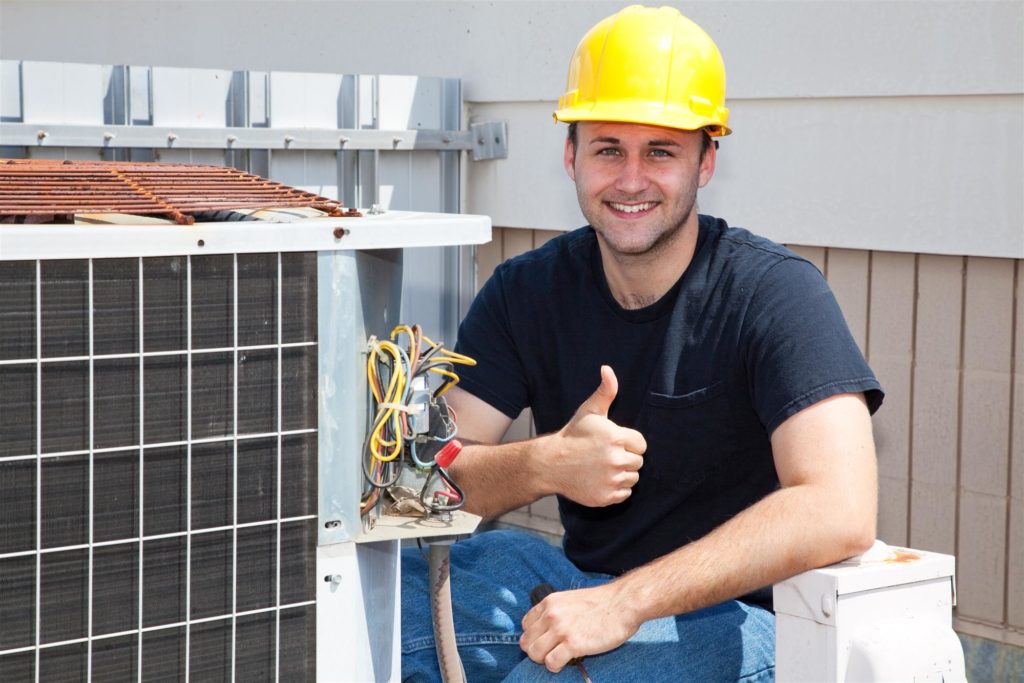
air condioner repairman thumbsup

Other Considerations When Selecting a New System

One of the most important things to consider, aside from efficiency, system cost, and installation cost, is the size of the unit itself. You want a unit that is sized correctly for your home. If you get a unit that is undersized, it will not be able to keep up with your cooling and heating demands. Not to mention, it will not be energy efficient at all.

Conversely, you want to avoid getting an oversized system too. Having a larger system than your home needs will cost more to operate and not provide any noticeable benefits to keeping your home cooled or heated. In addition, you will have much higher heating and cooling energy bills.

In the end, it really comes down to your own personal heating and cooling needs. If you only have a few rooms you need to heat and cool or a small home, a heat pump could be best for you. If you have a larger home or like to keep it much cooler during the hot Texas summers, then a traditional air conditioning system could be perfect.

For assistance in deciding whether heat pump systems or traditional HVAC systems are best for your home, please feel free to contact your nearest Christianson Air Conditioning & Plumbing location in New Braunfels, Temple, San Antonio, or Austin Metro today! We would be happy to discuss your heating and cooling needs and help you find the most cost-effective and energy efficient system for your home.

Four Signs Your Home Could Require Emergency AC Repair

No one wants to wake up in the middle of the night to a warm and humid home during the hot Texas summers. Yet, air conditioning systems do break down unexpectedly when they are not well-maintained, and then they require an emergency AC repair service call.

Require Emergency AC Repair

Long before your home’s AC breaks without warning, there are several early warning signs it will exhibit. If you can catch these and have the AC system repaired by our air conditioner company, you can hopefully avoid scheduling a 24-hour emergency repair service. Some of the more common warning signs to watch for include:

  1. There is a reduction in the force of the airflow blowing out of the vents.

This problem can be related to the air conditioning system not having access to unrestricted air flow. There can be a few causes for this type of problem. The most frequent cause is a dirty and clogged air filter.

If you notice this problem, the first thing you will want to do is check your air filter. If it is dirty and caked full of dust, dirt, and other debris, then change it. DO NOT run the air conditioner without a filter. Doing so will allow dirt, hair, dust and other debris to get inside the system and potentially damage it.

The other cause for a reduction in airflow could be an obstruction in the air vents themselves. It is not unheard of for a small animal, like a squirrel, mouse, or bird to get into the air vents and build a nest.

The materials they use to build the nest can block the air flow and create a restriction in the air vents. You will want to have our air conditioner company clean your air vents and verify all obstructions have been removed.

  1. The air conditioner is constantly running but not blowing cold air.

The cause for this issue could be that your air conditioner needs to have its coolant levels recharged. There might also be a slow leak in the cooling coils where the coolant is escaping. Additionally, if the air intake vents on the sides of the outdoor unit are dirty and need cleaning, the cooling coils cannot properly release heat.

This will cause the coolant to become warmer, so the air blowing out can feel cool or even warm. Having these types of problems fixed sooner than later could make a huge difference in your air conditioner breaking down unexpectedly.

  1. The thermostat “clicks” on but the air conditioner does not start.

For this type of problem, there are a few things you can check to see if you can get it started on your own before calling for AC repair. Start by verifying the breaker switch for your AC has not blown.

Depending on how your home is wired, the breaker for your AC outdoor unit could be in the main breaker box or in its own breaker box next to the unit. If the switch has blown, reset it and see if this fixes the problem. If the switch blows again, call for AC service, as there is an electrical problem that is overloading the system.

Another reason your AC will not start is if any of the wiring has become disconnected or damaged. Sometimes small rodents and other animals will chew on any exposed wiring. If they chew all the way through the wires, the signal between the thermostat and outdoor unit will be broken, and the AC will not turn on.

You can check to see if wiring near the unit appears to have been damaged. However, make sure to shut off the breakers first before touching the wiring. If you find wires are damaged and broken, then you will want to call for emergency AC repair.

  1. The air conditioner only runs for a short time and won’t turn back on for hours.

This issue can be related to low coolant levels inside the unit. It can also be caused if you have your thermostat set too low, and the coolant moving through the cooling coils is freezing. Yet another cause is if the water drain line on the side of the outdoor unit is clogged, it can cause the system to shut off.

For the latter two issues, you can do a self-check yourself before calling for service. Turn your thermostat up five degrees and wait to see if the system starts running correctly. If it does, then you had the unit set too low. You may still want to schedule a service call just to have your system checked.

For a clogged drain line, inspect around the outdoor unit and see if water appears to be coming out from underneath the unit. If it is, then the drain pipe is clogged. These are easy to clean if you have a removable one. If you are not sure how to do this, then call an AC repair technician for help.

When to Call for HVAC Emergency Service

If you failed to catch any of the early warning signs or your air conditioner just stops working unexpectedly, then you will need to decide if you truly need HVAC emergency service. Ask yourself the following questions:

  • Do you have children in the home?
  • Are you elderly or caring for elderly parents in the home?
  • Do you have pets in the home?

If you said yes to one or more, then you need emergency repair service. The hot Texas summers can be extremely difficult and hard for children, the elderly, and pets to deal with when they are stuck in a home that is 90+ degrees. Even if it is the middle of the night and your AC stops working, you can call and get 24-hour emergency repair service.

runner resting after running hard

Otherwise, if you can wait until morning and do not have children, pets, or elderly parents in your home, then you can still schedule same-day service so you will not have to be without your AC for long.

  • Emergency AC Repair Tip: Make sure to store our emergency service phone number in your cell phone or on a piece of paper hung on the side of your refrigerator.

Five Tips to Keep the Home Cool When Your AC Breaks

While you are waiting for AC repair service, there are several things you can do to help keep your home cool:

  1. Keep window blinds and curtains closed. You want to keep out direct sunlight, as this can heat up the home. You can also hang up sheets, beach towels, or light comforters over the windows for added layers to stop the heat.
  2. Turn up the speed on ceiling fans. If you have ceiling fans in the home, turn them up to medium or high speed. This will help keep the air flowing throughout the home better and prevent pockets of warm air from accumulating near the ceiling.
  3. If it is windy outside, create a natural cross-breeze upstairs. Open windows on opposite sides of your home in the bedrooms and leave the doors open. The cross-breeze will help draw up hot air from downstairs and vent it out of the home. If it is not windy out, you could place box fans in the windows and have one side blow into the home and the other outward to create an artificial cross-breeze.
  4. If you have children or elders, get out of the house. Go to a neighbor’s, the mall, a library, or a 24-hour diner where there is air conditioning and you can stay cool. You can let your AC service technician know you are leaving the home and ask them to call you when they are on their way to fix your AC.
  5. Keep electronics off and do not cook inside the home. Keep the TV, video games, computers, and other electronics off. These generate heat. Also, do not use your stove or oven or run the dishwasher or dryer, as these appliances will also create excess heat inside the house.

How to Avoid Emergency AC Repair Calls

Emergency AC Repair Calls

The most effective way to avoid having to call for emergency AC repair service is with regular maintenance and AC tune-up services. In Texas, since we tend to use our AC units almost year-round, it is highly recommended to have AC systems inspected twice a year—normally in the spring before the hot summer arrives, and again in the fall when temperatures start cooling down.

Bi-annual AC maintenance service helps prevent problems and can identify issues before your system fails unexpectedly in the middle of the hot summer. If you have not had your AC serviced yet this year, or if you are noticing any of the common warning signs we discussed or need emergency repair service, do not hesitate to contact your nearest Christianson  Air Conditioning & Plumbing location in San Antonio, Austin, New Braunfels, or Temple today!

How Can a Dehumidifier or Humidifier Benefit My Texas Home?

It is important to ensure the level of indoor humidity in your Texas home is kept at the right percentage level year-round. At Christianson Air Conditioning & Plumbing, we are frequently asked: “Do I need a humidifier or dehumidifier for my home?” To answer this question, let’s look at what humidity is and how it can affect indoor air quality.

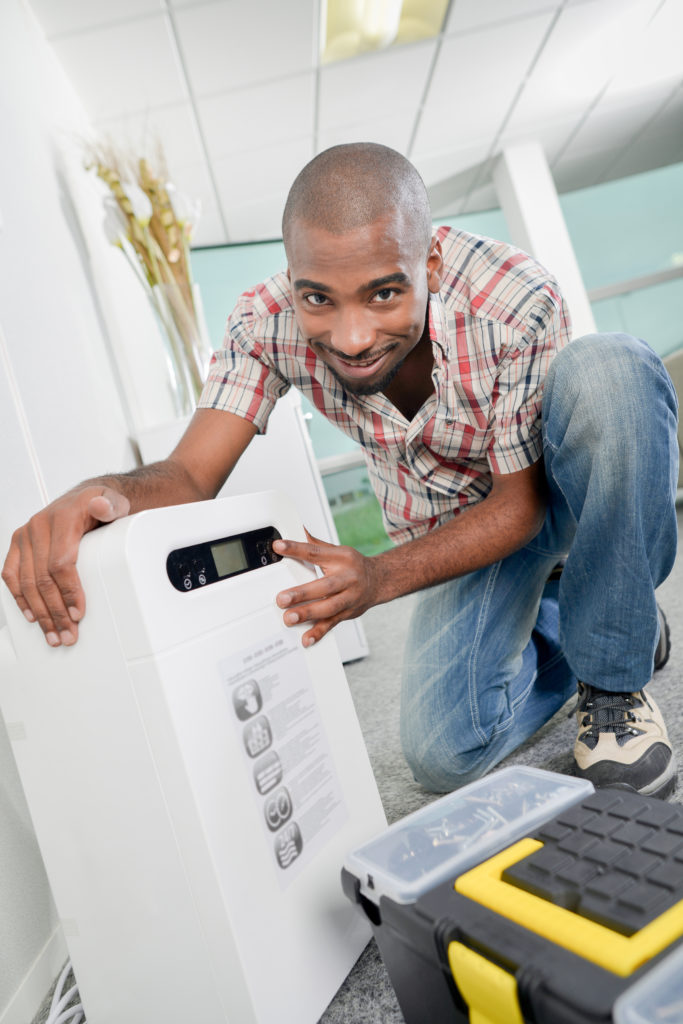
Man installing a dehumidifier

Humidity is the amount of moisture that is in the air. Ideally, you want to make sure the humidity level in your home is less than fifty percent. A good average to aim for is around forty percent. Maintaining around forty percent humidity in your Texas home will ensure you are comfortable.

This humidity level also helps promote better indoor air quality, alleviates problems with allergies and asthma, and reduces the spread of illnesses. In addition, you will discover you can set your thermostat a few degrees higher in the summer and a few degrees lower in the winter and still be comfortable.

Why You Need a Dehumidifier

As we all know, during the hot Texas summers, humidity levels can be rather high and make going outside almost unbearable. Even in your home during the summertime, humidity levels can increase and cause problems with mold and mildew.

If you have allergies or suffer from asthma, increased humidity levels can make it difficult to breathe. Not to mention, no one likes feeling moisture on their skin while they are trying to get a good night’s sleep. It is important to speak to a lung doctor as well to see what else you can do in your home to help you with your breathing, especially if you do suffer from these issues mentioned before.

While your air conditioner is designed to lower the indoor air temperature, it does not fully remove all humidity. You may have noticed your home feels warmer than what the thermostat says on those 90+ summer days. This is because the humidity inside is higher. When humidity levels are higher, they can make it feel warmer.

A dehumidifier can help by removing the excess moisture from the indoor air. As the water is extracted from the air, it makes it drier. Drier air feels cooler on the skin. Additionally, you won’t have to worry about condensation inside the home, which can promote mold and mildew growth.

Why You Need a Humidifier

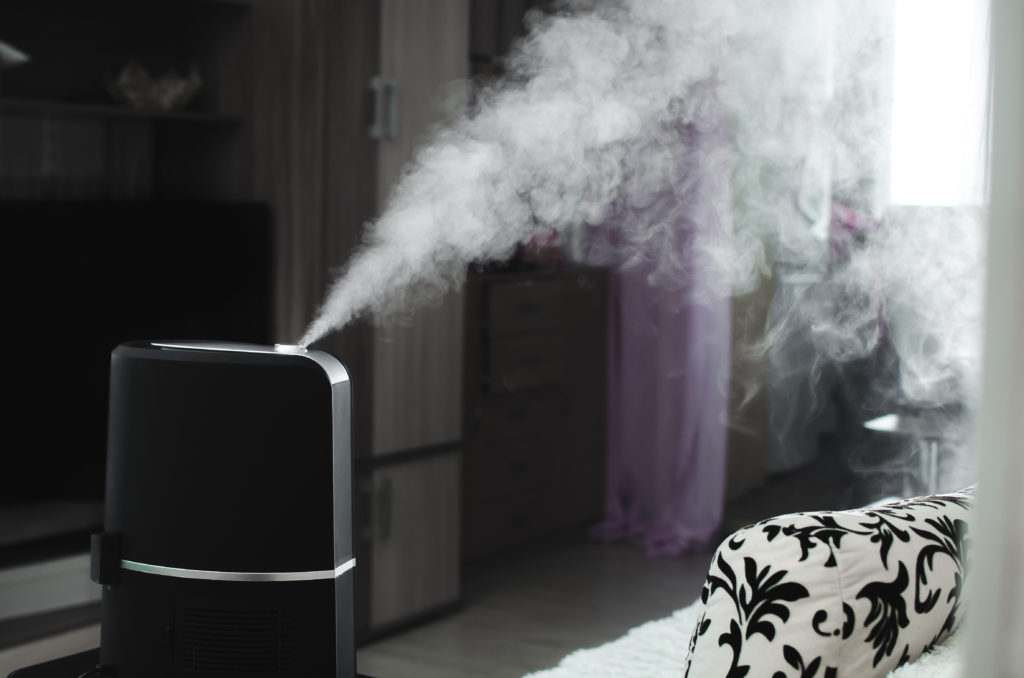
The steam from the humidifier in the night

Humidifiers, on the other hand, add moisture to the indoor air. They are perfect for your home in the winter when humidity levels can drop below 40 percent. As the air becomes drier, it makes it easier for bacteria and viruses to be spread. It also can cause dry and chapped skin. Using a humidifier can be a wise choice in such options. To enhance the effects, many people all over the world tend to buy distilled water from suppliers like Golyath or the ones in their area to use in the humidifiers. Distilled water can reduce the chances of mold colonies forming inside the humidifier’s tank. This in turn can prevent the spread of bacteria and viruses.

Another side-effect of drier air with low humidity levels is it will make you feel colder. If you have ever gotten the chills when temperatures dip down to the 50s or 60s, it is probably because there is very little humidity in the air.

Furthermore, dry air is not good for anything made from wood, including your furniture and flooring. Low humidity levels will suck moisture out of the wood and cause it to dry out. Dry wood can become brittle and break easier.

Hopefully, you can see the benefits of getting a dehumidifier and humidifier for your Texas home. To learn more about getting a dehumidifier and humidifier installed, or for AC repair and plumbing repair services, please feel free to contact your nearest Christianson Air Conditioning & Plumbing location in San Antonio, Temple, New Braunfels, or Austin today!

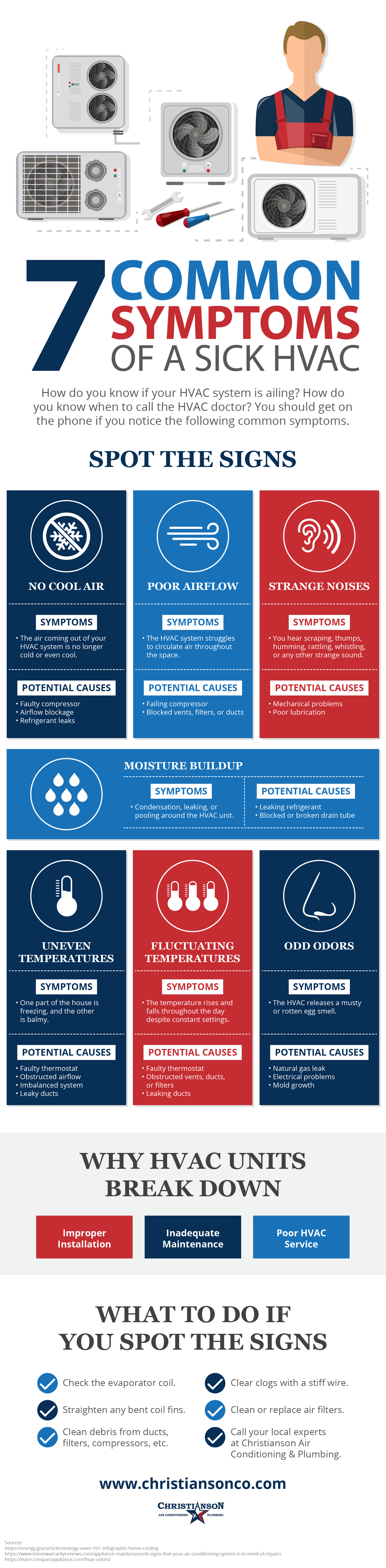
7 Common Symptoms of a Sick HVAC

Your home’s HVAC system is a complex air circulation system that helps control humidity levels, keep your home cool throughout the hot Texas summers, as well as warm on those occasional cold snaps we get in the wintertime.

Fortunately, your home’s heating and cooling system will let you know when things are not working correctly. Being able to recognize common symptoms of a potentially sick HVAC can help prevent more costly repairs in the long run. Better still is to remember to have your HVAC system inspected semi-annually to prevent it from getting sick!

To learn more about the 7 most common symptoms of a sick HVAC and potential causes, as well as reasons for HVAC failure and what to do if you notice any of the signs mentioned, we invite you to continue reading and reviewing the following infographic.

Afterward, if you would like to schedule HVAC maintenance or have further questions, please feel free to contact Christianson Air Conditioning & Plumbing today!

7 Common Symptoms of a Sick HVAC Infographic

Click below to embed this infographic into your website:

Is Your Heating System Too Loud? Cycling On and Off? We Can Fix That

Your home heating system should run fairly quietly when it is operating correctly. The only types of noises you should hear are the movement of air out of ducts and possibly a clicking sound at the thermostat signaling the unit to turn on and shut off at the end of the heat cycle.

Heating System

Unless you are right next to the furnace, you should not hear the actual sounds of the furnace running. If you can hear the sound of the blower motor, blower motor fan, or other types of noises throughout the home, it could indicate something is wrong with your furnace.

Troubleshooting the cause of the noises will depend on the type of system installed in your home. Let’s take a look at some of the various systems and common causes of noises.

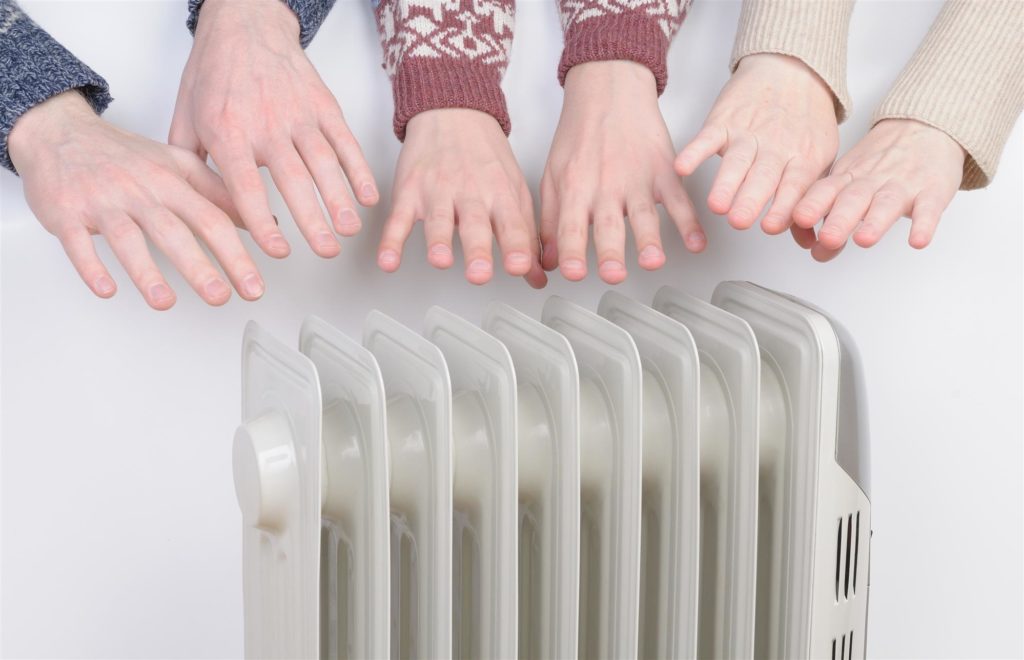
Radiator/Radiant Heating Systems

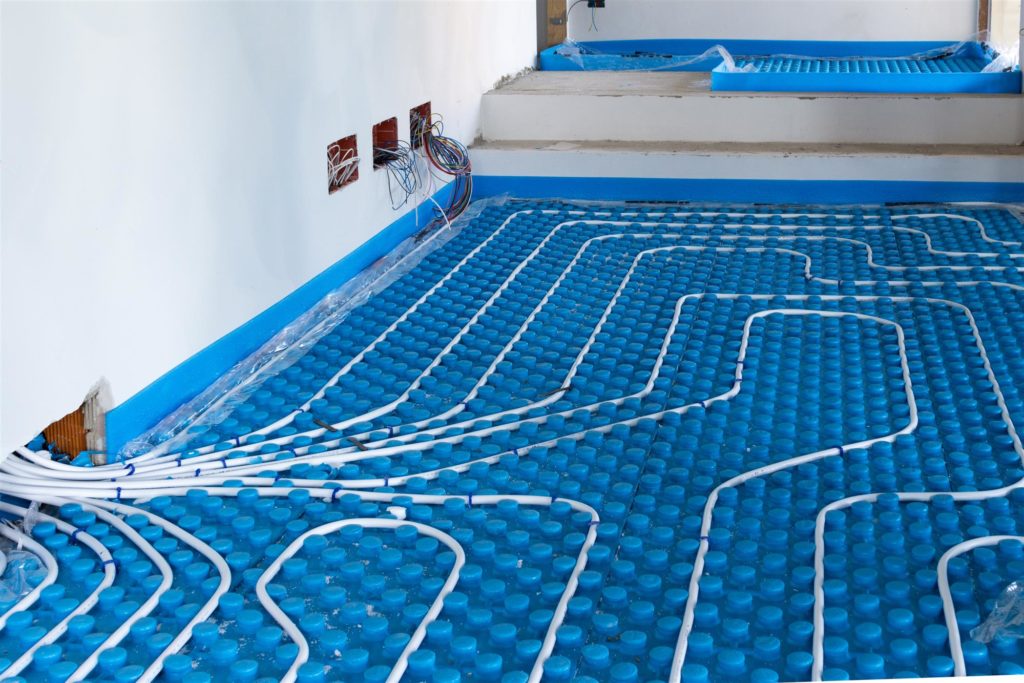
These types of systems use hot water to deliver heat to the rooms in your home. Newer designs allow for radiant heat systems to be installed under flooring without the need for a radiator in each room.

Radiator Radiant Heating Systems

In order to transport the hot water through the system, various plumbing pipes are used, similar to your water pipes. These systems can produce banging or knocking sounds when there are no air relief valves attached to the water lines or the pipes are not secure in the walls or subflooring.

When the flow of the hot water is abruptly stopped when the system shuts off and there are no pockets of air in the relief valves, it “hammers” against the side of the pipes from the reverse flow.

To illustrate, think about a vehicle crash test into a solid steel wall. Upon impact, the car hits the wall and the force of the impact causes it to move backward. The same is true when the water in the radiant heat system shuts off and the pressure cannot be released through air relief valves.

In cases where you hear a constant banging while the system is in operation in different areas throughout the home, this signifies the pipes were not properly secured when they were installed. The pipes can bang against interior structures and cause an echo effect.

Radiant Heating Systems

Aside from banging, other noises you could notice include hissing sounds and cracking and popping sounds. Hissing sounds are caused when there is a restriction in the pipes, like from scale buildup, where the water flow has to pass through a narrow section. Cracking and popping sounds occur when there are instances of scale buildup, corrosion, and any other sediments in the hot water or boiler tank.

Resolving these problems is not difficult as long as you get help from a qualified and experienced plumbing and heating repair company. The reason we recommend using a professional is that working with hot water lines can be dangerous and could result in personal injuries from the hot scalding water.

Conventional Furnace Systems

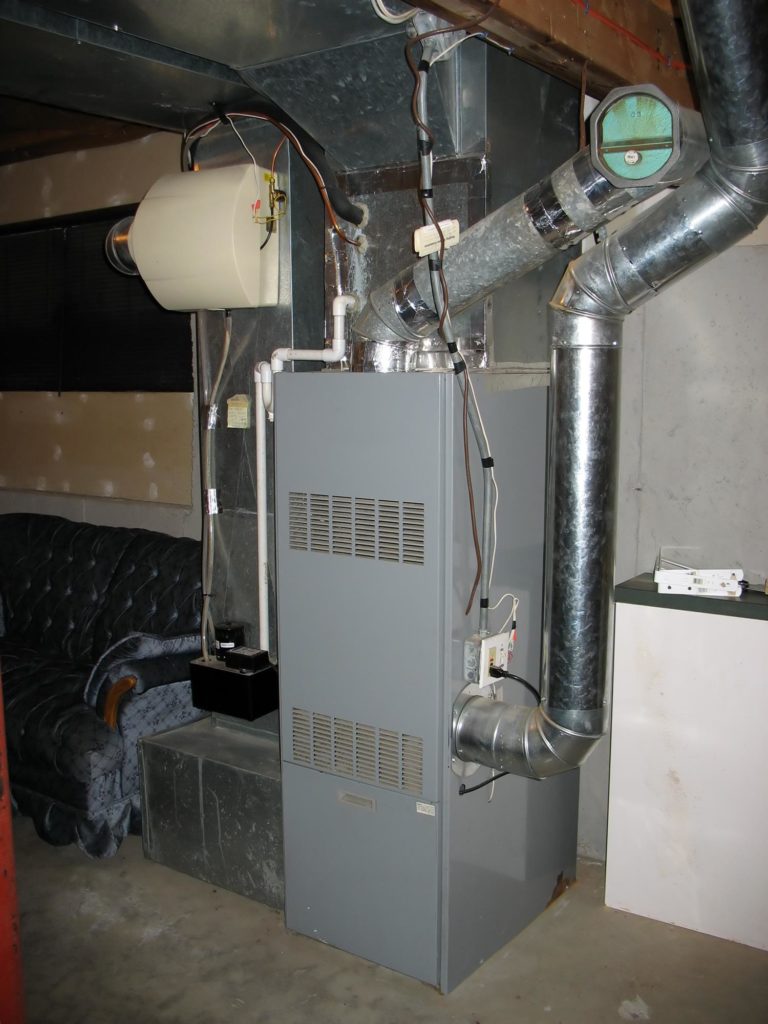
These types of systems are where you have the furnace installed somewhere inside the home, like your garage or basement, and it is connected to your outdoor AC condensing unit. Most people refer to this type of system as central heating and air conditioning.

Conventional Furnace Systems

Some of the more common noises you might hear from a conventional furnace system could include:

  • Hissing – Hissing noises can occur when there is a restriction or blockage in the ductwork and the air is being forced around it.
  • Clicking – If you notice clicking noises coming from the furnace unit, it could mean many different things, such as certain components are not engaging when they should and the relay switches keep clicking attempting to turn them on or off.
  • Cracking and Popping – Cracking and popping noises could emit from your furnace if the heat exchanger or heating element inside the unit is damaged or cracked.
  • Banging – Banging can occur if parts and components are loose, like the blower motor fan blades banging against the inside of the unit because they are no longer securely attached.

Packaged Heating and Cooling Systems

Packaged systems are all-in-one units that are installed outside the house. They provide both heat and air conditioning for the entire home. These types of systems are very popular in southern areas of Texas where it does not get that cold in the winter.

It can be harder to notice sounds coming from packaged systems inside the home. However, if you notice the unit seems a bit louder, and you can hear it turn on and off, hear the fan, or other sounds from inside the home, then there could be problems that require an inspection from a cooling and heating system technician.

Heating and ooling Systems

Other Types of Heating Problems

Aside from making noises, there are other problems that can occur when firing up your heater for the first time. Initially, you might notice a burning smell coming from the air vents in your home with conventional and packaged systems.

This is normal and should dissipate after one or two cycles. If the smell persists for more than two cycles, then there is a serious and potentially dangerous problem with the system. Shut it off immediately and call for emergency service right away.

If you have a gas furnace, and you notice the thermostat clicks but nothing happens, the pilot light might have gone out. No pilot light—no heat. However, do take caution when checking the furnace, as gas will still continue to come out.

If the pilot is out, shut it off, open and air out the room, and wait an hour before attempting to relight the pilot. If the pilot continues to go out after being lit, this is when it is time to call in a professional.

Other Types of Heating Problems

Other common problems have to do with the cycling on and off of the system. There is a variety of different issues based on the type of system you have installed in your home, but could include:

  • Blower motor fan continues to run even after the unit has cycled on and off.
  • Blower motor fan does not engage during the furnace cycle.
  • The blower motor turns on before the furnace does.
  • The furnace cycles continuously and never shuts
  • The furnace cycles on and off almost constantly with only a minute or two between cycles.
  • The furnace only runs for a few minutes and shuts off before reaching the preset temperature on the thermostat.
  • The thermostat clicks to signal the furnace to turn on, but it never does.

Troubleshooting these types of problems can be very complex because they could involve electrical systems, electrical wiring, natural gas lines, pilot systems, plumbing systems, and more.

In some cases, the problem could be as simple as a broken or loose wire that needs to be fixed and reattached to the right connection on the thermostat. Other times, the problem could be due to the age of the system and various parts and components wearing out.

As such, it is in your best interests and safety to contact a professional plumbing and heating technician to troubleshoot and diagnose what is wrong with your home’s heating and cooling system.

  • TIP: To avoid unexpected heater failures and emergency service calls, schedule bi-annual heating and cooling maintenance services with your professional technician in the fall and spring. The spring service inspects and verifies your AC is ready for the hot Texas summers, while the fall service inspects your furnace to ensure it will provide heat on those colder winter mornings.

For problems with your home’s heating system or to schedule maintenance service, please feel free to contact your nearest Christianson Air Conditioning and Plumbing location in Austin, New Braunfels, Temple, or San Antonio today!

Prepare for Winter with Replaced Gas Lines & Water Heaters

Even as warm summer weather persists into fall, the cold of winter isn’t far behind. Don’t let mother nature deceive you. It’s important to prepare for winter in Austin, TX before the cold sets in. This will promote comfort, heating efficiency, and lower energy bills, as well as increased safety. Gas water heater repair and other home maintenance tasks should be completed now, so you’re ready for the winter cold as it sets in around San Antonio, TX.

Here is a checklist for preparing for winter, starting with your gas lines and water heaters.

Gas lines:

  • Have them checked for leaks. A rotten egg smell and hissing sound can indicate a problem, which can create a very dangerous situation, so contact a professional for an immediate repair.
  • If you aren’t on mains gas and you rely on gas bottles to get you through the colder months, make sure your bottles are in good condition. There should be no dents or deep scratches in the metal and the pressure should be at the recommended level. Remember to always transport your bottles safely on a trolley – you can find great deals on gas bottle trolleys here.

Water heaters:

  • Flush the tank so there is no sediment that can cause damage or lead to hot water heater failure during a cold snap.
  • Seek professional hot water heater installation of newer, more energy-efficient models.

Gas lines water heaters winter

Plumbing:

  • Insulate basement, crawlspace, and attic pipes to protect them against freezing.
  • Use heat tape on pipes especially prone to freezing.
  • Roll up and store garden hoses inside the house.
  • Have in-ground sprinkler systems blown out to purge them of freeze-prone

Heating, Ventilation, and Air Conditioning

Gas water heater repair isn’t the only important preparation. Your ventilation and air conditioning system can be the source of many issues that affect your Temple, TX home in winter. Here are a few items to consider in terms of efficiency:

  • Remove window-mounted air conditioners or seal them with insulated liners.
  • Switch fans into reverse to blow warm air toward the floor.
  • Install a programmable thermostat for better heating control.
  • Limit the flow of outside air by sealing duct leaks, installing insulating sheets behind exterior outlets and switch plates, and replacing the damper in a drafty fireplace.
  • If you have a whole house humidifier, clean it and have the evaporator pad replaced.
  • Inspect the firebox and flue system for soot, cracks, and other fire hazards.
  • Clean or replace furnace air filters, which improve air quality and efficiency.

Seal Windows and Doors

  • Replace leaky weatherstripping around doors and doorframes.
  • Replace door and window screens with stormproof materials.
  • Caulk any drafty windows or doors to prevent heat loss.
  • Repair or replace windows with cracks, gaps, or broken glass.
  • Repair or fix rotted or decayed wooden window frames.

Prepare HVAC winter

Professional Service

If you live in Austin, San Antonio, Temple, or New Braunfels, TX, you can ready your home for winter by detecting hot water heater problems early and having professional technicians look for other issues. For example, Christianson can provide expert air conditioning repair or conduct an airflow analysis to detect duct leakage and other inefficiencies. We can repair gas lines and install water heater systems that save energy and stay reliable for years to come.

Protect your home and family, comfort, and wallet. Contact Christianson Air Conditioning & Plumbing for seasonal or emergency AC or plumbing service.

Humidity, Heat Waves and Hot Summer Nights: We’ve Got You Covered!

Summer-especially here in the southwest-can be a killer. Texas summers average a temperature somewhere in the 90s, punctuated by heat spikes upward of 100 degrees. For residents of the Lone Star State, that means lots of air conditioning indoors and extra care outdoors! In this article, we’ll take a look at how the heat and humidity can affect your home and health, as well as how a good air conditioner company can help you keep cool and safe when the temperatures rise.

How Humidity Works

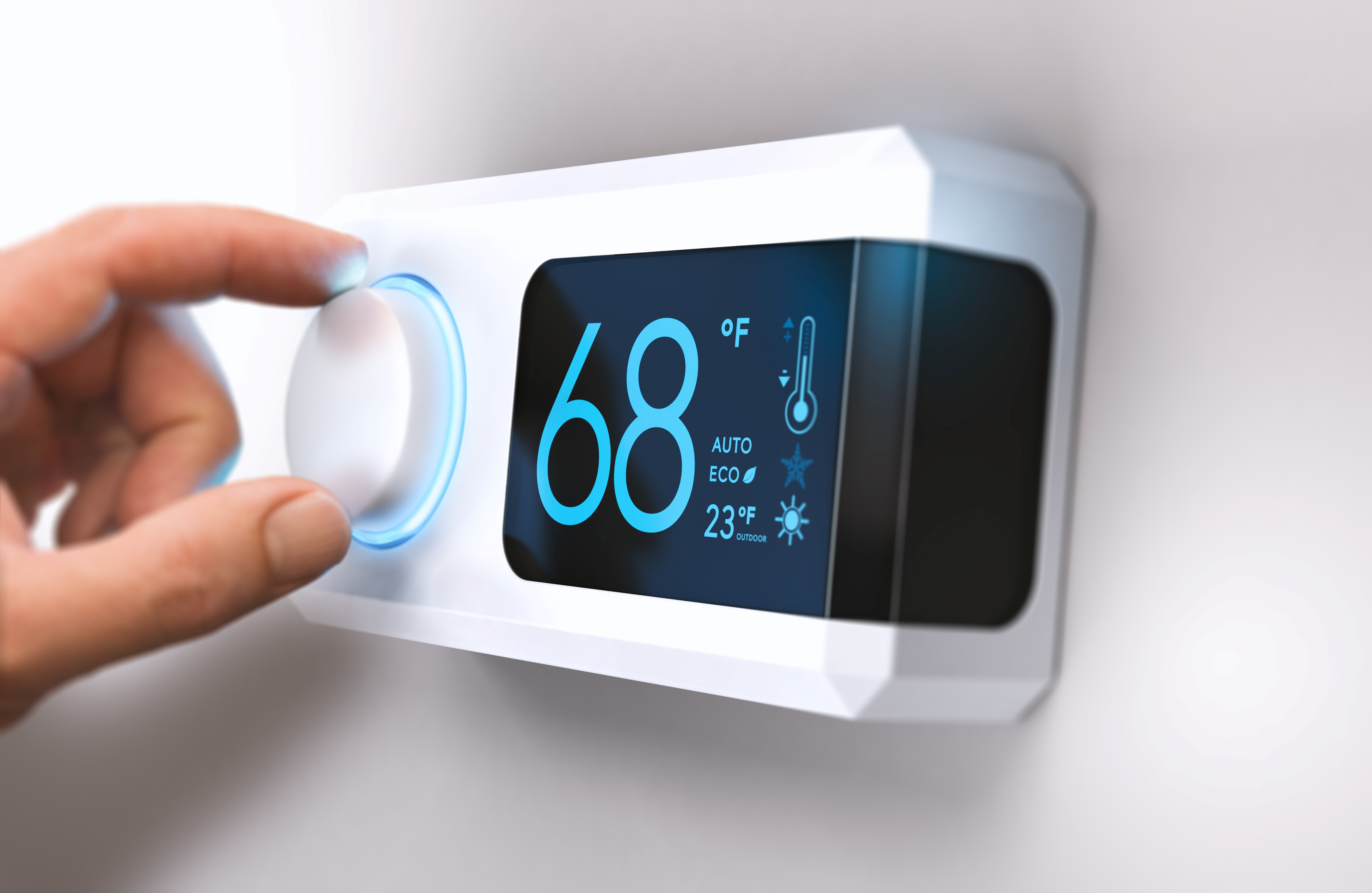
Humidity is a measurement of the amount of water vapor in the air. Much like walking through a cloud of steam, the presence of this water vapor Smart Thermostatmakes you feel sticky and slightly damp. The vapor is also the reason certain types of hair begin to frizz and curl in high humidity-the hair is essentially getting wet.

Generally, the amount of water vapor is defined in two ways: absolute humidity and relative humidity. Absolute humidity is calculated as the amount of water vapor divided by the amount of dry air at a given temperature. Relative humidity is the percentage we’re most familiar with in weather reports, as it refers to what percentage of the maximum possible amount of water vapor is currently present.

If the relative humidity is 50%, it means that the air is currently at half its capacity for water vapor. If the relative humidity is 100%, it means the air can’t possibly hold more vapor. At 100%, the vapor generally begins to form clouds. The vapor condenses and eventually falls back to the ground as rain. This is why it can seem so much less humid after a rainfall.

What Is a Heat Wave?

A “heat wave” is generally defined as a period of especially hot, potentially dangerous weather. A heat wave may also be accompanied by especially Woman Standing in Humidityhigh humidity. Because there is no respite from the incredible heat for a long stretch of time, people who spend a great deal of time outdoors or who do not have access to a cooled space can become extremely ill. Conditions like heat stroke, dehydration, and even death can result if a person does not take care during a heat wave-especially in the sweltering heat of the southwest United States.

Staying Safe in the Hot Outdoors

Whether you’re working during a heat wave or simply enjoy spending your summers in the sun, here are a few key tips for staying safe, cool, and properly hydrated in the great outdoors:

  • Plan rest periods into your workday (preferably somewhere cool).

If you’re laboring outside in extreme heat, make sure you take breaks to cool down and relax. Make sure your body temperature has a chance to level out while you hydrate and rest up before getting back to work. Over-working yourself in severe heat can be extremely dangerous (and it will likely affect the quality of your work).

  • Drink liquids frequently.

When spending a great deal of time outside in the heat, make sure you drink at least a half cup of water every 15 to 20 minutes to keep your Drinking Waterbody hydrated. Remember: As you sweat, you’re losing water! If you’re not so fond of drinking water, try some caffeinated drinks including coffee or even kombucha. In case you’re worried about your caffeine intake, you could perhaps try to measure the intake when it comes to these drinks and also try various fruit juices to keep yourself hydrated during this heat. You could maybe read this blog to know how much caffeine is in kombucha? You could check the same with any drink you prefer. Just make sure that you’re not dehydrated at all times.

  • Dress appropriately for the heat.

Always pay attention to the weather reports and dress for the heat and humidity. Should it cool off suddenly, you can always add layers over time.

  • Pay attention to any unusual symptoms, even if they seem vague.

Don’t take symptoms like dizziness, headache, nausea, or red-hot skin lightly. These may be symptoms of serious conditions like heat exhaustion or potentially fatal heat stroke. If your body starts acting unusually in the heat, it may be trying to tell you that something is very wrong.

  • Get into an air-conditioned space when you get the chance.

Even if you’d rather not be indoors for very long, it’s a good idea to take advantage of modern A/C systems whenever you can. Take a few minutes to pop into a nearby shop or public building to cool off in the air-conditioned space whenever you can. If you’re just hanging out in your backyard, make sure you head inside every so often to chill out-literally!

Using A/C Without Racking Up a Gigantic Energy Bill

Air conditioning can be a literal lifesaver in the heat of a Texas summer. Fortunately, there are a few things you can do to make sure you don’t break the bank trying to stay cool:

  • Make sure your A/C unit is in good condition before summer comes.

Make sure that your air conditioner is in good working order and will function efficiently by getting it inspected and serviced before the intense Fatigued Manheat of summer strikes. An air conditioner contractor like Christianson Air Conditioning & Plumbing can take a look at your system and help you address any maintenance or repairs that may need to be done before your unit is in regular use for the year.

  • Run the air conditioner less often at night.

Because our bodies generally need less cooling at night, you can set your air conditioner to run at a much lower rate while you’re asleep. If it’s not too hot indoors, you may be able to turn your A/C completely off at night and get by with a bedside fan.

  • Use a thermostat with a scheduling system to avoid cooling the house when no one is home.

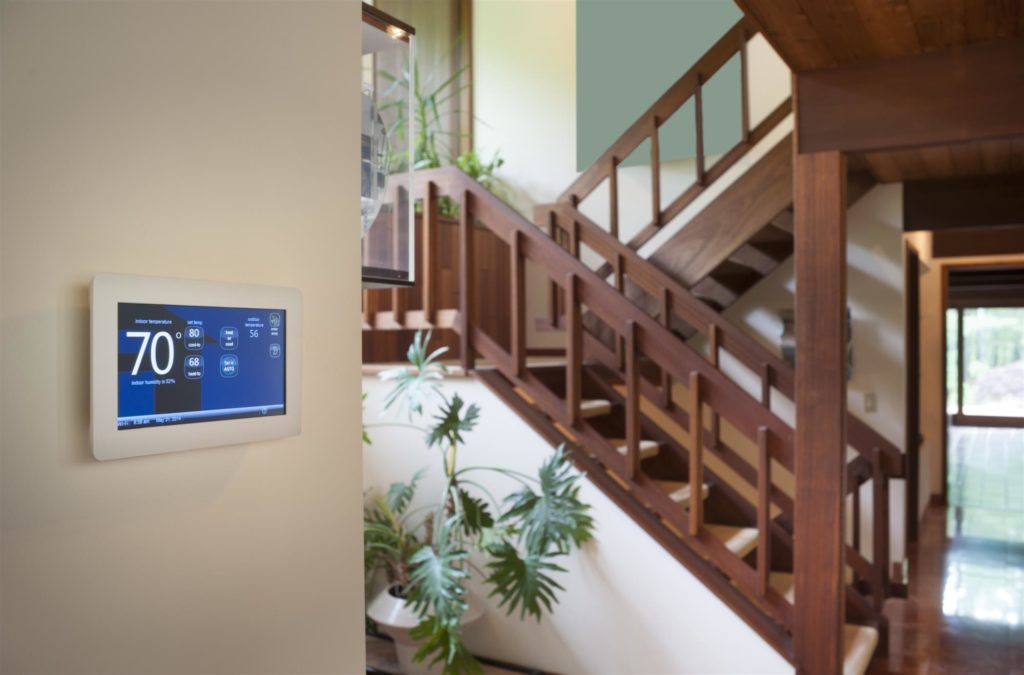
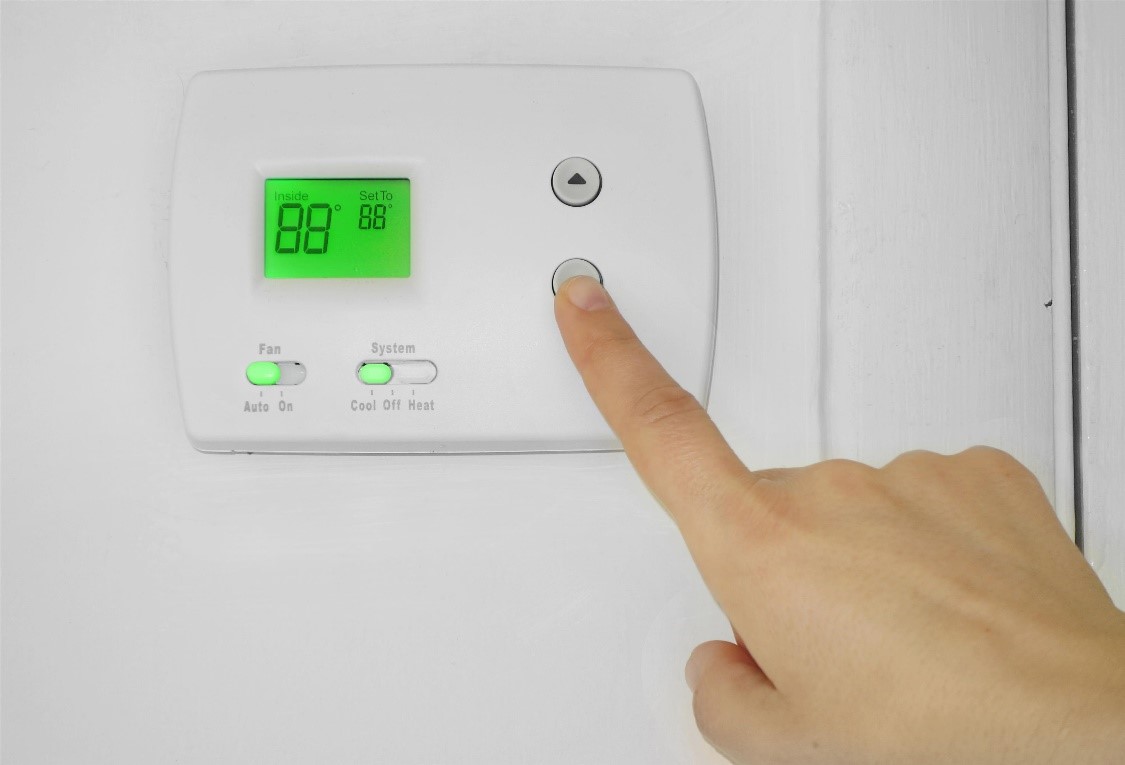
Another great way to reduce unnecessary usage is to use a thermostat with a scheduling option that allows you to adjust your home’s temperature at specific times of day. With timed cooling, you can set your A/C to kick on only a half hour before you arrive home, saving money on energy during the day when you’re not around.

  • Opt for a small window unit that cools only a certain area.

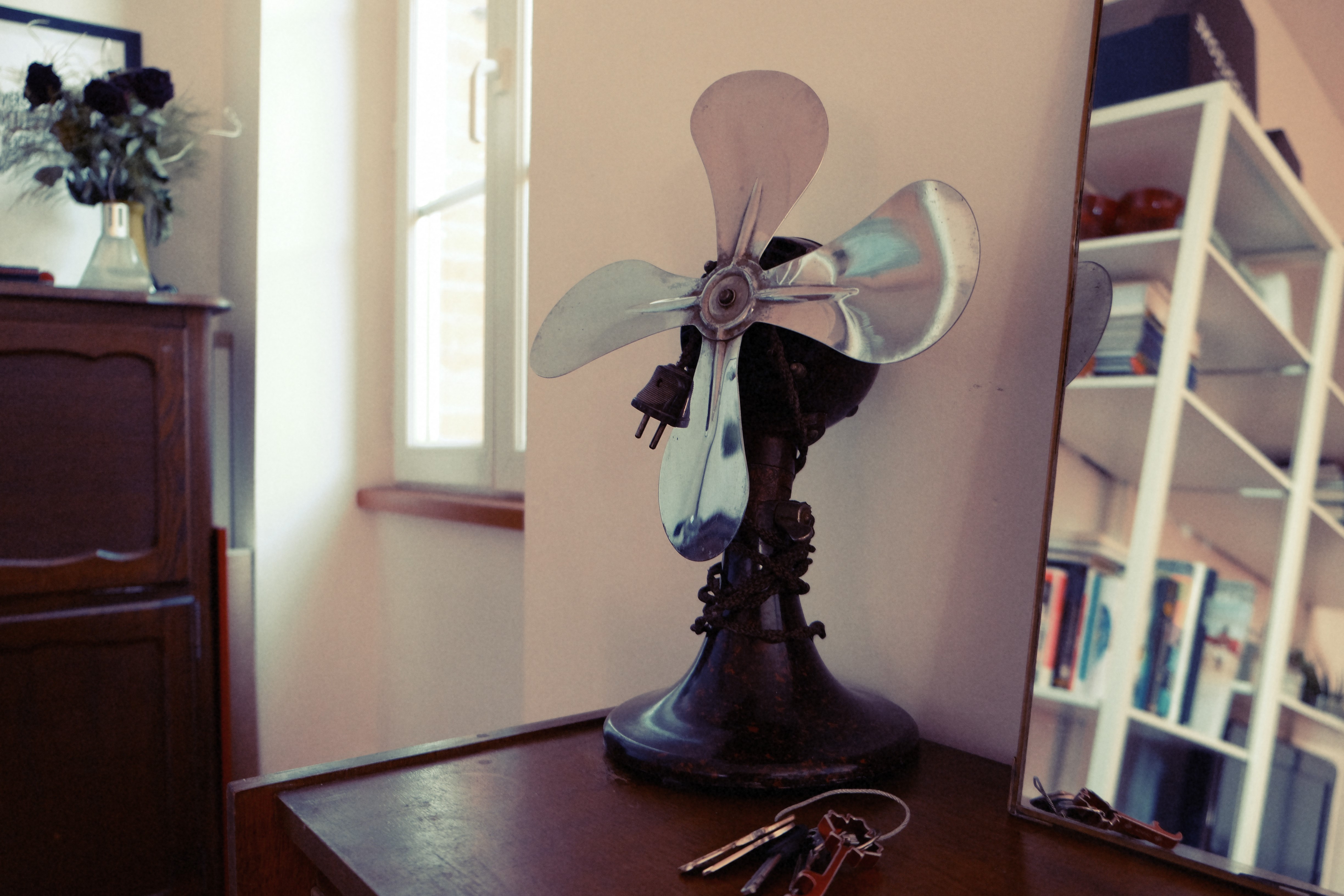
If you don’t have central air conditioning or would prefer not to use it, you can save money by heating only a small area or a single room with a Table Fansmall window unit. This uses significantly less energy and still gives you a nicely cooled getaway from the heat.

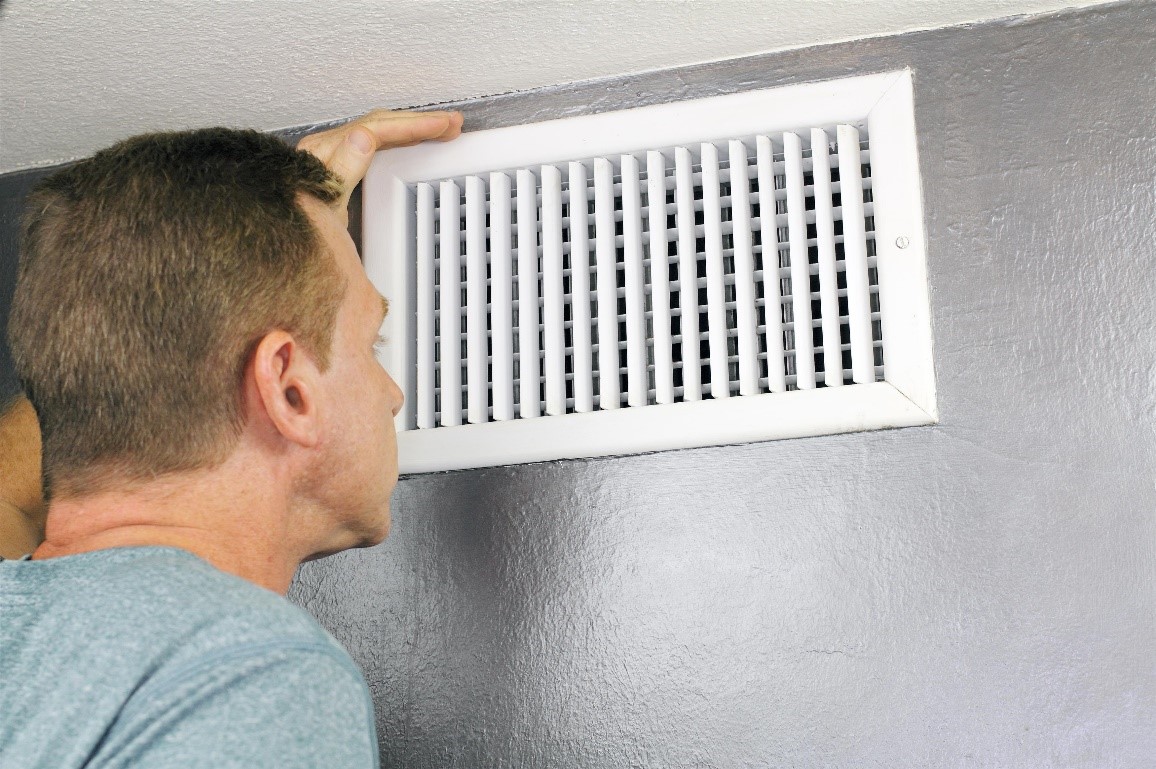
  • Close vents to rooms you don’t need to be cooled.

If there’s an area of your home that you don’t intend to spend much time in when it’s hot out (like the basement or a rarely used guest room), close the vents to that room. By not sending cooled air into that room, the areas you want cooled will come down to temperature more quickly and your system won’t waste energy.

  • Supplement air conditioning with fans for good movement.

Keep air moving throughout your home with a few fans for good measure. In addition to keeping cooled air distributed, the breeze will provide an extra cooling effect.

Beat the Heat and Humidity with Christianson Air Conditioning & Plumbing

At Christianson Air Conditioning & Plumbing, we’ve been helping residents across the Austin, San Antonio, Temple, and New Braunfels areas stay cool for more than 65 years. With our air conditioner installation, maintenance, and repair services, you can make sure that your home is prepared for the next big heat wave.

Whether you need us to perform a full air conditioner replacement or make an emergency repair to an existing A/C system, we’ve got you covered. To learn more about how our expert air conditioner contractors can help you beat the Texas heat, call your nearest Christianson Air Conditioning & Plumbing location today!

Source

  1. https://www.usclimatedata.com/climate/texas/united-states/3213

How to Operate Air Conditioning Efficiently and Save Energy

Today, air conditioning is more than simply an optional convenience. It helps keep indoor temperatures at within a tolerable range, which is very Operating an Air Conditioning Systemimportant in the year-round Texas heat. However, that comfort comes at a price—in the monthly utility bill, of course, but also in the energy used. If we look to the past, however, we can discover some air conditioning tips to save energy and money.

Keeping your utility bill down can be a challenge. In fact, the U.S. Department of Energy estimates that air conditioning can account for nearly half of the average home’s energy consumption. This number may be even higher for Texas residents, who are used to long, sweltering summers. Not all the expense is necessary for most homeowners, though, if they change certain inefficient habits and make sure their HVAC system is running properly and is well-maintained.

The Importance of Proper Installation and Maintenance

Keeping your HVAC equipment in good working condition is important, as the problems can begin almost immediately if your unit isn’t properly installed. That’s why it’s important to hire only experienced HVAC professionals to set up your cooling system.

Just as important, you should have your HVAC unit serviced to save on energy bills, as there is a variety of things that can go wrong that will run up your bill fast. This may include improperly operating fans, malfunctioning condensers, clogged vent-lines, and more. Clogged ducts are so common that the Department of Energy estimates that, in the typical home, 20 to 30 percent of air moving through HVAC ducts is lost through leaks in the ductwork.

Efficient A/C Habits to Save Energy

While it goes without saying that keeping your thermostat at a higher temperature will save you money in the warmer seasons, certain other tips Air Conditioning Installation and Maintenancemay be less well-known.

Keeping your home cool doesn’t mean relying 100 percent on the A/C. In fact, if we look to the past, we can see many ways Texans managed to stay cool before the advent of commonplace A/C, and these “cooling hacks” can still be used today.

Tips include:

  • Use a ceiling fan, and other ventilation strategies. If necessary, put a bucket of ice in front of the fan to blow even cooler air.
  • Install solar screens or window films. These can block out up to 70 percent of solar energy before it enters the home.
  • Have your home properly insulated. Insulation is both helpful for heating and cooling.
  • Don’t create extra heat. Turning certain lights or operating appliances on can turn up the heat in the room. For example, don’t cook in the oven if the outside grill is available, instead. Install energy-efficient lighting that runs cooler than incandescent light bulbs.
  • Turn off the A/C at night. Keep the windows open at night, and close them in the morning and pull down the blinds to keep sunlight from heating your room even more.

Christianson Air Conditioning & Plumbing has followed several “Green Initiatives” to help save energy and to save you money. These include:

  • High-efficiency equipment
  • Energy star certified products
  • Ozone friendly refrigerants

To learn more tips on how to save on your energy bill, or to schedule an appointment with our HVAC experts, please contact one of our area offices for more information.

Sources

  1. https://energy.gov/public-services/homes/heating-cooling
  2. https://www.energystar.gov/index.cfm?c=home_improvement.hm_improvement_ducts